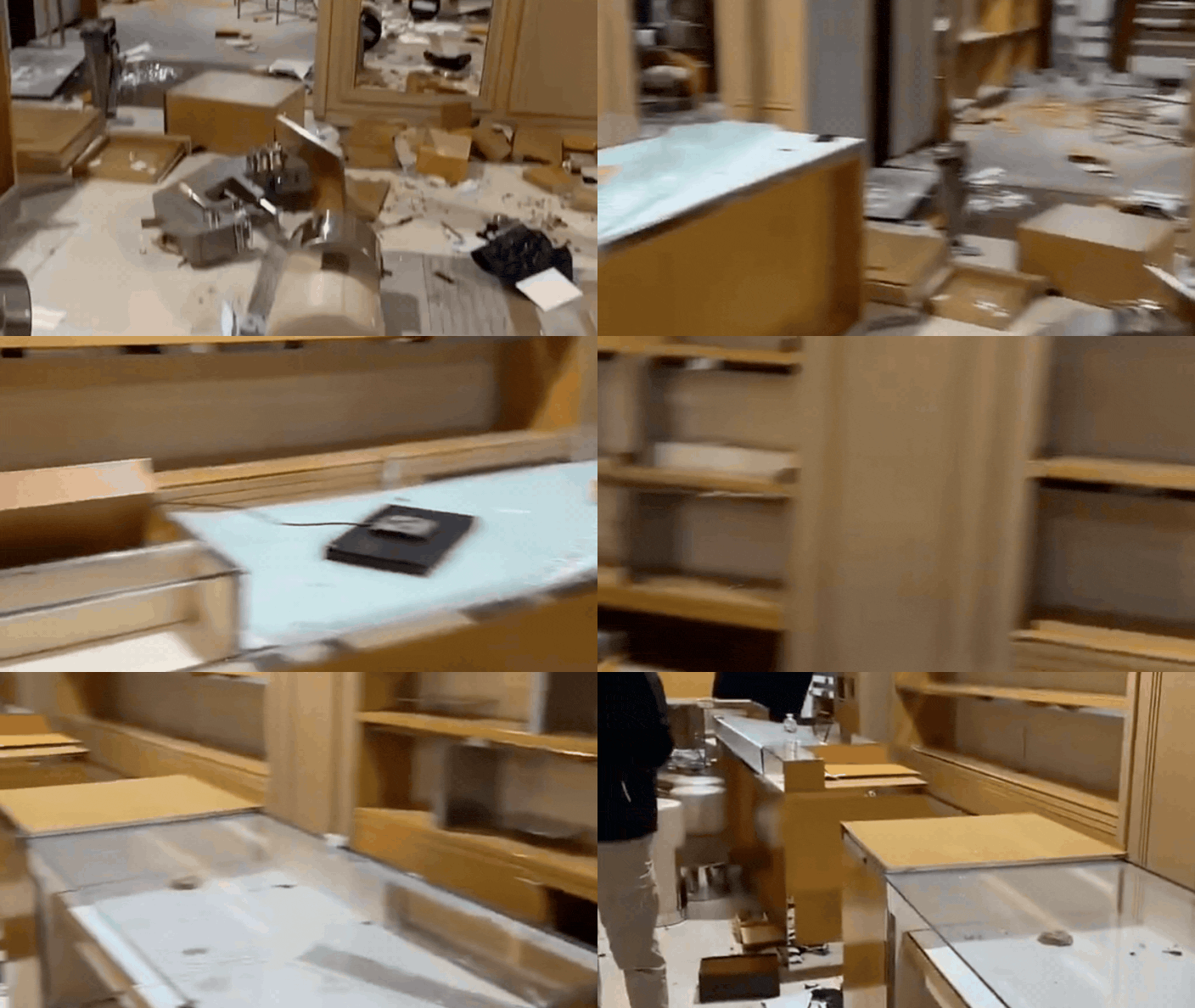
When masked crowds smash through glass storefronts in Paris, Marseille, Lille, and Bordeaux during nationwide cost-of-living protests, the footage rarely stays confined to local evening news. Clips of French protesters and opportunists breaking into Hermès boutiques, Louis Vuitton flagships, and Apple stores travel fast across social feeds, turning economic anger into a visceral spectacle of high-value theft. Yet treating these incidents as simple street chaos misses the deeper mechanics at work. Luxury retail has become a convenient target during civil unrest because flagship stores sit on prime commercial arteries, advertise immense wealth behind floor-to-ceiling glass, and carry high-resale inventory that can be flipped quickly.
For decades, I have watched retail security teams, urban planners, and risk underwriters try to outguess street volatility. They build thicker laminated glass, hire bigger guard details, and rehearse emergency closures whenever unions or activist coalitions announce mass marches. Still, the physical architecture of modern flagship retail is built to invite crowds in, not keep determined mobs out. When police resources are stretched across hundreds of thousands of demonstrators, municipal buildings, and flashpoints simultaneously, even guarded avenues can lose immediate coverage for crucial minutes.
The Anatomy of a Flagship Target
High-end boutiques and tech showrooms occupy a distinct psychological space in a city under economic strain. When households are squeezed by inflation, fuel costs, and stagnant purchasing power, a flagship store selling leather goods, watches, or smartphones looks less like a neighborhood shop and more like a monument to unequal prosperity. That contrast fuels symbolic anger. It also gives opportunistic looters an obvious stage where onlookers gather, film, and cheer.
Still, lumping every person in the street together distorts what actually happens during major demonstrations. Large protests in France regularly draw hundreds of thousands of people—with estimates in the October 2026 unrest ranging from roughly 550,000 according to the Interior Ministry to around 800,000 according to the CGT union. Most marchers come to air grievances over wages, prices, or public policy. Organized opportunism rides in on the slipstream of those crowds, exploiting stretched police perimeters, smoke, and confusion to hit commercial corridors in Bordeaux, Lille, Marseille, and central Paris.
- High visibility on main arteries: Streets like Bordeaux's Rue Sainte-Catherine or central Paris squares concentrate foot traffic, cameras, and high-margin brands in one walkable zone.
- Compact, portable merchandise: Small electronics, fragrances, beauty items, and accessories are easier to grab and carry on foot than bulky household goods.
- Strained municipal bandwidth: When unrest hits town halls, transit hubs, and dozens of storefronts at once, patrol response times inevitably lengthen in secondary pockets.
Why Glass and Guards Are Not Enough
Retailers have spent years upgrading their defenses, yet physical security has clear limits during large-scale riots. Specialist security glazing can absorb heavy blows and buy precious minutes, sometimes stopping a break-in before it starts. Once a barrier gives way, however, a handful of unarmed or lightly equipped store staff cannot hold back dozens of people.
Retail security is designed for shoplifters and isolated disturbances, not coordinated street mobs moving under cover of mass protests.
Consider a hypothetical example to see how quickly the math breaks down. Imagine a mid-sized brand store on a busy shopping street with two security guards on duty when a peaceful march nearby fractures into clashes a few blocks away. Within ten minutes, shutters are half-drawn, police units are pulled toward a burning municipal office or blocked intersection, and a group of thirty masked individuals arrives with metal barriers or crowbars. Even if the front glass holds for three minutes, the store is already functionally compromised if rear exits, side alleys, or neighboring units are exposed.
There is also a tension between brand hospitality and fortress retail. Luxury houses and flagship tech stores spend fortunes creating open, welcoming interiors that make customers linger. Boarding up windows days in advance or turning every storefront into a steel bunker sends its own message—sometimes signaling fear or inviting provocation before a single stone is thrown.
The Hidden Bill Beyond Broken Windows
Headlines focus on smashed displays and stolen bags, yet the financial damage runs much deeper than the retail price of missing stock. Luxury groups often track wholesale or manufacturing cost rather than sticker price when calculating inventory loss, while local franchisees or independent shops along the same street may face harsher cash-flow shocks.
Insurance adds another layer of friction. Commercial policies often separate standard theft from damage tied to strikes, riots, and civil commotion, leading to lengthy loss adjustments, sub-limits, and disputes over causation. Even when physical repairs are covered, business interruption hurts—closed doors mean lost daily sales, disrupted appointments, and nervous staff who have lived through intimidating scenes.
| Cost Layer | What Gets Hit | Why It Lingers |
|---|---|---|
| Direct Property & Stock | Storefronts, fixtures, display units, stolen goods | Replacement glass, custom millwork, and restocking take weeks |
| Operational Downtime | Temporary closures, reduced hours, security overtime | Lost peak weekend foot traffic is rarely recovered |
| Insurance & Legal Friction | Claim investigations, deductibles, civil suits | Riot and looting clauses trigger strict evidentiary reviews |
| Resale & Brand Spillover | Stolen goods hitting street markets or online listings | Fuels public frustration and forces platform enforcement |
And the stolen merchandise rarely disappears into a vacuum. Reports from major French unrest have repeatedly pointed to looted goods turning up quickly in informal street sales or online marketplaces. That creates a secondary headache for law enforcement and brands trying to trace serial numbers, curb gray-market dumping, and prove to angry taxpayers that crime carries real consequences.
Policing, Politics, and the Street Reality
Every wave of violent looting triggers a familiar political script. Leaders promise strict prosecution and swift justice, business groups demand stronger protection for commercial districts, and critics argue over whether policing was too heavy-handed or not visible enough in the right places. Both arguments contain uncomfortable truths.
Policing a mass protest across multiple cities is an exercise in brutal triage. When hundreds of arrests are made in a single day and over a hundred officers suffer injuries, commanders have to weigh defending public institutions and dispersing violent clashes against guarding every private shopfront. Putting heavy riot gear on every corner can inflame tensions with peaceful demonstrators; leaving commercial streets lightly patrolled invites opportunistic crime.
At the same time, blaming street looters alone ignores why the tinder is dry in the first place. When cost-of-living pressures mount and large segments of the public feel unheard, unrest becomes easier to spark and harder to contain. Rioters do not invent economic grievances, nor do they represent the majority of marchers, yet they thrive in the vacuum created when frustration boils over.
What Smart Retailers Actually Do Next
Veteran risk managers know there is no silver bullet that makes a city-center flagship immune to civil unrest. What separates prepared operators from caught-off-guard ones is disciplined pre-staging before crowds gather.
- Pre-position high-value stock: Move easily pocketed, high-ticket items out of street-level displays and back-of-house racks into secure safes or off-site vaults ahead of scheduled mass protests.
- Drill rapid lock-down protocols: Train managers and security teams on clear triggers for early closure, staff evacuation routes, and real-time check-ins so employees are never left stranded alone behind glass.
- Audit insurance wording early: Have risk brokers review riot, civil commotion, theft exclusions, and business-interruption waiting periods long before an incident occurs.
- Coordinate with local business associations: Share real-time street intelligence with neighboring shops, property landlords, and municipal contacts rather than operating in isolation.
None of these steps solves the underlying politics driving French street protests, and none guarantees zero damage when hundreds of thousands of people fill major boulevards. They do, however, shift retailers from reactive shock to controlled damage limitation—protecting people first, preserving recoverable assets second, and keeping a bad night from becoming a prolonged business crisis.
Rolex, Hermès, Gucci And Apple Stores Looted Amid Protests
This video provides visual coverage of the luxury and retail store looting during the French protests, illustrating the street-level disruption and commercial impact analyzed in the article.