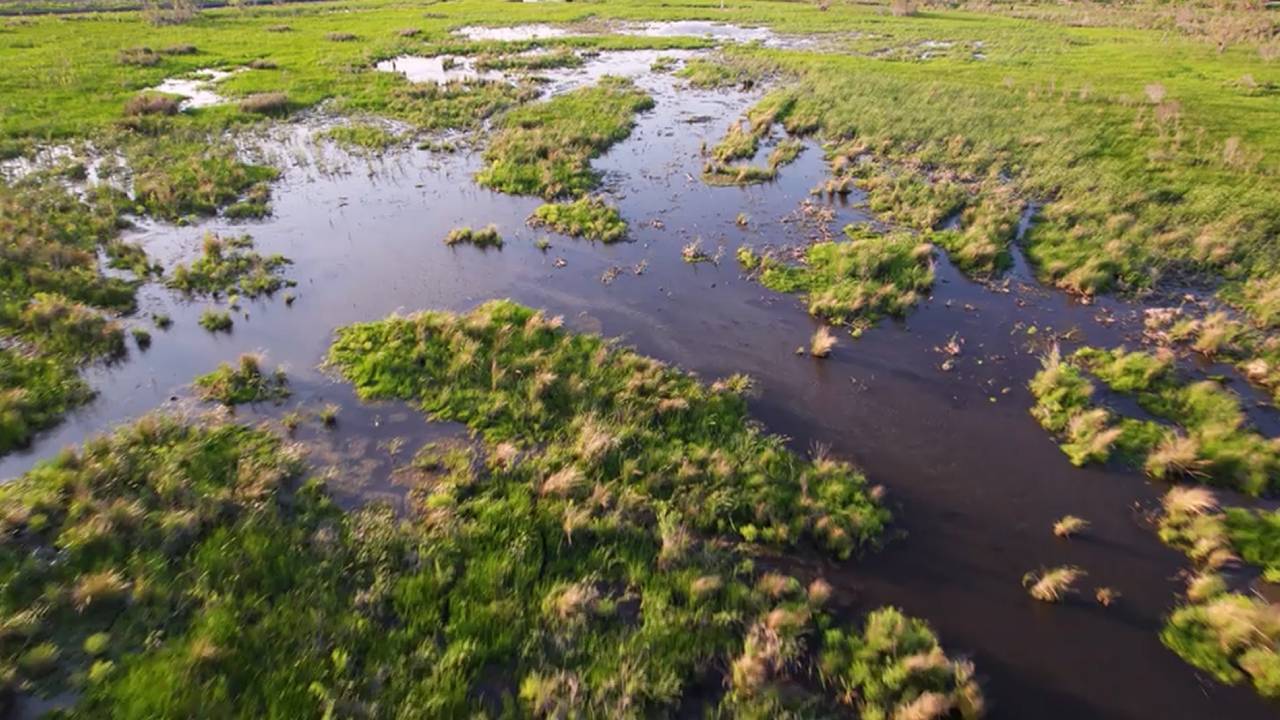
Drive down through the Louisiana bayou and you notice things disappear. Entire chunks of earth vanish into the Gulf, swallowed by erosion, storm surges, and decades of starved sediment flow. Since the 1930s, the Barataria Basin alone has bled nearly 300,000 acres of land. That is an area larger than New York City wiped straight off the map.
Then you see projects like the Upper Barataria Marsh Creation Project. Don't forget to check out our earlier post on this related article.
Just one year after heavy machinery stopped digging, marine life is already voting with its fins. White shrimp, brown shrimp, blue crabs, and red drum are flooding back into the newly built marshlands. It is a rare ecological win for a coastline that usually only makes news when a hurricane hits.
Pumping the Mississippi to Rebuild the Bayou
You cannot just toss dirt into open water and hope it sticks. Coastal restoration takes industrial muscle. Between 2022 and 2023, contractors from Weeks Marine used massive dredges to vacuum up roughly 8 million cubic yards of sediment straight out of the Mississippi River. If you want more about the history of this, BBC News provides an in-depth breakdown.
To put that volume in perspective, it was enough material to fill the Caesars Superdome completely twice.
They pumped that slurry into designated containment areas to build up 1,170 acres of emergent wetland habitat. But dirt alone doesn't make a living ecosystem. Crews also carved out 89 acres of water features, including a dedicated tidal pond and over 18,000 linear feet of flow pathways designed to mimic natural tidal creeks. They cut strategic gaps into the surrounding dikes so water and marine life could move freely between the newly minted marsh and the wider basin.
When the dust settled, the project actually overdelivered. It created 1,259 total acres of land and water features, beating its original target by 76 acres.
Why Shrimp and Crabs Came Back So Fast
Skeptics always question whether man-made marshes actually function like the real deal. Biology answered that question quickly.
Research teams from The Water Institute, working alongside Nicholls State University students and partners like the U.S. Geological Survey, spend grueling 12-hour days wading deep into the muck. They pump sediment through mesh cylinders to see what is living in the mud.
They found every target species right away. Blue crabs, grass shrimp, and red drum are utilizing the new tidal channels. Why? Because the engineering worked. The man-made channels connected the marsh back to the broader basin's tidal flow. Tides push vital nutrients in, giving larval fish and shrimp a safe nursery to feed and mature.
Native plants are also taking root naturally across the landscape, stabilizing the sediment. While a community-led effort to plant 500 cypress saplings faced some harsh hits from extreme weather, those trials give scientists critical data on how to build tougher coastal forests moving forward.
The Economic Reality Behind the Mud
Louisiana's wetlands are not just pretty scenery. They form an economic engine. The Gulf coast supplies a massive chunk of the nation's commercial seafood. Without a functional Barataria Landbridge acting as a physical barrier between the salty Gulf and the upper freshwater basins, saltwater pushes inland, kills the native vegetation, and accelerates land loss.
When the marshes die, the fisheries die with them. When the marshes recover, the commercial fishing industry gets a lifeline.
The work is far from over. Over the next twenty years, this engineered land will naturally settle and compact, maximizing tidal flooding and nutrient cycles. A strict 20-year monitoring and adaptive management plan governs the area, meaning teams can step in to adjust water flow or replant vegetation if any section starts struggling.
Check local coastal restoration trackers if you want to track upcoming sediment-diversion projects or get involved with local habitat volunteer groups. The blueprint works. Now it is a matter of scaling it before the Gulf takes the rest.