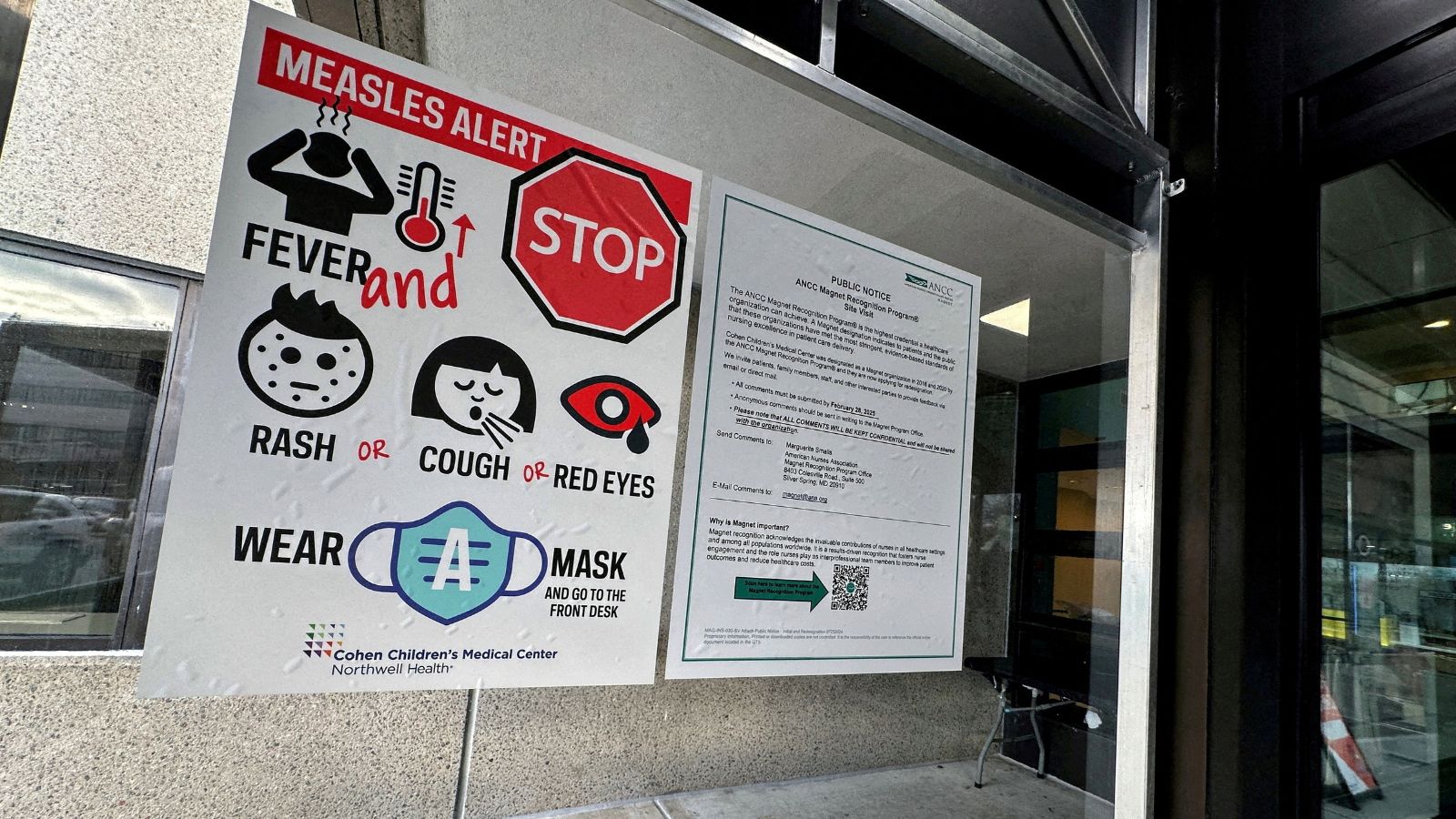
The public health establishment is having a collective meltdown over a technicality.
Headlines are screaming that the United States has officially lost its measles elimination status after crossing 5,400 reported cases this year. Pundits are treating this administrative downgrade like the return of the Black Death. Epidemiologists are wringing their hands on cable news, blaming social media algorithms, rogue parents, and declining trust in institutions. Don't miss our previous article on this related article.
They are all staring at the wrong scoreboard.
Losing elimination status is not a surprise medical catastrophe. It is the inevitable, mathematical consequence of a public health strategy built on fantasy rather than human nature. For twenty-six years, federal agencies clung to the illusion that a respiratory virus with an $R_0$ between 12 and 18 could be permanently locked out of a massive, interconnected nation with porous borders and fiercely individualistic citizens. To read more about the background here, Healthline provides an in-depth summary.
Elimination was never a permanent biological reality. It was a fragile accounting trick. And pretending otherwise has actively damaged public trust far more than any internet conspiracy theory ever could.
The Accounting Trick Behind "Elimination"
Most people—and frankly, most journalists covering this beat—do not understand what "measles elimination" actually means. They hear "eliminated" and assume the virus was wiped off the face of the earth, like smallpox.
It wasn't.
Under World Health Organization and Pan American Health Organization definitions, elimination simply means the absence of continuous endemic transmission of a specific viral strain within a defined geographic area for at least 12 months. Notice the loophole. The virus can enter the country every single week on international flights. It can spark outbreaks in schools, airports, and theme parks. Hundreds of Americans can get sick. As long as health departments trace and snuff out every single chain of transmission before the 365-day clock runs out, the country keeps its shiny gold star.
I have sat in enough state health department war rooms over the last decade to know how this sausage gets made. Whenever a cluster pops up, the obsession is rarely just about clinical care. It is about beating the 12-month stopwatch. Epidemiologists burn millions of dollars in overtime contact tracing every person who walked through Terminal B at JFK within two hours of an index patient, desperate to prove that Strain X died out before Strain Y arrived from Europe or Asia.
That is not disease control. That is bureaucratic gymnastics.
When you build your entire public health messaging around maintaining an artificial zero-endemic-transmission streak, you set yourself up for a catastrophic credibility collapse the moment reality catches up with the math. Once a single transmission chain stretches past 366 days, the Pan American Health Organization revokes the status, the press declares an apocalypse, and millions of ordinary people look around their completely normal neighborhoods and conclude that public health officials are hysterical liars.
The Math of Herd Immunity Was Never Sustainable
Let us look at the actual physics of the measles virus. Morbillivirus is arguably the most contagious human pathogen ever discovered. If an infected person walks into a room, coughs, and leaves, the virus remains suspended in the air for up to two hours. Nine out of ten susceptible people who enter that room will catch it.
Because the basic reproduction number ($R_0$) sits around 15, the herd immunity threshold required to stop sustained transmission is roughly 93% to 95%.
Think about what 95% compliance actually requires in a country of 340 million people. It means you need near-total, uniform saturation across every zip code, every religious enclave, every transient immigrant community, and every rural county in America. Not 95% as a national average. A 96% vaccination rate in suburban Massachusetts does nothing to stop an outbreak in an under-vaccinated pocket of Ohio, Texas, or New York. Viruses do not care about national averages; they exploit local density.
Maintaining a 95% immunity wall forever in a free society without authoritarian enforcement is a statistical unicorn. Even if nobody opposed vaccines on ideological grounds, administrative friction alone—missed pediatric appointments, families moving between states, insurance gaps, cold-chain failures, and the small percentage of people who do not mount an immune response after two doses—creates natural pockets of susceptibility.
Yet for decades, the Centers for Disease Control and Prevention treated 95% coverage not as an aspirational ceiling, but as a baseline entitlement. They assumed compliance would run on autopilot forever. They stopped explaining the mechanics of risk and started issuing moralizing edicts.
Why Coercion Backfired Spectacularly
If you want to understand how we hit 5,400 cases, stop blaming rogue wellness influencers and start looking at the self-inflicted wounds of the medical establishment between 2020 and 2023.
Before the pandemic, vaccine hesitancy regarding the MMR shot was a niche phenomenon concentrated in hyper-specific cultural and religious communities. The vast majority of parents didn't think twice about it. Why? Because the MMR vaccine had 50 years of unimpeachable safety data behind it, and pediatricians treated parents like partners rather than suspects.
Then public health leaders decided to burn their entire generational reservoir of credibility to push novel mandates, school closures, and heavy-handed censorship. They lumped every question about medical autonomy into a single bucket labeled "anti-science."
When you tell millions of skeptical parents that questioning a brand-new pharmaceutical product makes them no different from someone refusing a 1970s childhood immunization, you do not convert them to your side. You drive them straight into the arms of the people telling them to reject everything on the pediatric schedule.
I watched this happen in real time. Pediatricians who used to spend twenty minutes calmly walking hesitant mothers through the difference between live-attenuated measles vaccines and mRNA platforms were pressured by hospital networks to simply kick unvaccinated families out of their practices. Pushing hesitant families out of mainstream pediatric clinics doesn't make their kids immune. It just guarantees those parents will never hear a rational medical argument again, while clustering their unvaccinated kids together in alternative schools and homeschool co-ops—creating literal tinderboxes for measles transmission.
The establishment traded long-term trust in proven childhood vaccines for short-term compliance during a crisis. Now the bill has come due, and the interest rate is 5,400 cases.
Dismantling the Panic Questions
Whenever an outbreak hits the front page, search engines light up with the same panicked questions, fed by breathless news coverage. Most of these questions are built on flawed premises.
"Does losing elimination status mean measles is now unstoppable?"
No. Losing an international designation changes nothing about the biology of the virus or the efficacy of the vaccine. Two doses of the MMR vaccine remain roughly 97% effective at preventing infection. If you are vaccinated, your risk of severe disease is virtually zero. The virus is not mutating around the shot; measles is remarkably genetically stable compared to influenza or coronaviruses. Calling it "unstoppable" is pure media sensationalism.
"Are adults who were vaccinated in the 1970s or 1980s suddenly unprotected?"
For almost everyone, no. Unlike tetanus or pertussis, which require regular boosters because immunity wanes, wild-type infection or two properly administered doses of the live-attenuated MMR vaccine generally confer lifelong immunity. The only specific cohort that actually needs to check their records are Americans born between 1957 and 1989 who may have received only a single dose, or those vaccinated between 1963 and 1967 who might have received an early, inactivated (killed) version of the vaccine that proved ineffective. Everyone else is fine. Stop flooding clinics demanding unnecessary antibody titers.
"Should we reinstate strict federal mandates with zero exemptions to get our status back?"
This is the knee-jerk reaction of every authoritarian bureaucrat, and it is guaranteed to make the problem worse. California tried eliminating personal belief exemptions with Senate Bill 277. What happened? Medical exemptions skyrocketed overnight until the state had to pass another law policing doctors, and hesitant families simply pulled their kids out of public schools altogether, driving up homeschooling rates and concentrating unvaccinated children in unregulated social networks. You cannot mandate your way out of a trust deficit.
The Uncomfortable Trade-Off Nobody Admits
Here is the truth that neither side of the vaccine debate wants to say out loud: both the purists and the abolitionists are selling a lie.
The anti-vaccine crowd sells the lie that measles is a harmless childhood rite of passage—just a mild rash and a fever that builds character. That is dangerous nonsense. Measles is a brutal systemic infection. Roughly 1 in 5 unvaccinated people who catch it end up hospitalized. About 1 in 1,000 develop encephalitis, which can leave permanent brain damage. Between 1 and 3 out of every 1,000 infected children die, even with modern intensive care. Worse, the measles virus induces "immune amnesia," wiping out 11% to 73% of a person's existing antibodies against other pathogens, leaving survivors vulnerable to pneumonia, ear infections, and secondary bacteria for years afterward.
On the flip side, the public health establishment sells the lie that zero risk is achievable in an open society, and that any deviation from 100% compliance is an existential threat to civilization.
Both positions refuse to accept reality. In a free country of 340 million people connected to every corner of the globe by commercial aviation, sporadic measles outbreaks are a permanent feature of the landscape. You will never eradicate measles domestically while it remains endemic in parts of Europe, Asia, and Africa, unless you plan on shutting down international travel forever or forcibly vaccinating citizens at gunpoint.
Admitting that we will have periodic outbreaks is not surrender. It is adulthood.
What Actually Works Instead of Chasing Gold Stars
If health agencies want to bring 5,400 cases back down to a manageable baseline, they need to abandon the obsession with PAHO elimination status and fundamentally overhaul how they operate.
First, separate the MMR vaccine from the broader culture war. Public health officials must stop treating the childhood immunization schedule as an all-or-nothing religious text. When agencies bundle routine, decades-old live-attenuated vaccines with every new seasonal booster recommendation, they drag the MMR shot down into the political mud. Pediatricians need the freedom to meet hesitant parents where they are—offering delayed or spaced-out schedules if that is what it takes to get an MMR shot into a child's arm, rather than lecturing parents out the door.
Second, deploy surgical, hyper-local outreach instead of national shame campaigns. National PSA campaigns starring celebrities do nothing to move the needle in an insular religious community in Brooklyn or an immigrant neighborhood in Minneapolis. When outbreaks happen, the only thing that works is quiet, respectful engagement through trusted local leaders—rabbis, imams, pastors, and community elders—paired with mobile clinics that offer care without judgment or media cameras.
Third, fix adult surveillance gaps without panic. Instead of screaming about falling kindergarten rates, health systems should quietly audit healthcare workers, university students, and international travelers. Hospitals are the single most dangerous amplifiers of measles outbreaks because waiting rooms mix coughing index patients with immunocompromised cancer patients and infants too young to be vaccinated. Enforcing strict immunity verification inside clinical settings protects the genuinely vulnerable without sparking a national political war.
Fourth, retire the "elimination" metric from public communications. Keep it in academic journals where it belongs. Telling the public that a disease is "eliminated" when everyone knows it still exists creates an expectation of zero cases that no health system on earth can deliver. Measure success by hospitalizations, severe complications, and mortality—not by whether a transmission chain lasted 364 days versus 366 days.
The Real Lesson of 5,400 Cases
The downside to accepting sporadic outbreaks as a manageable reality rather than a national emergency is obvious: it means tolerating a baseline level of preventable illness in communities that choose not to vaccinate. Doctors hate watching kids suffer from something a $20 injection could have prevented, and rightfully so.
However, the alternative—pretending we can bully, censor, and mandate our way back to a statistical mirage—has already failed. You can see the proof in the case counts climbing past 5,400.
Public health does not fail because people are stupid. It fails because institutions become arrogant, mistake compliance for trust, and care more about protecting an international trophy than telling the unvarnished truth. Stop mourning the loss of a bureaucratic label that never meant what you thought it meant, fire the PR consultants running shame campaigns, and start treating the public like adults capable of weighing real risks.