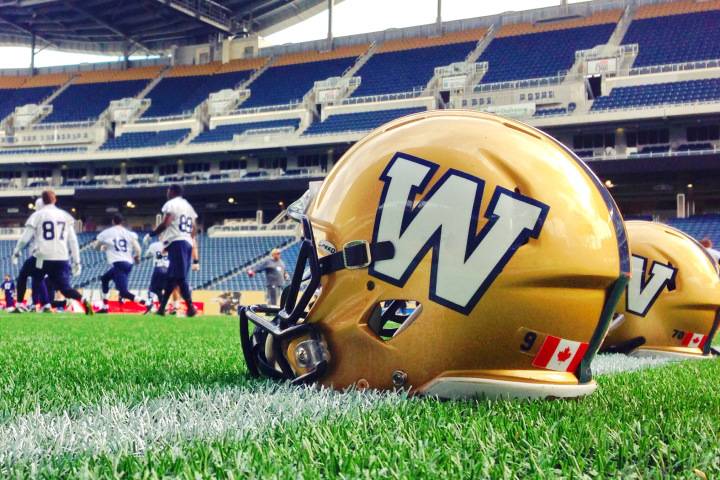
Every local beat writer and couch general manager is currently weeping into their keyboards over the loss of backup defensive back and special teams contributor Ethan Ball. The narrative is lazy, predictable, and entirely detached from how modern professional football rosters actually win championships. The mainstream reaction treats every depth injury as a tragedy that signals doom for a franchise's defensive ceiling. Let us stop mourning routine attrition and look at the brutal mathematical reality of Canadian Football League roster management.
When Mike O'Shea confirmed that Ball is likely done for the year with an Achilles tear, the media treated it as a heavy body blow. Ball played a modest role, dressing for a handful of games and logging nine special teams tackles in his rookie campaign before sliding into rotational defensive reps this season. He is a hard worker, a local product, and a hyper-competitor. None of that changes the fact that obsessing over the loss of a fringe roster player obscures the actual mechanisms that decide Grey Cup rings.
The Fallacy of Depth Panic
We need to dismantle the obsession with raw roster continuity. Fans and analysts love to tally up man-games lost as if every player on a 45-man roster carries equal statistical weight. They do not. In a salary-capped league with complex Ratio rules, depth is not about hoarding sentimental fan-favourites; it is about rotational efficiency and turning forced substitutions into developmental catalysts.
I have watched front offices panic over depth chart hits, burning valuable practice roster resources on panic-signings just to fill a body quota. That is amateur hour. When a rotational piece or special teams regular goes down, it forces a coaching staff to untap the next layer of an organization. Winnipeg's pipeline does not dry up just because a sixth-round draft pick hits the injured list.
The Special Teams Myth
Let us look closely at the primary argument for why Ball's absence hurts: his work on kick coverage units. The consensus claims that losing a dedicated special teamer destroys field position battles.
Here is the counter-intuitive truth. Special teams tackling is largely a function of scheme design, kicker hangtime, and blocking angles, not irreplaceable individual brilliance. Replace a replacement-level gunner with another hungry rookie from the practice roster, and the coverage unit efficiency drops by a negligible fraction of a yard per return. Teams do not win or lose championships because of their ninth-leading special teams tackler. They win because their stars stay healthy and their scheme dictates terms.
Imagine a scenario where a coaching staff uses an injury crisis as cover to completely overhaul a stagnant secondary rotation. Sometimes, a forced hand is the only way a risk-averse coaching staff will give younger, higher-ceiling talent actual game reps.
The Real Vulnerability
If you want to panic about the Winnipeg Blue Bombers, stop looking at the bottom of the depth chart. Look at the top. The real vulnerability of this roster lies in the miles on the core veterans and the offensive line health—factors that actually dictate the ceiling of the franchise. Fixating on Ethan Ball is a comfortable distraction because it lets fans play the victim of bad injury luck rather than confronting systemic roster construction realities.
Stop crying over depth players. True contenders do not rely on a sixth-round pick to salvage their November aspirations. They churn the bottom of the roster, find the next hungry body, and keep marching.