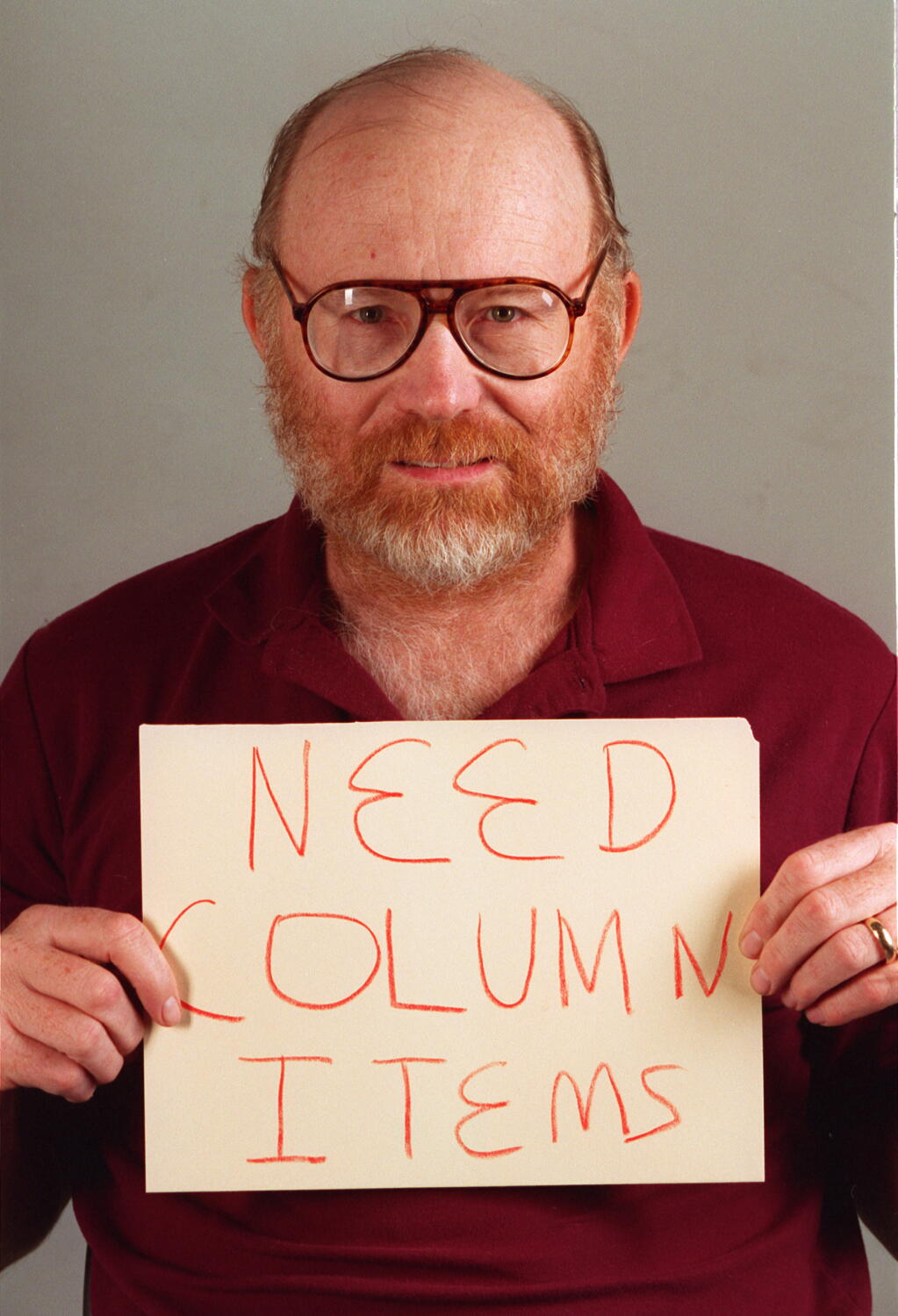
Most people outside Southern California hear the name Steve Harvey and picture a mustache, a booming laugh, and a Family Feud podium. That's a shame. For decades in Los Angeles, another Steve Harvey owned the morning commute with something far weirder and infinitely more local.
When the longtime Los Angeles Times "Only in L.A." columnist died at 80, the city lost its sharpest collector of everyday absurdity. He didn't chase the Hollywood red carpets or camp outside city hall waiting for corruption scandals. Instead, he spent more than 20 years documenting the bizarre signage, botched translations, freeway oddities, and eccentric characters that actually define life in the Southland.
If you've never read his work, you missed a masterclass in local journalism. And if you grew up reading him over breakfast, you already know why his death leaves a hole that algorithms and viral TikTok clips simply can't replace.
Who Was Steve Harvey of the Los Angeles Times
Steve Harvey wasn't a celebrity comedian. He was a career newspaperman who understood that a metropolis of 10 million people produces unintentional comedy every single minute.
Born and raised in the region, Harvey joined the Los Angeles Times in the late 1960s and worked various beats before taking over the "Only in L.A." column in the late 1980s. He kept that beat running until his retirement in 2011, filing thousands of dispatches that treated minor civic weirdness with the same care a beat reporter gives a budget hearing.
His premise was dead simple. Los Angeles takes itself way too seriously. Between the entertainment industry's ego and the endless sprawl of freeways, people forget how funny the place looks when you just slow down and read the billboards.
Harvey didn't invent jokes. He didn't need to. He let real life hand him the punchlines, then framed them with dry, deadpan precision.
What Made "Only in L.A." Work So Well
Great local columns fail all the time because writers try too hard to be clever. Harvey went the opposite direction. He acted like an archivist of the ridiculous, relying heavily on readers to become his eyes and ears across Southern California.
Thousands of Angelenos mailed in snapshots, clipped weird classified ads, and spotted typos on municipal street signs. Harvey curated the best submissions and turned them into a daily ritual.
The Power of Reader-Powered Journalism
Long before social media turned everyone into a citizen reporter, Harvey built a crowdsourced network using postcards, faxes, and early email. People drove around Burbank, Santa Monica, and Orange County actively hunting for "Harvey material."
- Mangled restaurant menus that promised dishes nobody would ever order on purpose.
- Contradictory traffic signs telling drivers to turn left and not turn left on the exact same pole.
- Bizarre real estate listings trying to pass off a converted garage in Silver Lake as an "artist's sanctuary."
- Celebrity sightings that deflated Hollywood glamour, like watching an Oscar winner argue over expired coupons at a grocery store.
Honestly, that feedback loop was the secret sauce. Readers felt like co-authors of the column. Seeing your name credited in the Times for spotting a hilariously misspelled storefront banner in Koreatown was a genuine badge of honor.
Why He Avoided Cheap Shots
Writing about eccentric people can easily turn cruel. Harvey rarely crossed that line. His humor aimed at institutions, bureaucracy, vanity, and the sheer chaos of urban sprawl—not vulnerable individuals.
When he poked fun at a movie studio's bloated press release or a city agency's 40-word explanation for a simple pothole, he was punching up at the pompousness that thrives in L.A. That restraint is why his column endured across changing cultural eras without aging into mean-spiritedness.
The Common Mistake People Make About His Legacy
When a beloved local columnist passes away, obituaries tend to call them "lighthearted" or "fluff." That's a massive misreading of what Steve Harvey accomplished.
Lighthearted doesn't mean trivial. By documenting the small friction points of daily life in Southern California, Harvey captured an authentic social history that serious political reporters completely missed.
Think about how historians study cities a hundred years later. Official records tell you who won elections and how much concrete went into the 405 Freeway. Columns like "Only in L.A." tell you what it actually felt like to sit in that traffic, what businesses lined Ventura Boulevard, and what made ordinary residents laugh during recessions, riots, and earthquakes.
Harvey preserved the texture of Los Angeles. Without writers like him, the city's memory gets flattened into nothing more than movie premieres and crime statistics.
How Local Journalism Changed Around Him
Harvey retired in 2011, right as the newspaper industry was colliding head-first with smartphones, Twitter, and collapsing print ad revenue. The timing wasn't a coincidence.
In many ways, "Only in L.A." was the analog ancestor of modern hyper-local accounts like @overheardla or neighborhood Reddit threads. People still crave shared inside jokes about their city. They still love pointing out absurd rent prices, weird billboards on Sunset Boulevard, and strange encounters at Trader Joe's.
The difference is curation and editorial voice. Social media feeds drown you in unverified rumors and rage-bait because algorithms reward outrage over charm. Harvey filtered the noise through a sharp, humane sensibility. He verified details, gave proper credit to the reader who snapped the photo, and wrapped every item in clean, punchy prose.
You knew what you were getting every morning. Five minutes of genuine amusement without anyone screaming at you about politics.
What Writers and Readers Can Take From Harvey's Career
You don't have to live in Los Angeles—or work at a major daily newspaper—to apply what made Harvey's work stick for decades.
First, pay attention to the margins. The best stories rarely sit in the middle of the press conference. They hide on the side of a delivery truck, in the fine print of a parking ticket, or in a throwaway quote from a bystander.
Second, respect your audience's intelligence and humor. Harvey never over-explained a joke. He laid out the facts, trusted readers to get the irony, and moved on to the next item.
If you want to appreciate why Angelenos are mourning him, pull up old archives of the Los Angeles Times from the 1990s and 2000s and search for "Only in L.A." Read a dozen entries in a row. Then walk outside in your own neighborhood, put your phone in your pocket for ten minutes, and actually read the signs around you. You'll start seeing the world the way Steve Harvey did.