Everybody is screaming about a broken system. They are wrong.
When the Federal Aviation Administration (FAA) pulled the emergency brake on the entire United States airspace system in January 2023—halting over 11,000 flights in the first nationwide ground stop since September 11, 2001—the mainstream press immediately reached for their favorite lazy narrative. They blamed "crumbling infrastructure." They pointed fingers at "outdated 1990s software." They painted a picture of an agency held together by duct tape and prayers, collapsing under the weight of modern air travel.
That consensus is comforting because it gives you a simple villain. It is also completely detached from how high-reliability safety systems actually work.
If you look at the mechanics of what happened with the Notice to Air Missions (NOTAM) outage, you aren't looking at a catastrophic failure of American aviation. You are looking at the exact opposite. You are looking at a zero-tolerance safety architecture doing precisely what it was engineered to do when data integrity is compromised.
The real scandal isn't that the computers went down. The real scandal is that travelers, politicians, and airline executives have become so addicted to frictionless, hyper-optimized schedules that they treat a life-saving pause as a personal insult.
The Myth of the "Broken" NOTAM System
To understand why the media got this wrong, you have to understand what a NOTAM actually is.
In plain English, a NOTAM is a real-time alert sent to pilots about abnormal conditions along their route. Think of it as the ultimate hazard warning system. Is a runway closed for emergency snow removal? That is a NOTAM. Is a flock of migratory birds hovering near the approach path? NOTAM. Are the approach lights out at O'Hare, or is there a temporary flight restriction because Air Force One is landing? NOTAM.
Without this feed, pilots are flying blind into dynamic hazards.
During the January 2023 incident, a corrupt database file knocked out both the primary NOTAM system and its backup. Let's be crystal clear about the root cause, because the FAA's subsequent internal review laid it bare: this wasn't a cyberattack, and it wasn't a sudden hardware explosion. A contractor accidentally deleted files while working to synchronize the live primary database with the backup database.
Because the two systems were mirrored, the corruption instantly replicated across both environments.
Here is where the lazy critics lose the plot. They ask, "How could a single corrupt file shut down an entire nation's airspace?"
Ask any aviation safety engineer from the National Transportation Safety Board (NTSB) or the International Civil Aviation Organization (ICAO), and they will give you a blunt answer: Because the alternative is guessing.
When a database feeding critical hazard alerts loses synchronization, the system cannot verify whether a pilot is seeing current data or stale data from six hours ago. If you allow planes to take off when you cannot guarantee the integrity of runway closure data, you are gambling with aluminum tubes packed with hundreds of human beings.
In aviation, there is a foundational rule known as fail-safe design. Unlike consumer tech—where Meta or Netflix can push broken code, let the app glitch for twenty minutes, and patch it on the fly—aviation does not tolerate graceful degradation when safety data is blind. If the system cannot confirm the safety of the airspace, the system stops. Period.
The FAA didn't "lose control" of the skies. Air Traffic Control (ATC) radar never went down. Voice communications between towers and cockpits never went down. Planes currently in the air were never in danger of colliding because ATC separation standards operate independently of the NOTAM database. The FAA simply refused to launch new aircraft into the sky until they could hand pilots a verified, uncorrupted hazard sheet.
Zero crashes. Zero injuries. Zero fatalities. In an industry built on blood-written regulations, that is the definition of a system working.
Why Modern Airlines Are Built to Shatter
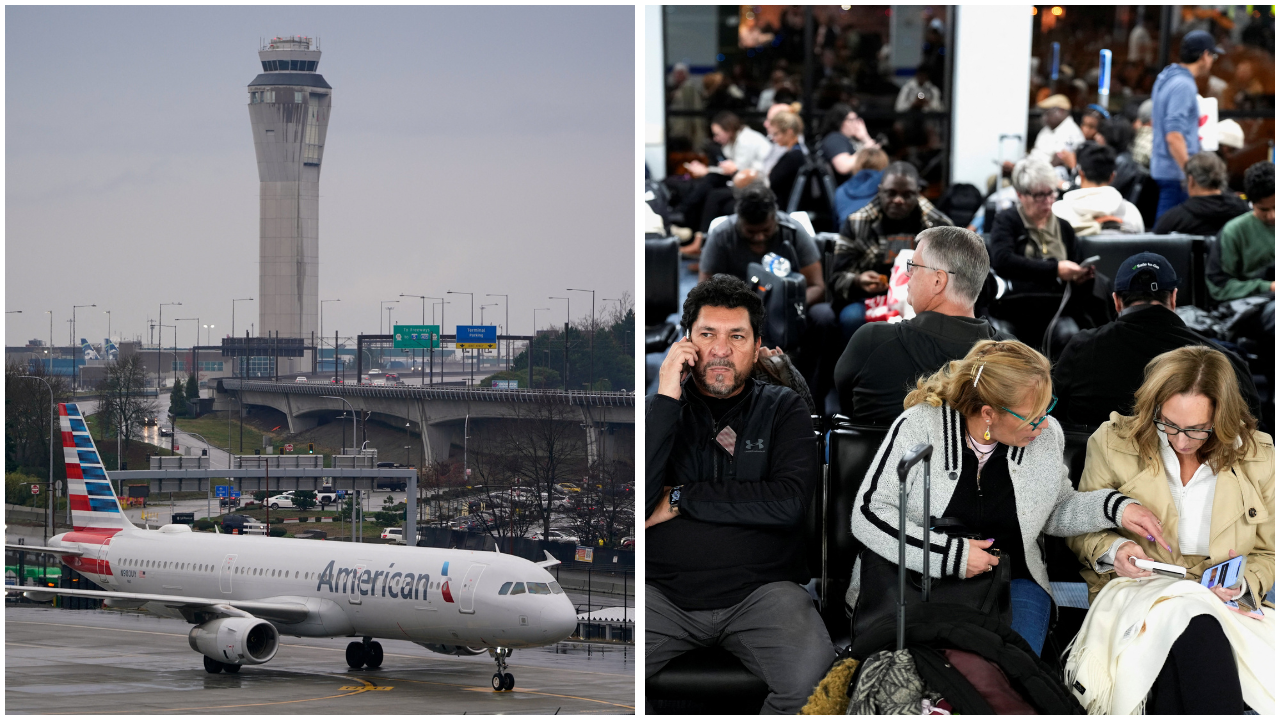
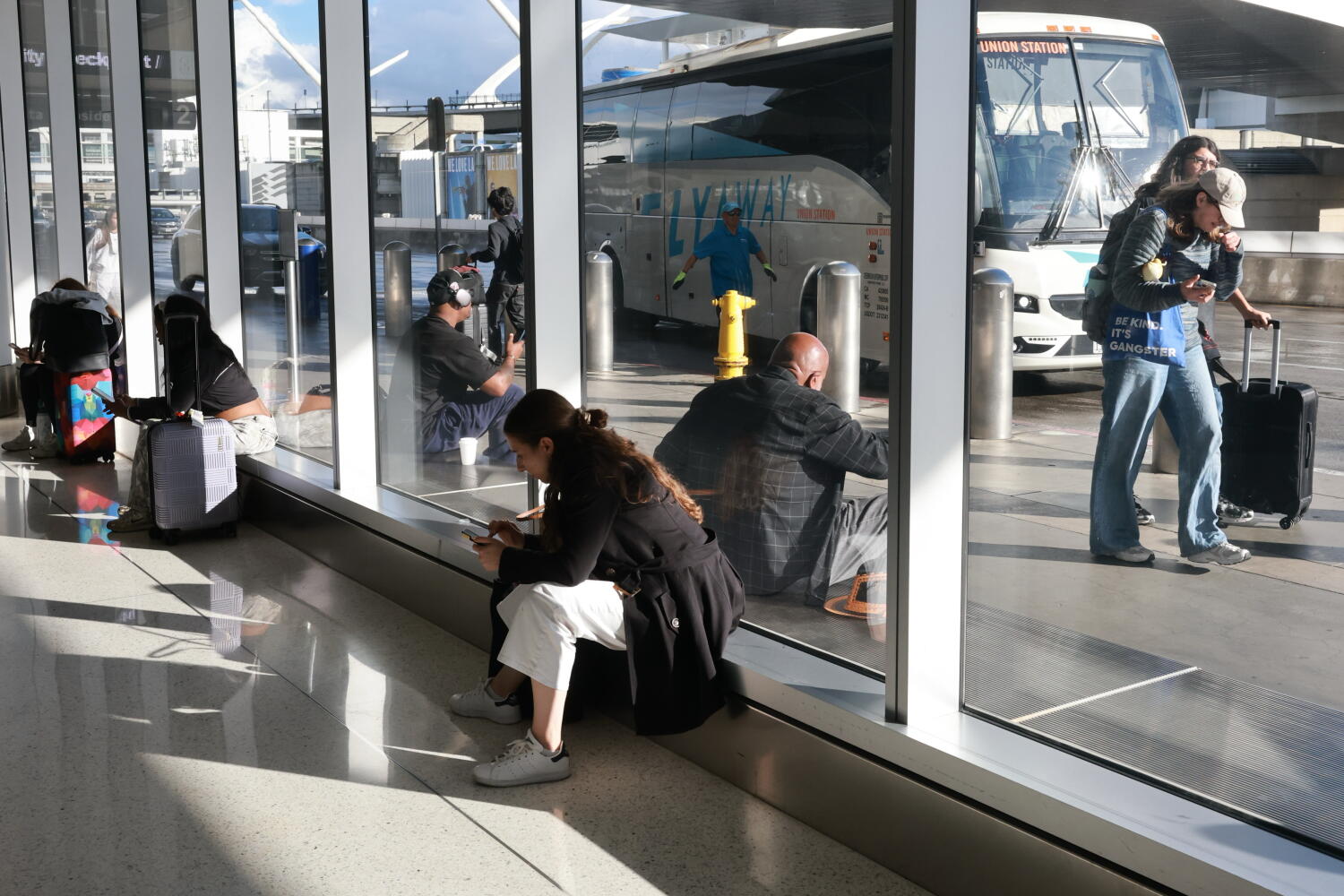
If the safety protocol worked, why did the fallout feel like an apocalypse? Why were passengers sleeping on terminal floors in Atlanta, Chicago, and Dallas for days after the computer glitch was fixed in just a few hours?
Stop blaming the FAA's servers and start looking at the airlines' spreadsheets.
Over the past twenty years, major US carriers have systematically stripped every ounce of operational slack out of their networks. I have watched airline network planners celebrate squeezing an extra 15 minutes of utilization out of a narrow-body jet, treating aircraft like Amazon delivery vans rather than complex machines operating in unpredictable weather environments.
To maximize quarterly margins, airlines rely on ultra-tight banked hub-and-spoke models and razor-thin crew legality buffers. Every plane is scheduled to land, unload, refuel, board, and push back within 45 minutes. Every pilot and flight attendant is scheduled right up against the legal limits of their duty day, governed by strict FAA fatigue rules (14 CFR Part 117).
Imagine a scenario where you balance a thousand dominoes on a glass table during an earthquake. When the table shakes, the dominoes fall. You don't blame the earthquake for the dominoes falling; you blame the person who decided balancing dominoes on glass was a smart business model.
The NOTAM outage lasted roughly four hours—from early morning until about 9:00 AM Eastern Time. Four hours. Yet it triggered over 10,000 delays and more than 1,300 cancellations across the country.
Why? Because when a four-hour ground stop hits the East Coast morning push, flight crews time out. Once a pilot hits their maximum legal duty hours, they cannot legally touch the controls. Now the plane is sitting at the gate in Charlotte, the passengers are boarded, the NOTAM system is back online, and the flight still cancels because the replacement crew is stuck in a holding pattern over Newark.
Airlines love to point at the government during these meltdowns. It is the ultimate PR shield. When a carrier cancels your flight because their own crew-scheduling software collapsed—as happened during the infamous Southwest Airlines holiday meltdown just weeks prior to the NOTAM freeze—they have to pay out vouchers, cover hotels, and face Congressional hearings. When the FAA issues a ground stop, airlines get to throw their hands up, classify the delay as "Air Traffic Control / Government Mandate," and legally absolve themselves of providing you with a dime for food or lodging.
They took your money for an ultra-fragile schedule, and they used the FAA's safety discipline as a scapegoat when their brittle network snapped.
Dismantling the "Upgraded Tech" Fantasy
Every time an airspace disruption makes headlines, pundits demand that Congress throw billions of dollars at "modernizing" the FAA. They speak about technology as if buying shiny new cloud servers automatically eliminates human error.
Let's dismantle that illusion right now.
First, the FAA has spent decades and tens of billions of dollars on NextGen (the Next Generation Air Transportation System), transitioning US airspace from ground-based radar to satellite-based GPS navigation (ADS-B). The idea that air traffic controllers are operating on vacuum tubes is pure fiction.
Second, migrating legacy aviation databases to modern cloud architectures does not make them immune to human stupidity. In fact, modern distributed systems often fail more spectacularly and more frequently than legacy monolithic systems.
Look at the track record of modern tech giants. Amazon Web Services (AWS), Microsoft Azure, and Cloudflare—companies spending tens of billions annually on the most advanced software engineering talent on earth—suffer catastrophic outages every single year. In 2024, a single flawed software update from CrowdStrike—a premier modern cybersecurity firm—crashed 8.5 million Windows machines globally, grounding airlines, halting hospitals, and freezing banks.
Why did the CrowdStrike outage happen? For the exact same reason the FAA NOTAM outage happened: automated synchronization of a corrupted file.
When you modernize a system, you don't eliminate failure; you just change the failure mode. Legacy systems are rigid, ugly, and slow to update, which is precisely why they are resilient against most external shocks. When you replace them with hyper-connected, rapidly updating modern architectures, you introduce complex dependencies that nobody fully understands until a contractor deletes the wrong file at 3:00 AM.
Should the FAA upgrade the NOTAM interface so pilots aren't reading walls of dense, abbreviated ALL-CAPS text that look like 1970s teletype printouts? Absolutely. The National Transportation Safety Board has hammered the agency for years on the readability of NOTAMs, pointing out that critical runway warnings get buried under pages of useless notices about unlit cell towers five miles from the airport.
In 2017, an Air Canada Airbus A320 nearly landed on a taxiway loaded with four fully fueled passenger jets at San Francisco International Airport—a near-miss that would have been the deadliest aviation disaster in human history. The pilots missed the runway closure notice because it was buried deep inside a massive, poorly formatted NOTAM packet.
That is the real flaw with NOTAMs. Not that the server went down for four hours, but that the data format itself is an unreadable mess that induces cognitive overload in the cockpit.
What Travelers Get Wrong About Airspace Delays
If you fly regularly, you are probably asking the wrong questions every time you stare at a red "DELAYED" status on the departure board.
Wrong Question: "Why can't the FAA keep the planes flying?"
Right Question: "Which airline actually has the spare capacity to recover when the system inevitably pauses?"
Ground stops are not anomalies. Between severe convective weather, solar storms, space launch closures off the Florida coast, VIP temporary flight restrictions, and technical maintenance, the National Airspace System (NAS) executes localized ground stops every single day. A nationwide ground stop is rare, yes, but the mechanics of recovery are identical whether the freeze hits one hub or the entire country.
When the sky locks up, your fate as a passenger has almost nothing to do with the FAA and everything to do with the operational philosophy of the carrier you booked.
Here is the brutal truth about surviving modern air travel when the grid freezes:
- Hub-and-Spoke vs. Point-to-Point: Legacy carriers like Delta, United, and American rely heavily on mega-hubs (Atlanta, Chicago, Dallas). When a ground stop hits, they can sometimes swap aircraft and crews more efficiently at their fortress hubs because they have spare jets sitting on the tarmac. Point-to-point carriers like Southwest or Spirit run tight, linear daisy-chains. If a plane gets stuck in Baltimore at 8:00 AM, the passenger waiting in Denver at 4:00 PM is doomed, even though the weather in Denver is crystal clear.
- The First-Flight Rule: Airlines build slack into their schedules overnight. Planes are cleaned, maintenance is performed, and crews get their mandatory rest. By 1:00 PM, minor delays have compounded across the network. By 6:00 PM, crew duty clocks are ticking down to zero. If you book a flight after 3:00 PM, you are volunteering to be the first casualty when a ground stop occurs.
- The Myth of Loyalty Protection: Having high-tier airline status does not magically materialize a legal flight crew out of thin air. It puts you ahead of other passengers for the remaining seats on the next flight, which means nothing if the next three flights are also canceled due to crew timeouts.
The Uncomfortable Trade-Off Nobody Wants to Admit
I am not arguing that the FAA is blameless. Letting a contractor delete live database files without an air-gapped rollback safeguard is an embarrassing operational blunder. An agency tasked with overseeing the safest transportation network in the world should not be brought to its knees by a fat-fingered file synchronization error. There is a massive difference between intentional safety protocols and sloppy IT governance, and the FAA deserved every bit of scrutiny it got for lacking basic change-management controls.
Furthermore, treating every ground stop as an untouchable "victory for safety" creates a dangerous moral hazard. If the FAA knows it can hit the pause button without facing structural consequences, the urgency to build true active-active database redundancy evaporates. Airlines and passengers end up absorbing billions of dollars in economic collateral damage because a government agency failed to implement basic database hygiene that a mid-sized fintech startup would consider mandatory.
Yet, we still have to confront the fundamental trade-off at the heart of commercial aviation.
You can have an airspace system that prioritizes throughput, or you can have an airspace system that prioritizes zero-fatality certainty. You cannot have both at the exact same time.
In 2009, Continental Connection Flight 3407 crashed near Buffalo, New York, killing 50 people. That tragedy triggered sweeping Congressional reforms that drastically increased pilot training requirements and overhauled crew fatigue rules. Since that day, US commercial airlines have carried over ten billion passengers with virtually zero fatalities—a safety record so statistically absurd it defies human intuition.
We achieved that record because aviation regulators made a cold, uncompromising choice: when in doubt, stay on the ground.
Every time a ground stop happens, cable news anchors stand in front of departure boards looking grave, interviewing stranded travelers who missed their cruise or their cousin's wedding. It makes for great television. It feeds the narrative of American decline.
Ignore the noise.
The next time you are sitting on the tarmac, staring out the window at a line of twenty jets with their engines shut down while the captain comes over the intercom to announce a nationwide ground stop, take a breath. You aren't witnessing a broken system failing you. You are witnessing the only system on earth willing to ruin your schedule to guarantee you survive the trip.
Book the 6:00 AM flight, pack a charger, and let the safety protocols do their job.