The smell of a kitchen in Hialeah is often identical to the smell of a kitchen in Vedado. It is the scent of onions softening in lard, the sharp hiss of garlic, and the heavy, earthy baseline of black beans simmering into a thick velvet. For sixty years, that smell was one of the few things that could cross the Florida Straits without a license or a permit. It traveled in memories, in smuggled letters, and eventually, in grainy video calls.
But money? Money was a ghost. It was something sent in the lining of a suitcase or through wire transfers that took a predatory bite out of a grandson’s paycheck. It was a lifeline, certainly, but it was never an anchor. It couldn't build anything permanent.
That is changing.
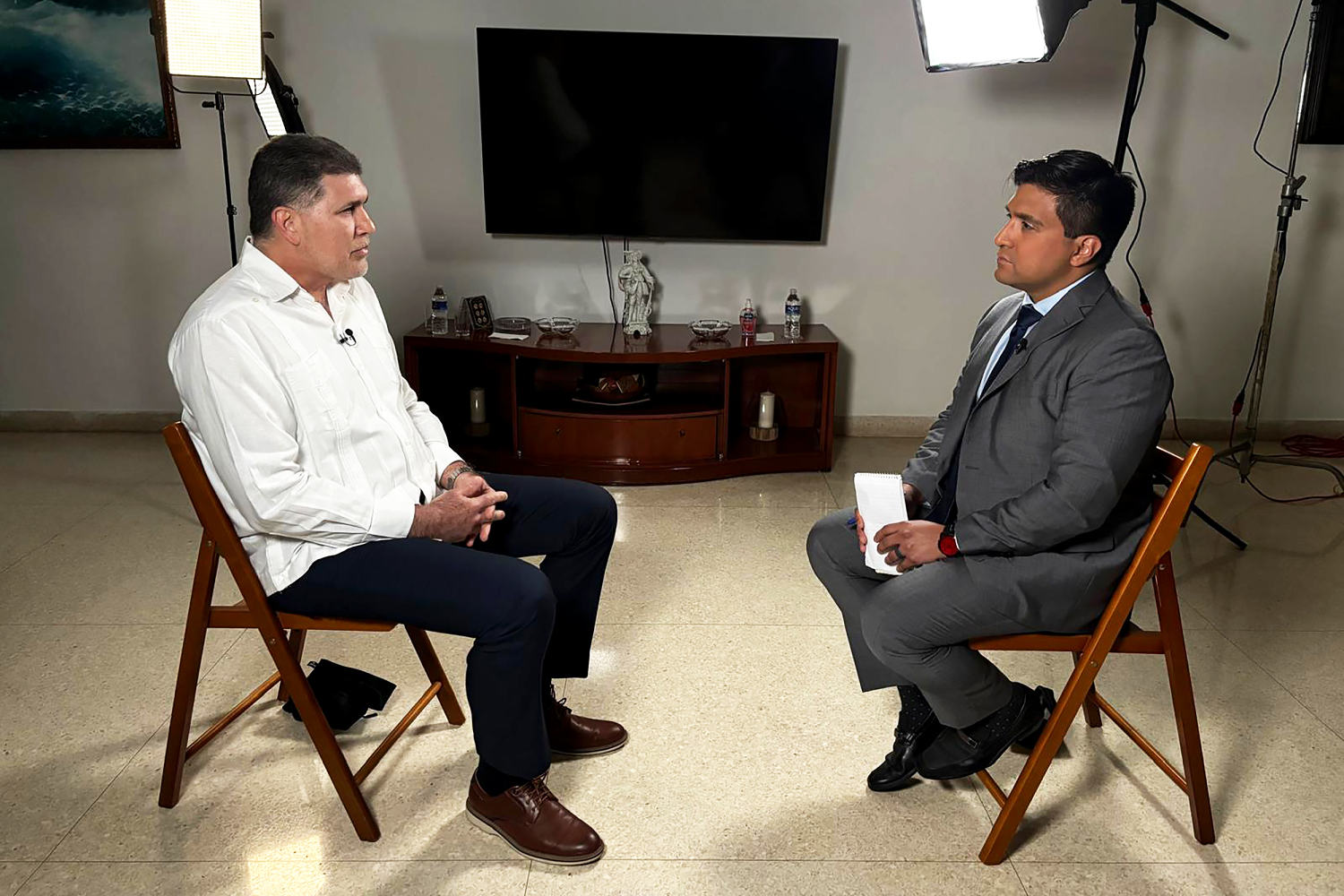
Cuba has spent decades as a fortress of "no." No to private property. No to external influence. No to the very people who fled its shores. Yet, the walls are thinning. Alejandro Gil, the island’s economy minister, recently stood before the National Assembly and uttered words that would have been heresy a generation ago. Cuba will now allow its nationals living abroad—the diaspora, the exiles, the "gusanos" who became the backbone of Miami—to invest in and own businesses on the island.
This isn't just a policy shift. It is a surrender to reality.
The Architect of a Second Chance
Consider a man we will call Mateo.
Mateo left Mariel in 1980. He spent forty years fixing air conditioners in the brutal humidity of West Palm Beach. He is retired now, sitting on a modest nest egg and a lifetime of technical expertise. Back in his childhood neighborhood of Centro Habana, his cousin’s son is trying to run a small auto repair shop. The kid is brilliant with a wrench but has no parts, no diagnostic tools, and no capital to expand.
Under the old rules, Mateo was a tourist. He could bring a heavy suitcase of Spark plugs and Spanish ham, stay for two weeks, and cry when he left. He was a source of charity, never a partner. If he wanted to fund a new hydraulic lift for the shop, he had to do it under the table, risking the seizure of the business and the "informal" loss of his savings. The state owned the dirt, the walls, and the future.
Now, the Cuban government is inviting Mateo to be a stakeholder.
The "czar" of the economy is looking at a ledger that no longer balances. The pandemic strangled tourism. The sanctions tightened like a garrote. The state-run enterprises are wheezing. To survive, the island needs oxygen. It turns out that oxygen speaks with a Cuban accent and lives in Florida, Madrid, and New Jersey.
The Physics of the Pivot
The mechanics of this change are rooted in the "mipymes"—the micro, small, and medium-sized enterprises that were legalized in 2021. For the first time since the revolutionary "Revolutionary Offensive" of 1968, private business was given a legal heartbeat. But it was a local heartbeat only.
By opening the door to those abroad, Cuba is attempting to tap into a wealth reserve estimated in the billions. This isn't just about the cash. It is about the supply chains. A Cuban American in the logistics business in New Orleans can now, theoretically, provide the wholesale inventory that a private grocery store in Matanzas desperately needs.
It is an admission that the revolution can no longer provide the bread, so it must allow the "prodigal sons" to bring the flour.
But the skepticism is a physical weight. You can feel it in the coffee shops on Calle Ocho.
Why now? Why, after decades of branding the diaspora as traitors, is the government suddenly holding out a collection plate? The trust is not just broken; it was ground into dust long ago. Potential investors are asking if this is a genuine transformation or a "piñata"—a moment where the government lets people build value only to smash it and take the treats when the crisis passes.
The Invisible Stakes
The risk for the investor is financial. The risk for the Cuban resident is existential.
When a government opens its doors to foreign-based nationals, it creates a new class of citizen. There is the Cuban who stayed, who endured the "Special Period" of the 90s, who walked to work when there was no fuel, and who waited in bread lines that stretched around the block. Then there is the Cuban who left, who prospered, and who now returns with the power to buy the block.
The tension is palpable. If Mateo buys the repair shop, does he become a hero who provides jobs, or a landlord who reminds everyone of what they lost?
The government is betting that the need for a functioning economy will outweigh the sting of wounded pride. They are banking on the "longing for home" being a stronger motivator than the "memory of the exit."
It is a gamble on the heart.
The Reality of the "New" Cuba
It is vital to look at the numbers behind the narrative. Cuba’s economy shrank significantly during the pandemic years, and the recovery has been glacial. Inflation has turned the Cuban Peso into a ghost of its former value. The black market isn't just a side alley anymore; it is the main thoroughfare.
The introduction of foreign-owned private business is an attempt to formalize that shadow economy. If the government can't stop the flow of dollars, they might as well tax the storefronts those dollars build.
The rules, however, remain frustratingly opaque. Will these investors have the right to repatriate their profits? Will they be able to hire and fire without a state intermediary? In the past, the state acted as the employer of record, taking a massive cut of the worker's salary before it ever reached the person doing the labor.
If the "Mateos" of the world are going to come back, they will demand a level of control that the Communist Party has historically been loath to give.
The Bridge Made of Bread and Steel
The true story of this economic shift isn't found in the speeches of the National Assembly. It is found in the quiet conversations between brothers separated by 90 miles of water and 60 years of history.
"I can send you the tractors," the brother in Miami says.
"But will they let me keep them?" the brother in Pinar del Río asks.
That question is the pivot point for the entire nation. If the answer is a sustained, verifiable "yes," then Cuba begins a transition toward something resembling the Vietnamese or Chinese models—a socialist political shell with a roaring, private engine.
If the answer is "maybe," the stagnation continues.
The tragedy of the Cuban economy has always been the waste of its most valuable resource: the ingenuity of its people. Cubans are masters of "la lucha"—the struggle. They can keep a 1954 Chevy running with boat parts and prayer. They can turn a balcony into a pig farm. They are natural entrepreneurs born of necessity.
By allowing the diaspora back in, the government is finally admitting that "the struggle" shouldn't have to be so hard. They are acknowledging that a nation is not just the people within its borders, but everyone who carries its flag in their wallet.
The walk back to Havana is a long one. It is paved with old grievances, confiscated homes, and bitter political rhetoric. It is a path littered with the ghosts of failed reforms.
But for the first time in a lifetime, there is a signpost pointing toward the front door.
Mateo looks at the photo of the auto shop on his phone. He sees the grease on the kid’s face. He sees the empty shelves. He thinks about the lift he could buy, the tools he could ship, and the way the air smells in the morning near the Malecón when the salt spray hits the warm stone.
He isn't thinking about the "czar." He isn't thinking about the Gross Domestic Product.
He is thinking about the fact that, for the first time since he jumped into the surf in 1980, he might be allowed to own a piece of the horizon he left behind.
The door is ajar. Whether it stays open depends on whether the men in suits in Havana realize that the people they once called ghosts are the only ones left who can breathe life into the ruins.
The coffee is brewing. The ledger is open. The silence of the island is waiting for the sound of hammers and the hum of new engines.
And Mateo is looking for his passport.