The kettle sat dry on the burner, a small monument to suspended routine.
For hours, houses across Kent shared a specific kind of quiet. It was not the peaceful hush of a Sunday morning or the deep stillness of a midnight snowstorm. It was an anxious, watchful quiet. It lived in the flick of a kitchen switch that yielded only a hollow hiss. It lived in the sudden, sharp realization of how thin the line is between modern comfort and raw, medieval vulnerability.
Water is an invisible tenant in our lives. We do not greet it, we do not thank it, and mostly, we forget it is there until it vanishes.
Consider what happens when 7,400 properties in South East Water territory lose that invisible tenant all at once.
At first, there is disbelief. You turn the handle again, harder this time, as if brute force might negotiate with gravity and infrastructure. You check the sink in the bathroom. Same hiss. Then, the mental inventory begins. How much is left in the Brita pitcher? Is there a half-bottle of sparkling water in the back of the fridge? Panic does not arrive in a cinematic wave; it creeps in through the throat, dry and insistent.
Behind the scenes, miles beneath the asphalt and hidden within pumping stations, a different kind of panic was being managed by engineers whose names we will never know.
South East Water crews moved through the damp English air with wrenches and meters, chasing ghosts in the pipes. Water distribution is a silent ballet of pressure zones, valves, and electrical grids. When a line fails, the system does not simply leak; it collapses inward upon itself. Restoring supply to thousands of homes is not as simple as flipping a master switch. Every kilometer of main must be pressurized slowly, methodically, to prevent catastrophic secondary bursts that would plunge neighborhoods right back into drought.
Think of it as untangling a massive knot of silk underwater. Pull too fast, and the thread snaps.
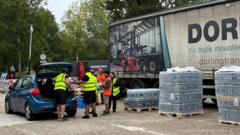
In living rooms across the affected postcodes, the hours stretched. Parents calculated how to wash toddlers without a bath. Local shopkeepers watched bottled water shelves empty with the speed of a tide going out. Neighbors who usually offered nothing more than a polite nod across a hedge suddenly found themselves knocking on doors, trading updates gleaned from erratic smartphone refreshes on utility company feeds.
We talk about infrastructure in numbers. We talk about capital investments, regulatory targets, and cubic meters per second. But infrastructure is actually an empathy network. It is the physical manifestation of a social contract. When the water stops flowing, the contract is breached, and we are instantly reminded of our shared fragility.
Then came the shift.
It started as a deep, subterranean rumble beneath the floorboards. A vibration that experienced homeowners recognize instantly—the sound of air sputtering out of a main, followed by a wet, heavy shudder.
In thousands of kitchens, the first drop appeared at the tip of the faucet. Brownish at first, stained with the sediment of disturbed iron, clearing slowly to a bright, cold transparency.
Relief is a strange emotion. It does not feel like joy. It feels like gravity returning. It feels like the dropping of shoulders that had spent half a day pinned to ears. People turned taps on and just watched them run, mesmerized by the sheer, ordinary miracle of municipal engineering doing what it was built to do.
The 7,400 properties are back online now. The pipes are full. The kettles are boiling. But the quiet memory of those dry hours remains, etched into the copper and steel of homes that briefly remembered what the world looks like before the modern age.