The fluorescent hum of the courthouse ceiling lights never changes, whether it is high noon or the heavy blue drag of late afternoon. Down the hall, behind a heavy oak door marked only by a brass plate, twelve people sit in a room that smells faintly of old carpet and floor wax. They have been there for three days. Outside, the world moves with an indifferent roar of traffic and sirens, but inside that room, time has fractured.
Silence. Then, a chair scrapes against linoleum.
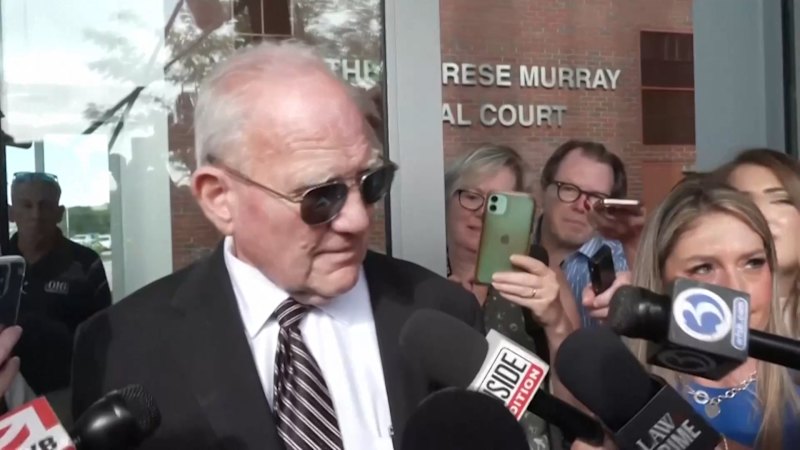
This is the third day the Lindsay Clancy jury has packed up their notepads, turned off their digital screens, and walked out without an answer. Three days of looking at each other across a table, weighing the jagged pieces of a tragedy that defies easy categorization. When the court officer announces yet another day has ended in a deadlock of quiet uncertainty, the legal teams file out with neutral masks over exhausted eyes. Defense attorneys step up to bank of microphones in the dimming light, offering measured phrases to the sea of reporters. They speak of patience. They speak of gravity. They speak of a jury wrestling with the heaviest possible burden.
We want our justice system to move like an engine. Pull the lever, apply the law, extract the verdict. Black or white. Guilty or not. But human minds do not process devastation like a calculator. When a jury stays out this long, they are not merely tallying votes. They are standing in the wreckage of a life, trying to find where the floorboards gave way.
Consider what happens when a mind breaks so thoroughly that the external world ceases to look real. In the case of Lindsay Clancy, the defense has pointed toward a severe psychiatric fracture—postpartum psychosis so profound that the person who loved her children and the person who took their lives existed in two entirely different dimensions of reality. To understand this requires a leap across an abyss. It demands that twelve ordinary citizens look past the sheer horror of the final act and examine the invisible, chemical storm that preceded it.
The defense attorneys know this better than anyone. They stand before the cameras not to spin a narrative, but to remind the public that a trial of this magnitude is not a sporting event. Every hour the jury spends behind closed doors is an hour they are picking apart medical records, psychiatric testimonies, and the harrowing timeline of a mental health system that failed to catch a free-fall.
When you spend years walking through criminal courtrooms, you learn a hard truth. Most crimes are born of malice, greed, or sudden, blinding rage. But every once in a while, a case arrives that completely scrambles the vocabulary of the law. It forces us to ask terrifying questions about the fragility of human consciousness. What happens when the brain turns against its own protectiveness? Who is left to stand trial when the person who committed the act was swallowed whole by an illness they never saw coming?
The jury is searching for a hook in the dark. They are looking at witness statements from nurses, doctors, and family members who watched the unraveling in real time. They are debating the fine, razor-thin line between legal insanity and overwhelming despair. Every piece of evidence is a heavy stone they must turn over, examine from every angle, and place back down.
Day three ends. The hallways empty out. The microphones are packed away into padded cases. The cameras power down, their red recording lights winking out one by one.
Tomorrow, the sun will rise over the courthouse steps. The doors will unlock. The twelve jurors will walk back into that room, take their seats around the table, and look at each other once more. The silence will resume. And somewhere in the space between what the law demands and what the human mind can bear, the agonizing work of finding the truth will begin again.