The clock on the wall does not care about wrinkles. It does not care about arthritis, or failing kidneys, or the way a man's hands tremble when he tries to hold a plastic cup of water. Time simply ticks. For seventy-four years, time accumulated for a man living behind concrete and razor wire, turning his hair to ash and his skin to parchment. Then, on a Tuesday evening, the state stopped the clock entirely.
Numbers are cold things. They reduce human existence to ledger entries. Fourteen. That was the count. Fourteen state prisoners put to death this year alone within the boundaries of Florida. Just a statistic on a spreadsheet, an administrative footnote in the massive machinery of criminal justice. But numbers do not bleed. Numbers do not feel the sting of a chemical compound sliding into a vein while witnesses watch from behind thick glass, checking their watches to see if dinner reservations will be kept.
To understand what happens in a execution chamber, you have to look away from the numbers and look at the hands.
Consider the sheer weight of decades. When an individual enters the prison system as a young man and exits it only horizontally, decades pass like geological epochs. The world outside changes entirely. Entire generations grow up knowing the internet, smartphones, and a digital reality that would look like science fiction to someone locked away in the late twentieth century. Inside, the calendar shrinks to the distance between breakfast and lock-in.
By the time someone reaches seventy-four years of age, the person who committed the crime and the person strapped to the gurney are biologically distinct entities. Cells have replaced themselves a thousand times over. Memories have frayed into loose threads. Yet the legal fiction persists that retribution must be exacted, exacting a pound of flesh from a body that time has already half-consumed.
Critics of capital punishment often lean heavily on economics, pointing out the exhaustive appeals process, the millions of taxpayer dollars funneled into decades of litigation, and the sheer inefficiency of maintaining a death row. Others point to the terrifying finality of the error rate, knowing that the justice system is built by humans, and humans are notoriously bad at being infallible.
Listen to the silence that follows an execution. It is a heavy, suffocating silence.
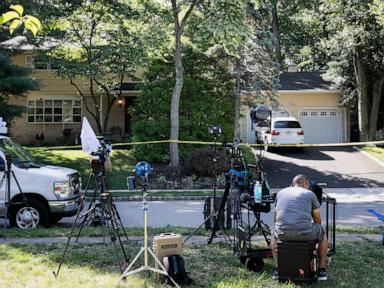
The witnesses shuffle out into the parking lot. The media vans fold up their satellite dishes. The prison guards return to their posts, locking doors and checking counts as if nothing out of the ordinary has transpired. But the air feels different. A line has been crossed. Another life has been subtracted from the sum total of humanity by deliberate, calculated state action.
Age does not grant immunity. The law is blind, they say. Sometimes, it is blind because it refuses to see the frail, elderly human being lying beneath the white sheet, reduced once more to a mere statistic on an end-of-year report. Fourteen. And the year is not yet finished.
The light fades over the Florida pines. Somewhere nearby, a telephone sits silent on a desk. The paperwork is signed. The pulse has flatlined. Another day closes, leaving behind only the long, quiet shadow of what cannot be undone.