Midnight does not sound the same everywhere. In Florida, it arrives with the heavy, wet heat of a southern swamp, cicadas screaming a frantic rhythm against the screen wire. In Missouri, it slips across the flat, dark fields of the midsection, smelling of damp earth and approaching frost. In Texas, it drops over the concrete expanse like a heavy velvet curtain, swallowing the noise of the highway and the neon hum of all-night diners.
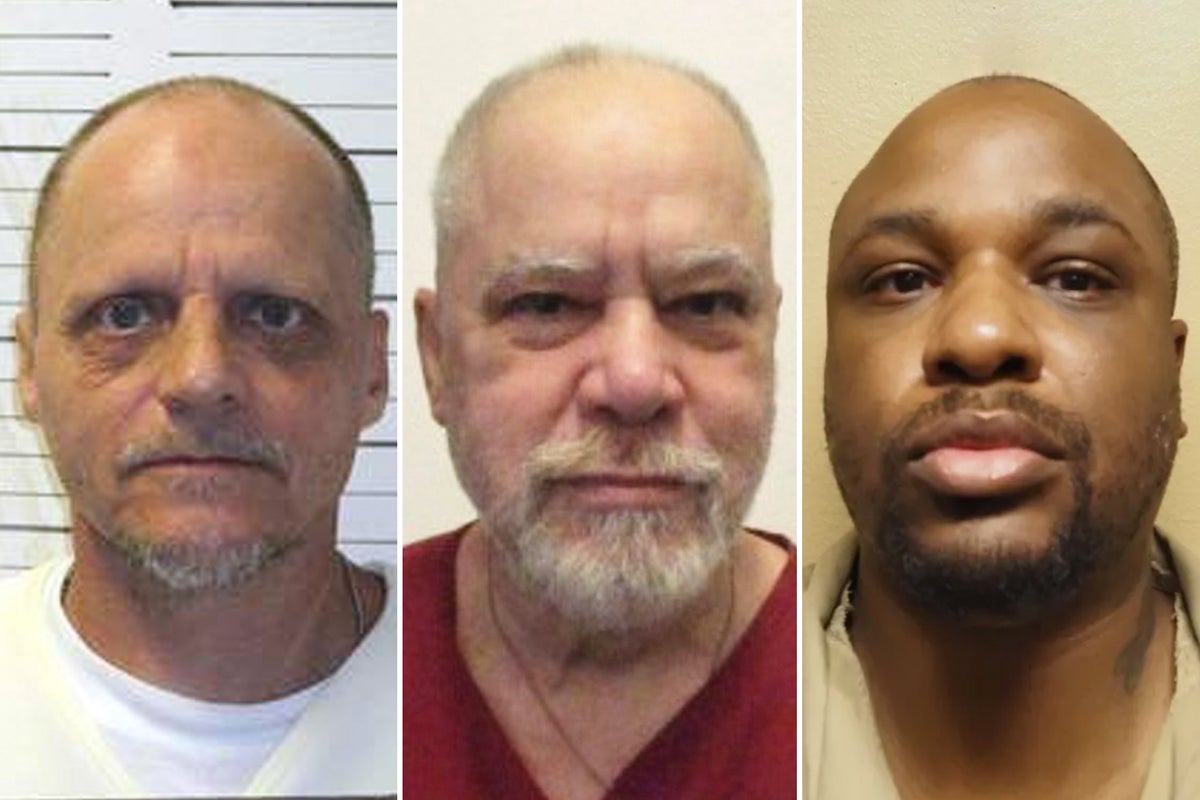
On a single, unremarkable day, three men lie strapped to three different gurneys in three distinct rooms separated by hundreds of miles of asphalt and pine. Also making waves lately: Why Trump 2028 Talk Hits a Wall Against the Constitution.
Time collapses.
We talk about the machinery of justice as if it were a clock—cold, precise, self-lubricating. We picture gavels falling, ink drying on parchment, the measured cadence of appellate judges reading opinions that span fifty single-spaced pages. We imagine a system that moves at the speed of thought, or at least the speed of caution. But walk inside an execution chamber five minutes before the fluids begin to flow, and you realize something terrifying about the machinery. It is made of human meat, nervous sweat, and the unbearable weight of finality. Additional insights into this topic are detailed by The New York Times.
Consider what happens when the calendar clusters its grief.
Three lives. Three separate dockets. Three distinct histories of trauma, failure, and the ultimate transgression. To the federal judiciary and the respective state supreme courts, it is a Tuesday. To the clerks drafting midnight stays that never arrive, it is a blur of emergency motions filed in fonts that look frantic on a glowing screen. To the families of the victims, it is the ragged edge of a wound they thought might finally scar over. To the families of the condemned, it is a countdown measured in heartbeats and the click of a warden’s ballpoint pen.
I remember the smell of the room when the state takes a life. It is not the smell of cleansing fire or high-minded philosophy. It is the sharp, clinical tang of antiseptic mixed with the unmistakable odor of pure, unadulterated terror—a smell that lingers in the fabric of the witnesses' coats long after they reach their cars in the parking lot.
We must look closely at how we arrived at this convergence.
The death penalty in America is not a uniform river. It is a series of isolated locks and dams, each state operating its own private theater of retribution. When executions bunch together on the calendar—as they occasionally do due to overlapping warrant expirations, the clearing of judicial bottlenecks, or the sudden availability of specific lethal substances—it creates an illusion of routine. It suggests a factory line operating at standard capacity.
Nothing could be further from the truth.
Every single execution requires an army of executioners, spiritual advisors, defense attorneys who have not slept in seventy-two hours, and witnesses who must stare through reinforced glass at a man breathing his last borrowed air. Multiply that by three, happening simultaneously across three time zones, and the logistical impossibility reveals the psychological toll. The state splits its own focus. The public splits its attention. The horror is diluted by geography, yet amplified by its sheer symmetry.
Three deaths in a day.
Let us trace the invisible lines connecting these men, not by their crimes—which have been parsed, litigated, and cataloged in the grim archives of criminal reports—but by their humanity. They are broken vessels, almost universally marked by childhoods that read like case studies in catastrophic neglect. They are the downstream effects of violence passed down like a family heirloom.
When a society decides to kill a man, it performs a complex moral math. It weighs the absolute value of public safety against the irrevocable nature of state-sanctioned homicide. It asks us to believe that the government can act as a flawless arbiter of life and death, even as error rates and overturned convictions haunt the history of capital jurisprudence.
And yet, on triple execution days, the philosophical debate retreats into the background, replaced by the stark, ticking reality of the clock.
The first execution begins as the sun hits its zenith in the East. The protocol is rehearsed to the point of exhaustion. The IV team—often anonymous, their licenses protected by statutory shields—finds a vein in a scarred arm. The chemical cocktail is verified twice, then a third time. In the viewing gallery, the silence is so profound that the hum of the air conditioning sounds like a jet engine.
Somewhere in the Midwest, two hours later, the second man is walking the short distance from the holding cell to the chamber. He is wearing the orange or white of the condemned. His legs are shackled, a chain dragging softly against the linoleum. He makes a final statement—perhaps defiant, perhaps broken, perhaps a whisper directed at a chaplain who holds a worn leather Bible.
By the time the third state prepares its room as dusk settles over the southern plains, the exhaustion of the day has settled into the bones of everyone involved. The reporters have filed their stories. The protesters have packed up their placards and folded their lawn chairs. The legal teams have logged off their computers, their petitions rejected by courts that had grown numb to the emergency appeals.
The final plunger is pushed.
We are left with a statistical anomaly that feels less like justice and more like an industrial process.
The danger of days like this is not merely the moral weight of the acts themselves, but the normalization of them. When three men die in a single day, the event risks becoming a media spectacle, a morbid curiosity consumed between sports scores and weather reports. It flattens the profound tragedy of murder—both the murders that put these men on the row and the murders the state is now committing in return—into a routine news cycle.
We must resist the flattening.
Every execution is an individual rupture in the social fabric. It is a deliberate choice made by a political community to step outside the principle of rehabilitation and embrace the permanence of the grave. To group them together by date is to treat human extinction as a scheduling conflict.
As the night deepens, the three states return to their ordinary rhythms. The traffic picks up on the interstate. The guards go home to their families, washing the strange, sterile smell of the death house from their hands with ordinary soap. The victims' families try to sleep, finding that the absence they mourned yesterday is just as heavy today. And the condemned men—now cold, now absent from the ledger of the living—leave behind only the questions we refuse to answer about who we are when we hold the power over life and death.