The sea does not care about sanctions. It is a vast, indifferent canvas of grey-blue swells that swallows the heat of the Caribbean sun and hides the secrets of the men who traverse it. Somewhere off the coast of Matanzas, a rust-streaked hull cuts through the water, carrying more than just crude oil. It carries the weight of two empires, the desperation of a crumbling power grid, and the silent prayers of a mother in Havana who just wants the lights to stay on long enough to cook dinner.
This is not a story about international law. It is a story about a ship, a shadow, and the friction between high-level geopolitics and the low-level hum of an empty refrigerator.
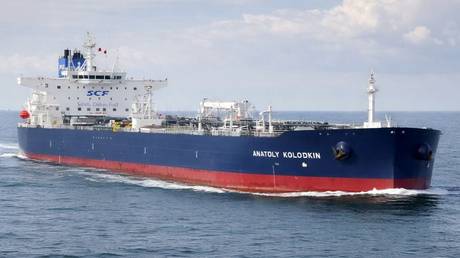
The vessel is the Liriope. It flies a flag of convenience, a common mask in the high-stakes game of maritime hide-and-seek. But its origins are no secret to those who track the digital breadcrumbs of global trade. It came from Russia. It is headed for Cuba. In the boardrooms of Washington, this 600-foot tanker is a provocation—a floating middle finger to a decades-old blockade designed to starve a regime of its lifeblood. In the streets of Matanzas, it is something else entirely. It is hope.
The Anatomy of a Ghost
To understand why a single ship matters, you have to understand the math of a blackout.
Cuba’s energy infrastructure is a relic. It is a patchwork quilt of Soviet-era thermal plants that groan under the pressure of constant use and a lack of spare parts. When the fuel runs dry, the grid fails. When the grid fails, the fans stop. The mosquitoes descend. The medicine in the clinic’s small fridge begins to warm. The silence that follows a power failure in a tropical city is heavy, thick with the smell of stagnant air and the quiet frustration of eleven million people.
For months, the United States has tightened the screws. The goal is simple: cut off the flow of Venezuelan and Russian oil to force a political reckoning. It is a strategy of attrition. But oil is like water; it finds the cracks.
The Liriope is one of those cracks.
Imagine the captain of such a vessel. We will call him Marek. He is not a politician. He is a man who understands the specific gravity of crude and the way a ship handles when it is riding low in the water, burdened by 600,000 barrels of heavy oil. Marek knows that his AIS—the Automatic Identification System that broadcasts his position to the world—is a liability. He knows that at certain points in the journey, the signal might "flicker." He knows that the eyes of satellites are watching his wake, tracking the thermal signature of his engines as he weaves through the Atlantic.
The Invisible Stakes of a Cold Trade
The "blockade" is often discussed as if it were a physical wall in the water. It isn't. It is a web of banking restrictions, insurance blacklists, and diplomatic threats. If a company insures the Liriope, that company loses access to the American market. If a port provides it with fresh water, that port risks being shunned by the world’s largest economy.
This creates a shadow economy. Every gallon of oil that reaches the pier at Matanzas comes with a "risk premium." The price isn't just the market rate for Brent crude; it’s the cost of the bribe, the cost of the offshore transfer, and the cost of the long, circuitous route taken to avoid detection.
Russia provides this oil not out of charity, but out of a calculated need for relevance. By fueling the Caribbean’s most defiant island, Moscow reminds the West that its reach is not limited to the borders of Eastern Europe. It is a chess move played with tankers instead of knights.
But let’s look closer at the board.
Consider a small bakery in Old Havana. The owner, a man whose hands are permanently dusted with flour, depends on a diesel generator that sounds like a dying tractor. When the tankers don't arrive, the diesel price on the black market triples. He has to choose between raising the price of bread—a staple his neighbors can barely afford—or letting his dough rot in the heat.
To him, the Liriope is not a violation of the Monroe Doctrine. It is the reason he can open his doors tomorrow morning.
The Dance of the Mid-Sea Transfer
How does a ship like this actually make it? It rarely sails a straight line.
One of the most common tactics in this underworld of energy is the "ship-to-ship transfer." Two tankers meet in the open ocean, far from the prying eyes of coastal patrols. They tether themselves together, giant steel beasts huddling in the dark, and exchange their cargo through thick, pulsing hoses.
One ship might be "clean," with a legitimate paper trail. The other is the "ghost." By the time the oil reaches its destination, its "birth certificate" has been forged so many times that it is legally unrecognizable. It is a shell game played on a global scale.
The Liriope, however, seems to be skipping the subtleties. It is steaming toward the terminal with a brazenness that suggests the stakes have shifted. Perhaps Moscow is tired of the shadows. Perhaps Havana’s need has become so acute that the risk of a public confrontation is outweighed by the risk of total darkness.
The Friction of Reality
There is a specific kind of tension that exists when a ship enters territorial waters under the threat of intervention. The crew feels it in the vibration of the deck. The diplomats feel it in the clipped tone of their cables.
The U.S. State Department issues warnings. They speak of "destabilizing influences" and "violations of international norms." And they are right, from a certain perspective. The influx of Russian energy provides a lifeline to a system that many believe needs to change. It bypasses the financial structures that the world uses to maintain order.
But the "order" looks very different when you are standing in a three-hour line for subsidized rice.
Logic dictates that if you stop the oil, you stop the regime. But history suggests that the regime is often the last thing to stop. The people stop first. They stop traveling. They stop producing. They stop dreaming of anything beyond the next twelve hours of electricity.
The Liriope represents a breakdown of the consensus. It is a physical manifestation of a multipolar world where the "world’s policeman" no longer patrols every beat. When a Russian tanker approaches a Cuban port, it signals that the tools of 20th-century diplomacy—sanctions, embargos, blockades—are losing their edge against the blunt reality of 21st-century energy needs.
The Pier at Matanzas
The port of Matanzas is dominated by massive silver tanks, some of them still scarred by the lightning-sparked fire that devastated the facility years ago. It is a place of industry and rust. As the Liriope draws closer, the tugboats go out to meet it. These small, powerful vessels nudge the giant into its berth with a strange, mechanical tenderness.
The hoses are connected. The pumps begin to throb.
Deep in the bowels of the island’s power stations, engineers prepare for a "surge." They watch dials that have been hovering in the red for weeks. They wait for the pressure to rise. For a few weeks, or perhaps a month, the "scheduled" blackouts might be shortened. The fans will spin. The streetlights will flicker to life, casting a yellow glow over the crumbling colonial facades.
We often talk about these events in the abstract—as "flows" of "commodities" between "actors." But there is nothing abstract about the heat of a Cuban night without power. There is nothing abstract about the roar of a Russian engine or the smell of unrefined crude oil.
The Liriope will eventually unburden itself and slip back out to sea, lighter and higher in the water. It will return to the grey-blue swells, its mission complete, its hull a little more weathered. Behind it, it leaves a temporary reprieve and a lingering question about the true cost of a blockade that can be bypassed by anyone with enough steel and enough spite.
The ship is a symptom. The disease is a world where the simple act of keeping the lights on has become a form of war.
As the sun sets over the Florida Straits, the silhouette of the tanker disappears into the haze. The politicians will continue to argue over the legality of its journey. The analysts will update their spreadsheets. But for the man in the bakery, the only thing that matters is the steady, comforting hum of a machine that finally has enough fuel to run.
The lights are on in Havana. For now.
The ocean remains silent, holding the secrets of the transit, indifferent to the flags we fly or the lines we draw in the water.