Blisters do not form all at once. They start as a whisper. A quiet friction against the heel, a slight sting masked by the adrenaline of the first ten miles, and then, inevitably, a raw, burning reality that demands your absolute attention.
Most of us spend our lives trying to outrun discomfort. We adjust the thermostat, we upgrade our footwear, we take the elevator. We curate our existence into a series of climate-controlled transitions from one soft surface to another. We watch the world through glowing rectangles, scrolling past crises and triumphs with a flick of a thumb, detached, safe, and entirely stationary.
Then came HMBLZAYY.
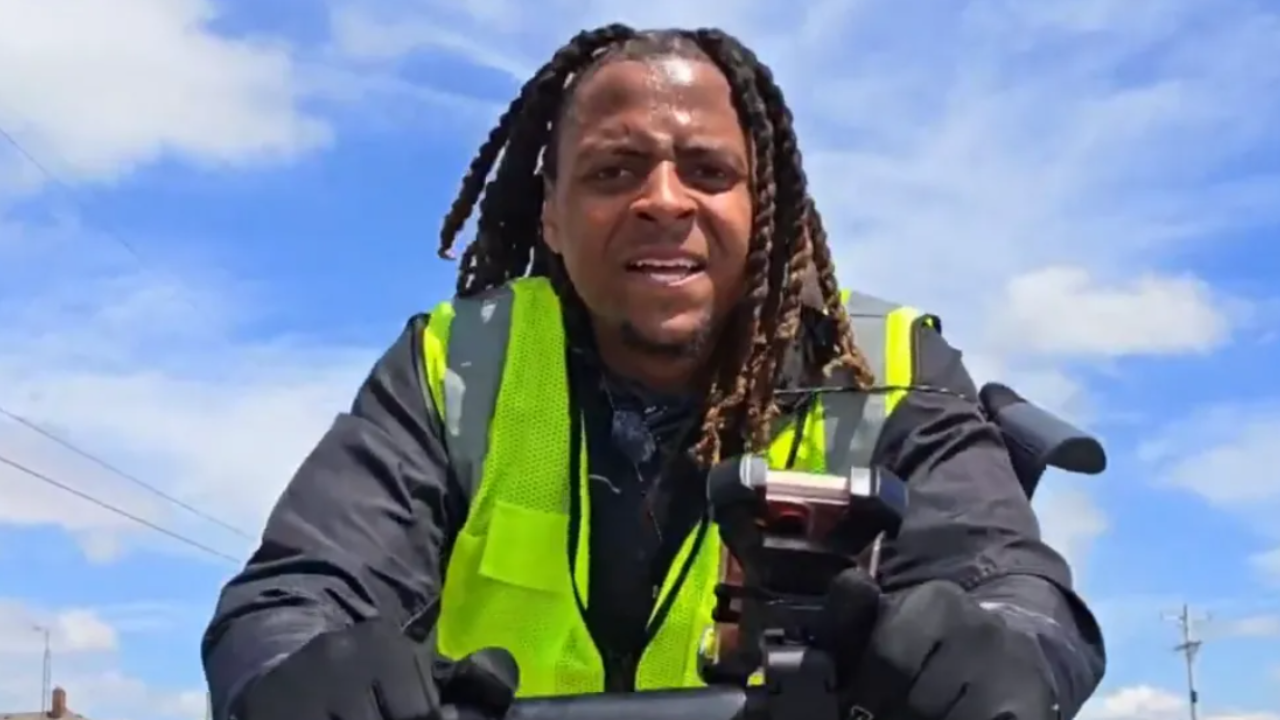
You might know him by his handle, a name tossed into the fast-moving river of Twitch streams and digital chatter. Or perhaps you caught a fleeting clip of a bearded, weather-beaten figure standing on a highway shoulder, holding a phone aloft as semi-trucks roared past at eighty miles per hour. But numbers on a screen rarely tell the truth about weight. They do not capture the sheer, mind-numbing monotony of an asphalt horizon stretching for days without a single change in elevation.
He walked three thousand miles across America.
Pause for a second and let the geography settle into your bones. Three thousand miles is not a trip. It is an eviction from comfort. It is stepping out of your front door in the humid sprawl of the East Coast, or the salty breeze of the West, and deciding that every single yard between here and the other side of the continent will be measured strictly by the rotation of your ankles.
Why?
The easy answer is charity. Almost two hundred thousand dollars raised for good causes. A neat, respectable figure that looks impressive on a quarterly report or a news ticker. People love numbers because they are clean. They fit inside neat little boxes. Two hundred thousand dollars buys things. It funds research. It feeds families. It builds structures.
Yet, reducing this journey to a fundraising tally misses the entire point of what happened out there on the blacktop.
Think about what it means to stream your life to thousands of strangers while your body slowly breaks down. Imagine waking up at dawn in a tent pitched dangerously close to an interstate off-ramp, your muscles screaming from yesterday's twenty-six miles, knowing that today requires twenty-seven more. Your joints ache. Your throat is dry. Your phone battery is at twelve percent. And thousands of people are watching, waiting, typing in the chat, demanding entertainment, connection, or meaning.
In the beginning, it was just a crazy idea. A streamer taking his community outside. But the internet is a notoriously fickle beast. It thrives on spectacle for five minutes before scrolling away to the next shiny distraction. To keep an audience engaged for months while doing something as profoundly un-cinematic as putting one heavy foot in front of the other for ten hours a day? That requires a different kind of magic.
It requires vulnerability.
When you strip away the studio lighting, the custom mechanical keyboard, and the carefully edited video essays, what is left? A guy in a faded hoodie, sweating through his shirt, talking to a camera mounted on a cart.
There were days when nobody donated. Days when the chat was quiet, moving at a lazy crawl while the rain drove sideways into his face. Days when the isolation must have felt heavier than the backpack. I remember—or rather, behavioral psychology tells us—that human beings are wired for tribal connection. We yearn to be seen. We want to know that our suffering matters, that our presence leaves a dent in the world. HMBLZAYY wasn't just walking across a map; he was dragging a digital campfire across a vast, disconnected wilderness, inviting millions of isolated people to sit around it with him.
The chat became a living, breathing ecosystem. Insomniacs in Tokyo, lonely teenagers in suburban bedrooms, shift workers grinding through graveyard shifts in Ohio—all of them walked those miles with him. When his shoes disintegrated, viewers sent new ones. When he hit a wall of exhaustion, the community rallied, turning a personal endurance test into a collective crusade.
Consider the scale of the American landscape. It is not uniform. It shifts violently.
There are the endless, flat expanses of the plains where the sky dominates everything, making you feel microscopic and entirely exposed. There are the grueling inclines of mountain passes where every breath tastes thin and metallic. There are the desolate stretches where towns are marked only by rusted grain silos and abandoned gas stations, places where time seems to have stopped forty years ago.
Through all of it, the stream stayed live.
People tuned in while eating breakfast. They checked in during their lunch breaks. They fell asleep to the rhythmic crunch of gravel and the low hum of wind noise against the microphone. It became a strange, modern ritual. A digital pilgrimage where the pilgrim was broadcasting his blisters in real-time.
We live in an era defined by cynicism. Every institution feels hollowed out. Every public figure is suspected of having a hidden angle, a monetized motive, a PR team pulling the strings behind the curtain. Authenticity has become a marketing buzzword, weaponized by brands trying to sell us sneakers and subscriptions.
That is why this journey felt so jarring. It was too absurd, too punishing, and frankly too stupid to be a corporate marketing stunt. No brand manager would sign off on a campaign where the protagonist develops chronic tendonitis and loses twenty pounds of muscle on camera just to prove a point about human endurance.
It was real because it hurt.
Step.
Breathe.
Step.
Imagine the sheer psychological fortitude required to look at a map, point your finger at a destination three thousand miles away, and accept that the only way to get there is by walking. Not driving. Not flying. Walking. The speed of the human body is roughly three miles an hour. At that velocity, the world refuses to become a blur. You notice the discarded lottery tickets in the gutter. You smell the pine trees long before you see the forest. You watch the seasons change across state lines, feeling the temperature drop degree by agonizing degree.
And all the while, the counter on the screen kept climbing.
Five thousand dollars.
Twenty thousand.
Fifty thousand.
One hundred thousand.
Each milestone wasn't just a financial achievement; it was a collective exhale from an audience that desperately wanted to believe that good things can still happen through sheer, unadulterated stubbornness.
When the final miles finally ticked down, when the ocean air of the destination coast finally hit his face and the horizon stopped being an abstract goal and turned into actual water, the reaction wasn't explosive celebration. It was exhaustion. A profound, bone-deep quiet.
He didn't conquer America. America let him pass. The road didn't care who he was, how many followers he had, or how much money he raised for charity. The highway exacted its toll in sweat, blood, and ruined footwear, just as it would for anyone foolish enough to challenge it on foot.
Yet, something fundamental shifted.
Thousands of people who started as passive spectators ended up as participants in a grand, shared story. They learned that apathy is a choice, that distance is just a series of single steps, and that even in the most digitized, fragmented version of modern life, we still possess an ancient, primal capacity to pull together and carry one another across the finish line.
The livestream eventually ended. The camera blinked off. The screen went black.
Somewhere out there, the highway is still stretching across the continent, waiting for the next fool brave enough to walk it. And the rest of us are left staring at our glowing rectangles, wondering what we are going to do with our own two feet.