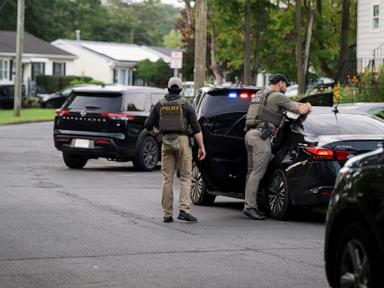
Dawn arrives without applause in towns where the highway meets the county line. The light hits the windshields of idling sedans, casting long, gray shadows across asphalt that has seen too many quiet mornings. For years, the tension in these places was palpable. It hung in the air like dust after a dry harvest. Every brake light at an intersection, every sudden flash of blue and red in the rearview mirror, carried a weight far heavier than a routine traffic infraction. People held their breath.
Then came the memo.
Quietly, without the fanfare of congressional speeches or prime-time broadcasts, Immigration and Customs Enforcement issued new operational guidance. It laid out a framework of explicit boundaries regarding vehicle stops, establishing a threshold where suspicion is no longer enough to warrant flashing lights on a municipal street. To a bureaucratic eye, it was administrative prose. To the people living on the other side of that windshield, it was a sudden shift in the atmospheric pressure.
Rules change. But fear has a long memory.
Consider what happens next in a hypothetical scenario on State Route 9. Maria leaves her shift at the bakery at 5:00 AM. Her tail light has a small crack—a minor mechanical nuisance she has been meaning to fix since last Tuesday. Under older, looser interpretations of enforcement authority, that single crack was an open door. It was an invitation for a prolonged detention, an inquiry into status, a sudden derailment of an ordinary Tuesday morning into an administrative labyrinth.
Now, look at the memorandum's core constraint. It draws a sharp, legal perimeter. Routine traffic management and minor equipment infractions cannot serve as a backdoor proxy for broad immigration sweeps without specific, corroborated, actionable intelligence.
The crack in the tail light is still a violation of municipal motor vehicle code. A local police officer can still pull Maria over and issue a ticket for equipment maintenance. But the federal mandate creates a wall between local transit and federal immigration enforcement. The stop cannot morph into an interrogation about where her grandfather was born. The highway remains a road, not a checkpoint.
To understand why this distinction matters so deeply, we have to look past the legal jargon and examine the architecture of trust. When communities feel that every routine interaction with civil authority carries an existential threat, they retreat into the shadows. Victims stop calling the police to report burglaries. Witnesses to violent crimes walk away from accident scenes. Children miss school because their parents fear the school bus stop has become a perimeter.
Trust is heavy to build and fragile as glass. When it shatters, repairing it takes generations.
The new memo is an attempt to address this fracture, even if its authors would never use such poetic language. It recognizes a fundamental truth of modern governance: agencies cannot function effectively when an entire population views their presence with terror rather than respect. By narrowing the scope of vehicle stops, the policy attempts to restore a baseline of predictability to daily life.
Yet, words on a PDF file do not automatically change the behavior of a human being standing on the shoulder of a dark highway with a flashlight and a loaded holster.
Law enforcement is decentralized, messy, and deeply personal. A policy drafted in a sterile Washington conference room must filter down through layers of field offices, local sheriffs' departments, and individual discretion. A patrol officer facing a nervous driver on a lonely stretch of blacktop operates on instinct and adrenaline, not always consulting a compliance manual in real time.
This is where the friction lives. The gap between a directive and its execution is wide enough to drive a truck through.
Civil rights advocates point out that while the guidelines restrict certain types of stops, they still leave room for interpretation. What constitutes "reasonable suspicion" in the mind of an experienced officer can stretch like elastic. A driver's nervous demeanor, a hesitation before answering a question, a sudden lane correction—these subjective behavioral cues have historically been used to justify stops that later collapse under legal scrutiny.
The memo attempts to tighten these loose bolts, demanding higher evidentiary standards before a vehicle can be targeted for immigration enforcement purposes. It insists on documentation. It requires a paper trail. But paper trails are written after the lights go off and the blue glow fades from the pavement.
For Maria, waiting at the kitchen table while her coffee brews, these administrative debates are distant noise. What matters to her is whether she can drive her delivery van across the county line without her stomach knotting into a fist every time she sees a cruiser parked in the median.
The human element of any immigration policy is rarely found in the text of the law. It is found in the silence of a kitchen table where a family debates whether it is safe to visit a sick relative in the next state over. It is found in the trembling hands of a father showing his driver's license to a stranger in uniform.
We often talk about the rule of law as if it were a machine—cold, precise, and unfeeling. But law is executed by human hands, interpreted by human minds, and felt by human hearts. When those hands are heavy, the machine crushes everything in its path. When those hands are guided by clear, restrictive boundaries, the machine leaves room for people to live, work, and move without looking over their shoulder at every turn in the road.
The ICE memo on vehicle stops is not a revolution. It is not an open door, nor is it a closed border. It is a yellow light. It tells the state to slow down, to check its equipment, to verify its map before it decides to cross the line from traffic safety into the lives of ordinary families.
Whether that yellow light is enough to prevent collisions on the dark highways ahead remains to be seen. The policy is on paper. The reality is on the road.
As the sun climbs higher over State Route 9, the morning traffic thickens. Sedans, trucks, and delivery vans merge into a steady, humdrum flow. Maria pulls her van out of the driveway, checks her mirrors, and signals. For today, the road is just a road.