Rain on cobblestones always sounds like applause. Or typing. On a damp morning outside a municipal hall where flags hang heavy and soaked against their poles, the sound is just a persistent drumbeat, steady as a pulse.
Inside, the air smells of wet wool, cheap black coffee, and the unique, dry dust of old paper that has been handled by too many anxious hands. A woman named Margaret adjusts the collar of her tartan coat. She is sixty-two, her knuckles swollen with the quiet arthritis of people who spent decades cleaning municipal offices before the budget cuts hit. She has carried the same green metal box to rallies for thirty years. Inside it are not weapons or manifestos, but three laminated photographs of her grandchildren and a clipping from a local newspaper dated 1997, yellowed at the edges like old tea.
"They think it’s about lines on a map," she says, her voice raspy from the chill. "They think we’re drawing borders out of spite. It’s not a border. It’s a floor. We just want a floor that doesn't cave in when we walk on it."
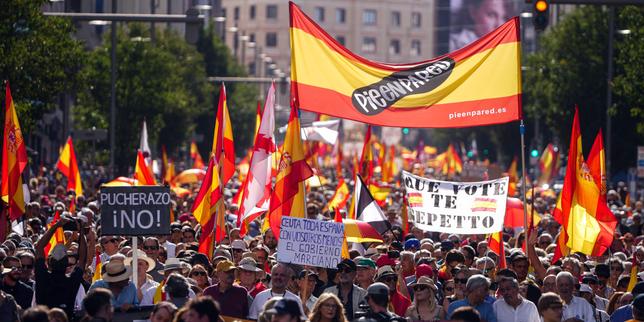
Across town, under the grand arches of a more modern auditorium, the first minister steps up to a mahogany podium. The microphones hiss. The television lights throw a harsh, clinical blue across faces that have learned to smile for the cameras. Outside, thousands stand shoulder to shoulder, breath turning to gray smoke in the raw air, holding placards that have begun to warp and soften in the drizzle.
When the first minister speaks, the speech does not begin with policy papers or economic forecasts. It begins with a declaration that feels less like a political platform and more like a physical gravity: there is no turning back.
The words land in the damp air not with a bang, but with the heavy, final thud of a heavy iron gate latching in the dark.
For decades, the journey toward independence—whether in small towns across the Scottish Highlands or within the complex machinery of regional governance everywhere—has been treated by commentators as a ledger of risk. Economists wave sheets of projected deficits. Analysts draw neat curves showing currency fluctuations, trade dependencies, and debt-to-GDP ratios. They speak in the language of numbers, as if human history were a spreadsheet that could be audited into compliance.
Yet numbers do not shiver in the rain. Spreadsheets do not remember the look in a mother's eyes when the local shipyard closed its gates for the final time on a Tuesday afternoon in November.
To understand why thousands of people stand for hours in freezing precipitation to hear a politician say what has already been said a hundred times, you have to abandon the ledger. You have to look at the architecture of hope.
Consider what happens when a community feels perpetually governed from a room three hundred miles away. It is not merely a matter of taxation or legislative voting records. It is a slow, corrosive erosion of agency. It is the sinking feeling that your future is decided by someone who has never walked your streets, who does not know the name of your local river when it floods, and who regards your home as a line item on an administrative balance sheet rather than a place where children grow up and bury their parents.
Margaret remembers the winter of 1984. She remembers the strike notices taped to grocery store windows and the way the lights in her neighborhood seemed dimmer, as if the electricity itself was rationing its loyalty. In those days, power was something done to people, never by them.
"When you are told your whole life that you are too small, too poor, too remote to steer your own boat," Margaret says, her thumb tracing the edge of her green tin box, "eventually you stop listening to the weather forecasts. You just build a better boat."
That sentiment is the invisible engine driving the rally. It is an emotional alchemy that transforms fear into resolve. The critics call it romanticism. They warn of turbulence, of closed doors, of the friction of unmooring from centuries-old institutions. They ask the hard, necessary questions: What about pensions? What about borders? What about the currency?
These are valid questions. They deserve rigorous answers. But the profound miscalculation of the status quo is believing that people ask for safety above all else. Sometimes, safety is just another word for stagnation. Sometimes, the risk of trying to build something of your own is infinitely more attractive than the guaranteed decay of staying put.
The first minister’s address moves from the abstractions of sovereignty down to the specific, gritty texture of daily life. The crowd leans in. The rain keeps falling, plastering hair to foreheads, turning cardboard signs into soggy mush, but nobody moves. They are listening for the acknowledgement of their own exhaustion.
When a society reaches this juncture, the momentum is no longer sustained by speeches. It is sustained by the sheer weight of accumulated moments where people realized they were on their own anyway.
Think of the local health clinic that lost its weekend hours. Think of the post office shuttered because the algorithm deemed it inefficient. Think of the young people packing their bags with degrees in their hands and one-way train tickets in their pockets because the local economy offers nothing but low-wage service jobs and skyrocketing rent. These are the bricks that build the road to independence. They are laid silently, day by day, by a system that failed to notice the ground was shifting beneath its feet.
By the time the rally ends, the applause does not sound like celebration. It sounds like a vow.
People fold their wet signs. They shake hands with strangers they will never see again. They walk back toward bus stations and parking lots with water sloshing in their boots. But their posture is different. There is an unmistakable stiffness in the spine of a crowd that has decided its own direction.
The political pundits on the evening news will parse the rhetoric phrase by phrase. They will debate whether the speech gained two percentage points in the polls or alienated the undecided voters in the suburbs. They will draw their arrows on touchscreen monitors and project scenarios out to the next decade.
They will miss the point entirely.
The journey of independence is not a campaign strategy. It is a tectonic shift in how human beings perceive their own dignity. Once a population stops looking outward for permission and starts looking inward for strength, the machinery of control changes forever.
The rain stops just as Margaret boards her bus home. Through the streaked window, the gray slate roofs of the city look polished, almost luminous in the late afternoon glare. She opens her green tin box, checks on her grandchildren’s photographs, and snaps the metal clasp shut. The sound is crisp, clean, and final.
There is no turning back. Not because the road ahead is smooth or guaranteed, but because the place they left behind no longer exists.