The Price of a Flat Tire
Ammunition does not matter if it is sitting in a shipping container three hundred miles away. Food is useless if the truck carrying it is idling at a washed-out checkpoint. Medical supplies mean nothing if they are buried under a chaotic mountain of conflicting digital manifests.
In the modern military, we talk endlessly about weapons systems, stealth capabilities, and tactical brilliance. We obsess over the sharp edge of the spear. But the spear is just a heavy stick if the arm wielding it is starving.
The defense community has a clinical, sterile term for the nightmare of moving gear through a war zone: contested logistics. It sounds like a corporate supply chain issue, perhaps a minor delay in a shipping warehouse. It is not. Contested logistics is a polite euphemism for trying to deliver thousands of tons of fuel, water, and bullets while people actively try to kill you, jam your communications, and blow up your bridges.
Historically, we solved this with sheer mass. During the Gulf War, the American military built massive, sprawling supply depots in the desert—iron mountains of gear. We had so much stuff that inefficiency did not matter. If a platoon needed water, we sent a convoy of ten trucks. If two got hit, eight made it through.
That era is over.
In a conflict against a near-peer adversary, those massive supply hubs are just giant, stationary targets for long-range missiles. Future fights will not happen on predictable front lines. They will happen across vast, fragmented spaces like the Indo-Pacific, spanning thousands of miles of open ocean and isolated islands. Supplies will have to move in smaller, stealthier, faster increments.
The margin for error has dropped to zero. If a single drone strike blocks a narrow straight, or a cyberattack blinds a tracking system, the entire network chokes. Soldiers wait. And in that silence, options evaporate.
This is the invisible crisis the US Army is scrambling to solve. And they just turned to a relatively young technology firm to rebuild the digital nervous system of military supply lines.
The Chaos of the Disconnected Node
To understand why the US Army just awarded Gallatin AI a contract to deploy its contested logistics software, you have to look past the press releases and sit in the mud.
Imagine a logistics officer stationed at a temporary, austere airfield in a dense jungle environment. Let us call him Miller. Miller is twenty-four years old, sleep-deprived, and staring at a ruggedized laptop screen. His unit needs replacement parts for a radar system that keeps them from being wiped off the map.
Under the old way of doing things, Miller’s computer needs to talk to a massive cloud database located thousands of miles away in Virginia. But the enemy is actively jamming the satellite uplink. The connection is a stuttering, broken mess. Every time the signal drops, the database locks up. The request fails. Miller has no idea if the parts are on a plane, on a ship, or still sitting in a warehouse in California.
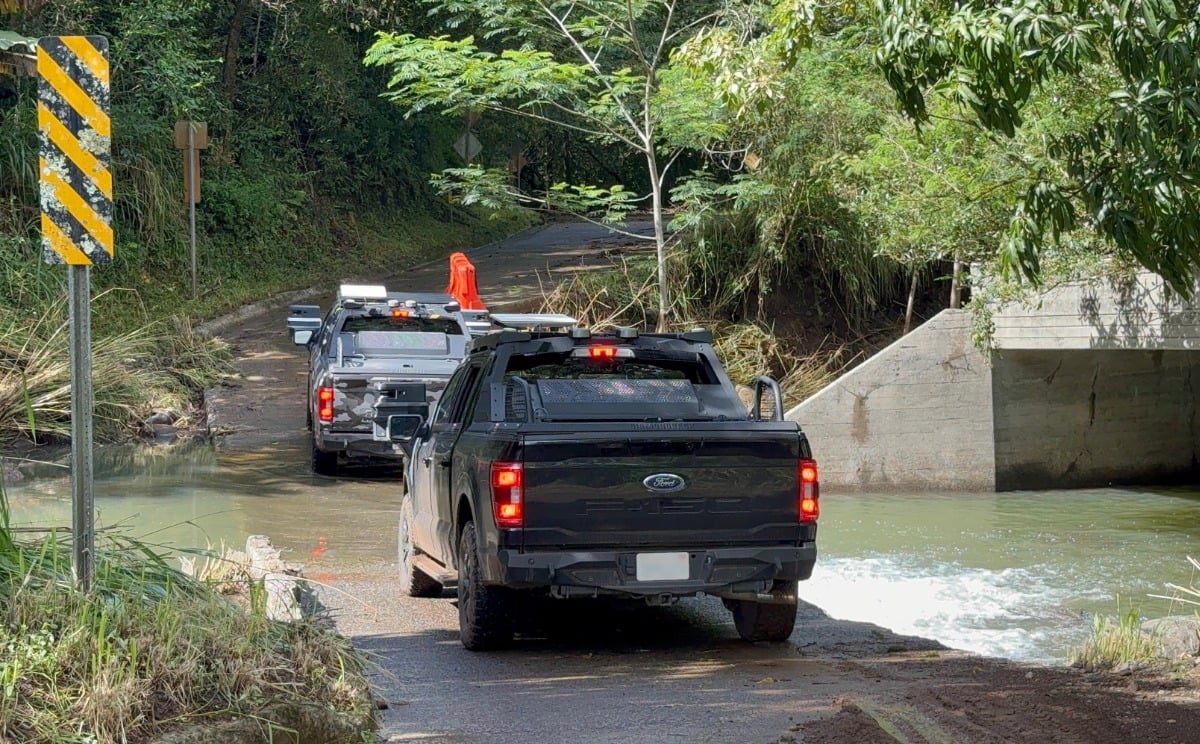
Meanwhile, a supply convoy is forty miles away, navigating a dirt road. The bridge ahead of them was destroyed two hours ago. The convoy commander does not know it. Miller does not know it. The system in Virginia certainly does not know it.
This is the reality of the disconnected node.
Traditional logistics software is built for a world of perfect connectivity. It assumes the internet works. It assumes electricity is stable. It assumes Amazon-like predictability. When you strip those luxuries away, the software does not just slow down; it shatters. It becomes a liability.
Gallatin AI approached this problem from a fundamentally different philosophical angle. Instead of trying to build a thicker pipe to send data back to a central brain, they built a system that allows every individual node to think for itself.
Their software operates on the edge. It is designed to live in environments where bandwidth is scarce, intermittent, or entirely hostile. If Miller loses connection to the rest of the world, his local system does not freeze. It uses localized machine learning models to analyze the data it does have, predicting shortages, calculating alternative routes, and updating inventory lists autonomously.
When a fleeting window of connectivity opens for even a few seconds, the software does not try to sync the entire massive database. It sends tiny, highly compressed bursts of critical data—the absolute essentials. It patches the map together piece by piece, like a broken mirror reassembling itself in the dark.
The Machine Beneath the Armor
The technical term for what Gallatin is doing involves distributed ledgers, edge computing, and predictive analytics. But the reality is much more intuitive. Think of it as an immune system.
When you cut your finger, your brain does not need to manually direct every white blood cell to the wound. Your local tissue reacts instantly. It handles the immediate crisis while signaling the rest of the body for backup.
Gallatin’s software treats every truck, every drone, every warehouse, and every soldier’s handheld device as a cell in that larger organism. If a bridge is blown up, the convoy’s onboard system immediately logs the obstruction. Even without a satellite connection, that vehicle broadcasts the hazard to any other friendly asset within radio range. The network heals its own map organically, bypassing the need for a distant, centralized command to hand down instructions.
The predictive element is where the math becomes truly elegant.
Military supply chains are notoriously reactive. A unit runs low on fuel, they radio it in, and a fuel truck is dispatched. In a contested environment, that delay is lethal. Gallatin’s algorithms analyze historical consumption rates, local weather patterns, terrain difficulty, and current threat levels to forecast what a unit will need three days before they even realize they are running low.
It transforms logistics from a desperate game of catch-up into a proactive shield.
The US Army’s decision to integrate this software into its operational framework is a quiet admission that the nature of deterrence has shifted. We are no longer just measuring the size of an enemy’s missile arsenal; we are measuring the speed of their data. The military that can make decisions ten minutes faster than its opponent wins. The military that can keep its trucks moving through a digital blackout survives.
The Human Factor in the Formula
Software engineers often fall into the trap of believing that clean code solves human problems. They write beautiful algorithms in air-conditioned silicon valleys, far removed from the dust and terror of actual application. They forget that the ultimate user of their product is not a tech-savvy developer, but a terrified nineteen-year-old trying to read a screen while wearing thick tactical gloves in a downpour.
If software is too complex, users abandon it. They revert to what they know: paper notebooks, whiteboard tallies, and chaotic radio calls.
The real victory for Gallatin AI wasn't just convincing the Pentagon that their math worked. It was proving that their interface could survive the psychological pressure of combat. The software distills terrifying complexity into stark, unmistakable clarity. It strips away the noise, leaving the user with only the choices that matter right now.
Red means stop. Blue means moving. A flickering yellow line means a route is compromised.
When we look at the geopolitical map, it is easy to get lost in the macro-narratives of shifting alliances and defense budgets. We see the multi-billion-dollar acquisition announcements and view them as abstract moves on a cold chessboard.
But every line item on a government contract eventually trickles down to a human being. It matters to the mechanic who needs a specific seal to fix a helicopter before a tropical storm hits. It matters to the medic who needs blood plasma that must be kept at a precise temperature across a three-day transit through hostile territory.
The contract awarded to Gallatin AI is a milestone for a young company, certainly. It validates their approach to decentralized artificial intelligence. It satisfies the metrics of defense acquisition reformers who have begged the military to adopt commercial software speeds.
But none of that is the true measure of success.
The real test will happen on some unnamed, dark stretch of road years from now. A driver will be guiding a heavy cargo truck through a rainstorm, running completely dark to avoid thermal sensors. Suddenly, the screen on the dashboard will pulse gently, rerouting them down a dirt track three miles ahead because an unseen threat has just compromised the main highway.
The driver will turn the wheel. The truck will keep moving. The supplies will arrive. And no one will ever know how close they came to vanishing into the dark.

:max_bytes(150000):strip_icc()/Logistics-db9279223e6c4ccbbdd7b891f20a056e.jpg)