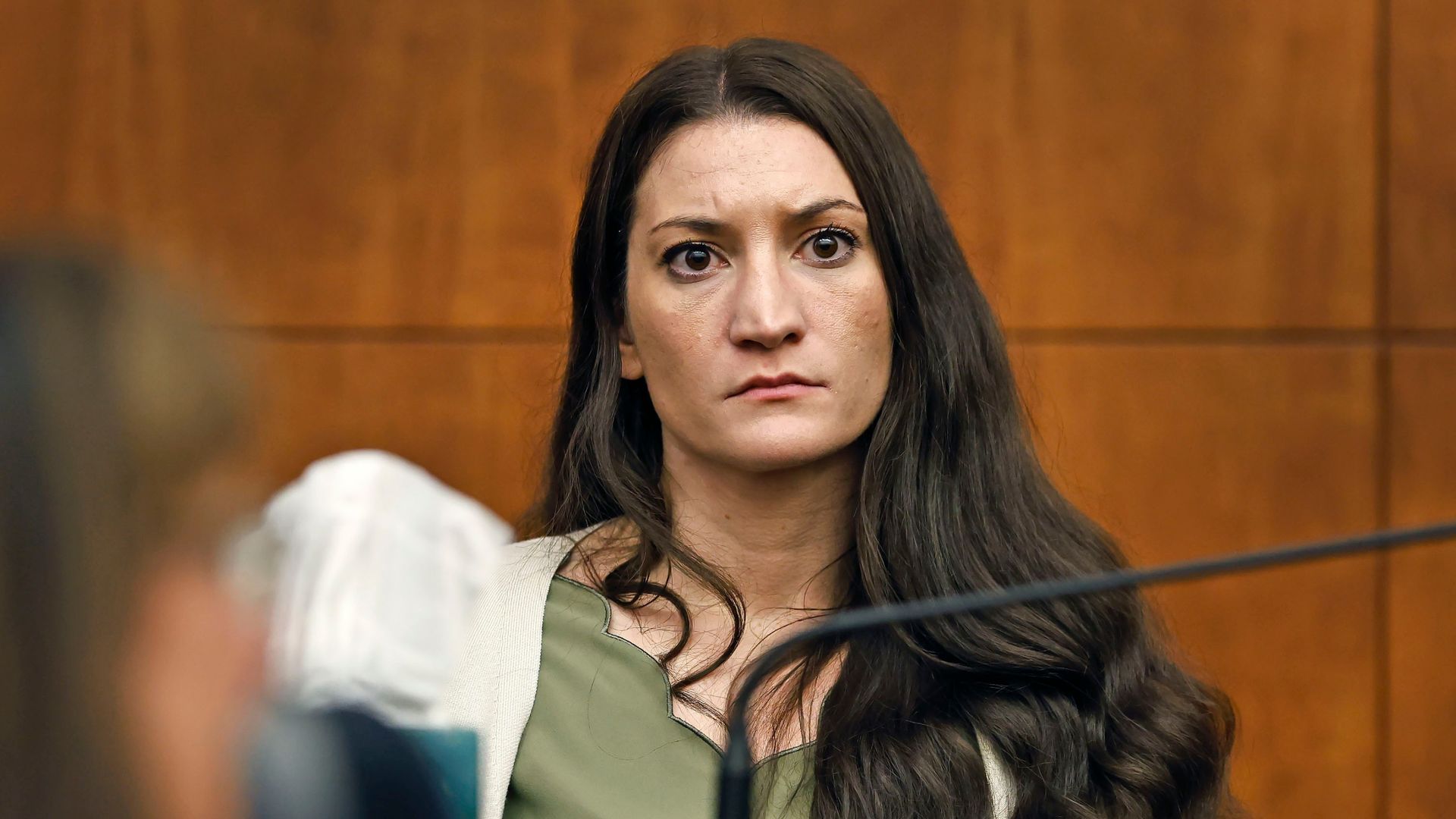
A Massachusetts judge declared a mistrial in the high-profile murder case of Lindsay Clancy after a 12-person jury deadlocked following 38 hours of deliberations spread across seven exhausting days. Clancy, a former labor and delivery nurse, does not deny that she strangled her three young children—Cora, Dawson, and Callan—at their Duxbury home in January 2023. Instead, the protracted legal battle centered entirely on a grim and complex question of human cognition: whether she was suffering from acute postpartum psychosis so severe that she lacked the capacity to understand the wrongfulness of her actions. With the trial ending in a hung jury split 11 to one, the legal system now faces a difficult path forward. Prosecutors must decide whether to commit the immense resources required for a retrial, negotiate a resolution, or drop the matter entirely, while legal analysts grapple with what this outcome signals for future cases involving severe maternal mental health crises.
The deadlock itself was not born in a vacuum. Court notes revealed that the panel of nine women and three men was heavily fragmented, with 11 jurors reportedly favoring an acquittal based on lack of criminal responsibility while a single holdout refused to join them. The tension culminated in a frantic eleventh-hour legal maneuver when defense attorney Kevin Reddington filed an emergency appeal with the Massachusetts Supreme Judicial Court. Reddington asked the state’s highest court to force Trial Judge William Sullivan to further question or remove the holdout juror, arguing that the juror was biased and refusing to follow instructions on reasonable doubt. When the Supreme Judicial Court denied the request, the mistrial became inevitable. Judge Sullivan dismissed the jury, thanking them for enduring a grueling proceeding featuring over 80 witnesses and 300 exhibits. A status conference has been scheduled for September 29 to determine the next procedural steps.
This outcome highlights the deep friction between clinical medical realities and cold statutory definitions of criminal culpability. Under Massachusetts law, a defendant claiming lack of criminal responsibility must prove they suffered from a mental disease or defect that robbed them of the substantial capacity to appreciate the criminality of their conduct or conform it to the law. Defense experts painted a harrowing picture of a woman utterly unmoored by severe mental illness on the day of the killings. Dr. Allison Resnick testified that Clancy was frankly psychotic, driven by auditory hallucinations and an altered reality.
Conversely, the prosecution argued that Clancy's actions demonstrated calculation rather than a complete detachment from reality. Lead prosecutor Jennifer Sprague framed the tragedy during closing arguments as a deliberate, albeit agonizing, choice made by a mother overwhelmed by her circumstances. This clash of interpretations exposes a fundamental vulnerability in modern courtrooms. Jurors are asked to peer backward into the shattered mind of a defendant and parse the exact boundary where clinical depression ends and profound, homicidal psychosis begins. When medical experts disagree and human behavior defies neat categorization, juries fracture.
The legal mechanics following a mistrial offer three distinct avenues, none of which provide clean closure.
First, the Plymouth County District Attorney's office can elect to try the case a second time. A retrial would require selecting a brand-new jury, re-summoning dozens of high-priced expert witnesses, and putting Patrick Clancy and surviving family members through the excruciating process of reliving the tragedy. Legal experts note that a second prosecution carries massive financial costs and the distinct possibility of another hung jury given the polarizing nature of the defense.
Second, the state could explore a negotiated plea agreement. Facing the persistent threat of a first-degree murder conviction and a mandatory life sentence without parole, defense counsel would likely listen to alternative resolutions. However, finding a middle ground in a case involving the deaths of three children remains politically and emotionally fraught for prosecutors.
Third, prosecutors could choose not to retry the case. Such a decision would acknowledge the profound punishment Clancy has already endured. Following the killings, Clancy jumped from a second-story window in a suicide attempt, leaving her permanently paralyzed from the waist down. She has spent the intervening years confined to medical and psychiatric custody. Advocates for maternal mental health argue that cycling a severely disabled and mentally ill woman through repeated trials serves little retributive or deterrent purpose, though victims' rights advocates caution against appearing lenient on violent crime.
Beyond the criminal docket, the legal fallout extends into civil courts. Lindsay and Patrick Clancy have signaled plans to pursue a medical malpractice lawsuit against the healthcare providers who treated her in the weeks leading up to the tragedy. That forthcoming litigation shifts the analytical lens away from individual criminal responsibility and toward institutional accountability. The civil action aims to examine whether medical professionals failed to recognize, diagnose, or appropriately monitor the escalating signs of severe postpartum psychiatric distress. It asks whether a systemic failure in maternal healthcare allowed a preventable crisis to spiral into catastrophe.
The mistrial leaves a vacuum where a definitive verdict should reside. It demonstrates that when the legal system collides with the darkest corners of human psychological collapse, simple binaries of guilt and innocence often collapse with it. As the court prepares to reconvene at the end of September, the true cost of this legal deadlock is measured not just in judicial expenditures and court transcripts, but in the prolonged absence of resolution for a community still reckoning with an unfathomable loss.