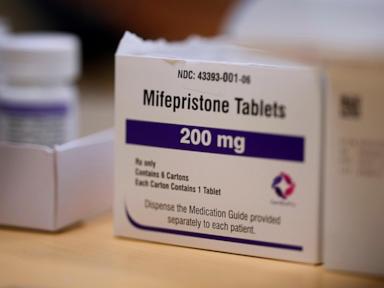
The modern battlefield of reproductive healthcare has shifted from the clinic sidewalk to the logistics of the United States Postal Service. By targeting the distribution of mifepristone, federal courts have effectively initiated a stress test on the separation of powers, medical regulation, and the privacy of the American mailbox. This isn't just a debate over morality. It is a fundamental rewiring of how the government can intervene in the relationship between a doctor and a patient who never meet in person.
Recent judicial rulings attempting to curb the mailing of mifepristone do more than restrict a specific procedure. They challenge the decades-long authority of the Food and Drug Administration (FDA) to determine drug safety independent of political or judicial whim. If a judge in a remote district can override the scientific review process that deemed a medication safe for mail-order delivery, the entire pharmaceutical infrastructure enters a state of permanent instability.
The FDA Scientific Shield is Cracking
For over twenty years, mifepristone has been used by millions of women. It is safer than penicillin. It is safer than Viagra. Yet, the legal strategies currently moving through the appellate system treat it as a unique hazard that requires pre-digital oversight.
The core of the legal argument against mailing the drug rests on a dusty piece of 19th-century legislation: the Comstock Act of 1873. This zombie law, long thought to be a relic of Victorian-era censorship, prohibits the mailing of "obscene" materials or items used for abortion. For decades, the Department of Justice and the courts treated this as applicable only to illegal acts. Now, activists are successfully convincing judges that the act remains a "blanket ban," regardless of whether the abortion is legal under state law.
This is a tactical masterstroke. By focusing on the Comstock Act, opponents of abortion access don't need to win the argument on personhood or medical necessity. They only need to control the pipes through which medicine flows.
Logistics as a Weapon of Control
When the FDA relaxed its Risk Evaluation and Mitigation Strategy (REMS) in 2021, it acknowledged a reality that the pandemic made undeniable. Telehealth works. Shipping a pill in a discreet package is no different, scientifically, than dispensing it behind a pharmacy counter.
However, the "mailing" aspect is the vulnerability. In a country where state laws are increasingly fractured, the federal mail system was the last remaining bridge for patients in restrictive zones. By targeting the mailing process, the courts are creating a "de facto" national ban for anyone without the means to travel hundreds of miles to a brick-and-mortar clinic.
Consider the ripple effect on rural healthcare. In states with vast distances and few providers, the mail was a lifeline. Removing that option doesn't stop the demand for the procedure. It simply pushes the patient toward less regulated, "gray market" international suppliers where quality control is non-existent.
The Dangerous Precedent for All Pharmaceuticals
If you believe this ends with mifepristone, you haven't been paying attention to the mechanics of the legal system. The precedent being set is that a plaintiff can claim "associational standing"—arguing they are harmed because they might have to treat a patient who experienced a complication from a drug they didn't prescribe.
This is a radical expansion of who can sue. If a group of doctors can sue to stop the distribution of an abortion pill because they object to its existence, what stops a different group from suing to block vaccines, birth control, or even psychiatric medications?
The stability of the American pharmaceutical market relies on the "Final Agency Action" of the FDA. When a drug is approved, companies invest billions based on the certainty that the drug can be sold. If that approval is subject to the geographical luck of which judge hears a case, the business model for drug development collapses. No CFO will greenlight a billion-dollar R&D project if a single court order can vaporize their distribution network overnight.
The Privacy of the Mailbox
There is a darker undercurrent here regarding surveillance. To enforce a ban on mailing specific pills, the government would theoretically need to monitor the contents of packages. While the USPS requires warrants for most searches, the pressure on private carriers like FedEx and UPS to "self-police" their shipments is mounting.
We are entering an era of medical checkpoints. If the Comstock Act is fully revived, it won't just be the pills. It could be instruments, manuals, or even digital information related to reproductive care. The legal theory is a vacuum; it will suck in everything it can until someone stops it.
The current judicial trend suggests that the "right to privacy" is being replaced by "interstate commerce regulation" as the primary lens for reproductive rights. By framing the issue as a postal violation rather than a bodily autonomy issue, the courts are attempting to bypass the public's general support for abortion access.
The Misunderstood Safety Data
The narrative that mifepristone is dangerous is a statistical fabrication often presented in court filings without peer-reviewed backing. In reality, the complication rate for medication abortion is less than 0.5%.
When judges cite "mental health risks" or "unseen complications," they are often leaning on studies that have been retracted or discredited by the broader scientific community. This "junk science" enters the legal record and, once there, becomes "fact" for the purposes of an appeal. It is a feedback loop of misinformation that ends with a patient being denied a prescription in their own home.
The Civil War of the States
As federal courts squeeze the mail-order supply, "shield law" states are pushing back. Massachusetts, New York, and California are stockpiling doses and passing laws to protect their doctors who ship to patients in "red" states.
This creates a constitutional crisis. Can a Texas prosecutor extradite a New York doctor for mailing a legal pill? The answer is currently a terrifying "maybe." We are watching the Balkanization of American medicine, where your zip code determines not just your rights, but the physical availability of FDA-approved chemistry.
The pharmaceutical industry, usually a bastion of conservative corporate interests, is now in an awkward position. They hate regulation, but they love predictability. The current judicial assault on mifepristone is the definition of unpredictable. If the FDA loses its status as the final word on safety, the "gold standard" of American medicine becomes a lead weight.
The focus on "mailing" is a Trojan horse. It is the most effective way to implement a national ban without ever having to pass a law through Congress. It relies on a 150-year-old ghost and the hope that the public won't notice the technicality until the mail stops arriving.
The goal is not to make abortion safer. The goal is to make it invisible, difficult, and legally perilous for both the provider and the postal worker. If the courts succeed in severing the link between the pharmacy and the mailbox, they won't just have stopped a pill. They will have dismantled the modern expectation that medicine is a private matter between a patient and the professional they choose to trust.
The infrastructure of the American medical system is being dismantled by the very people sworn to uphold its laws, one delivery route at a time. Demand that the FDA's authority remains absolute, or prepare for a future where every prescription you take is subject to a judge's political approval.