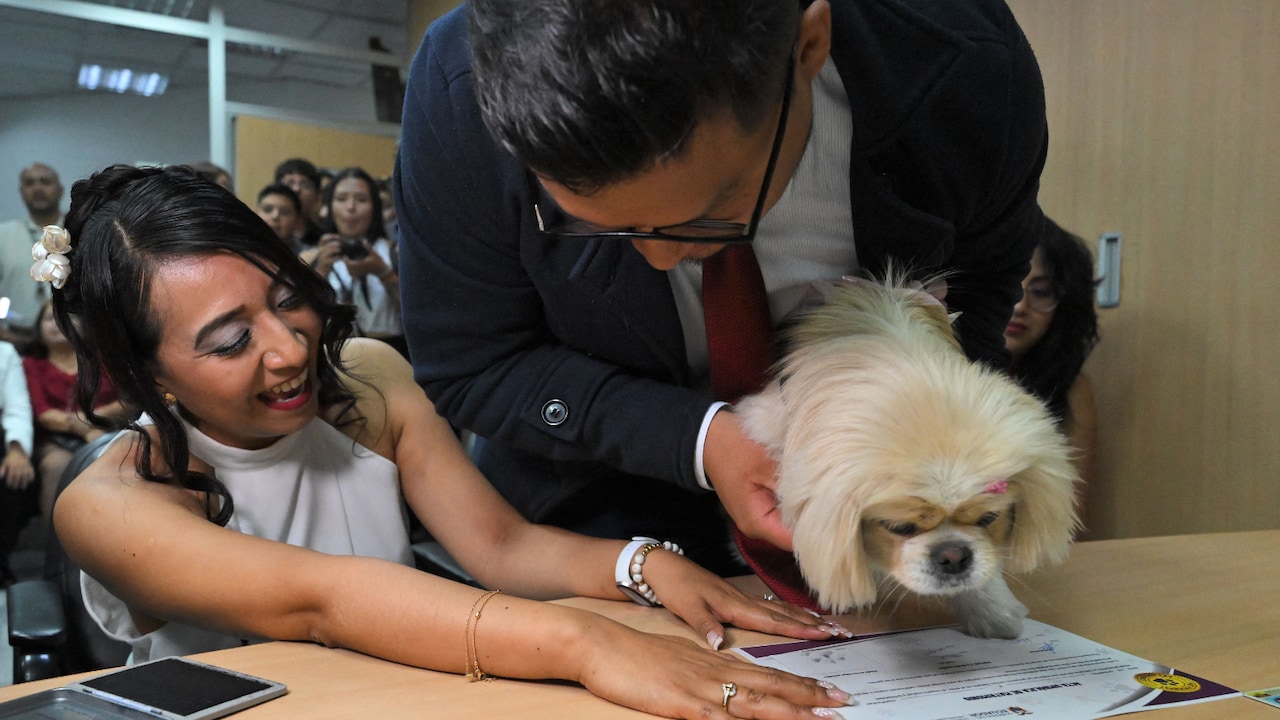
Ecuadorian couples are bypassing traditional human wedding parties to sign their marriage certificates with their pets' paw prints. This trend is not just a quirky social media fad. It is the direct result of a massive legal shift that redefined animals as "sentient beings" rather than property under Ecuadorian law. As a result, notary offices across Quito and Guayaquil have opened their doors to dogs, cats, and other companion animals acting as symbolic or civil witnesses. This fundamental change is reshaping the legal and emotional definition of the modern family unit in South America.
The Constitutional Spark
To understand why a golden retriever is now stamping a marriage register in Quito, you have to look at the paperwork. In 2022, Ecuador’s Constitutional Court made a historic ruling stemming from the case of a woolly monkey named Estrellita. The court declared that wild animals, and by extension domestic pets, possess distinct legal rights under the umbrella of the Rights of Nature (Derechos de la Naturaleza). In similar news, we also covered: Why Catnip Coalition Is the Best Thing to Happen to Burbank Thrift Shopping.
This was a massive legal pivot. For centuries, civil codes treated animals the same as a piece of furniture or a tract of land. Once the highest court broke that barrier, the bureaucratic dominoes began to fall.
Couples quickly realized that if an animal has a recognized legal standing regarding its well-being, its presence in civil ceremonies carries more than just sentimental weight. Notaries, who operate with a high degree of administrative flexibility in Ecuador, began accommodating requests to include pets in official ceremonies. They are not replacing human witnesses in the eyes of strict statutory law, but they are being integrated into the formal, state-sanctioned documentation of the union. Apartment Therapy has analyzed this critical subject in great detail.
How the Process Works in the Registry
The actual execution of a pet-witnessed wedding requires careful logistical planning. It is far from a chaotic free-for-all.
First, the couple must select a civil registry office or a private notary willing to accommodate animals. While the constitutional ruling opened the door, individual civil servants still retain the right to manage their courtrooms and offices based on public health and safety standards.
- The Documentation: The couple prepares the standard legal marriage licenses required for any human union.
- The Paw Print: Alongside the traditional signatures of the bride, groom, and human legal witnesses, a separate section or an official appendix is created for the pet.
- The Ink: Notaries utilize non-toxic, pet-safe ink pads to capture the animal's print directly onto the ceremonial or supplemental registry documents.
This practice has created a booming micro-economy. Specialized wedding planners in Ecuador now focus exclusively on "pet-inclusive" ceremonies. These coordinators manage everything from animal behaviorists who keep the pets calm during the vows to custom-tailored formal wear designed for dogs and cats.
The Economic Realities of a Changing Family Structure
This shift highlights a broader demographic trend occurring across Latin America. Birth rates are declining, and millennials and Gen Z are delaying marriage and childbearing. In many urban centers, pets have filled that emotional space.
The financial investment reflects this reality. Couples are reallocating budgets that used to go toward large guest lists into specialized venues that welcome animals.
Average Wedding Expense Redistribution in Urban Ecuador
| Traditional Budget Allocation | Pet-Inclusive Budget Allocation |
|---|---|
| High-capacity venue rentals | Pet-friendly boutique venues |
| Multi-course human catering | Specialized pet menus and treats |
| Large bridal party gifts | Animal handlers and behaviorists |
| Traditional photography | Pet-focused event videography |
This spending reallocation proves that the phenomenon is deeply entrenched in the economic decisions of the younger demographic. It represents a conscious choice to elevate the status of a domestic animal to that of an immediate family member.
Legal Gray Areas and Future Complications
While the trend enjoys immense popularity, it introduces several complex legal questions that the Ecuadorian judicial system has yet to fully resolve.
If an animal is a recognized member of the family unit at the time of marriage, what happens during a divorce?
In traditional legal systems, a pet is treated as property to be divided up based on who purchased it. However, under Ecuador's evolving framework, judges are increasingly forced to consider the emotional well-being of the animal. We are starting to see the early stages of pet custody battles that mimic human child custody disputes. This involves arguments over visitation rights, alimony for veterinary care, and primary residency.
Furthermore, the lack of a standardized national protocol means that a pet-witnessed marriage certificate might be accepted in one municipality but viewed as highly irregular in another. The Ministry of Government has not issued a blanket directive, leaving the decision entirely up to local authorities and individual notaries. This lack of uniformity creates a fragmented system where the legal weight of the ceremony depends entirely on geography.
Cultural Resistance from Traditional Sectors
The rise of the pet witness has not been met with universal praise. Conservative legal scholars and traditional religious institutions in Ecuador have voiced strong objections to the practice.
Critics argue that blending human civil rites with animal participation degrades the solemnity of the institution of marriage. They view it as a symptom of extreme secularization and individualism, where human relationships are devalued in favor of companion animals.
Religious ceremonies, particularly within the Catholic Church, which maintains a powerful cultural influence in Ecuador, strictly prohibit the inclusion of pets as sacramental witnesses. Consequently, this trend remains confined entirely to civil registries and secular celebrations, creating a stark divide between secular legal evolution and religious tradition.
The Pragmatic Future of Domestic Partnerships
As the legal framework continues to adjust to the reality of the Constitutional Court's ruling, the pet-witness phenomenon will likely move from an exceptional novelty to a standardized civil option. The market is already adjusting, and local governments are realizing that pet-friendly policies attract young professionals and boost civic engagement.
The transformation of a pet from property to a marriage witness is a pragmatic reflection of how modern citizens define their households. It forces the state to recognize that the boundaries of support systems and companionship have fundamentally changed.