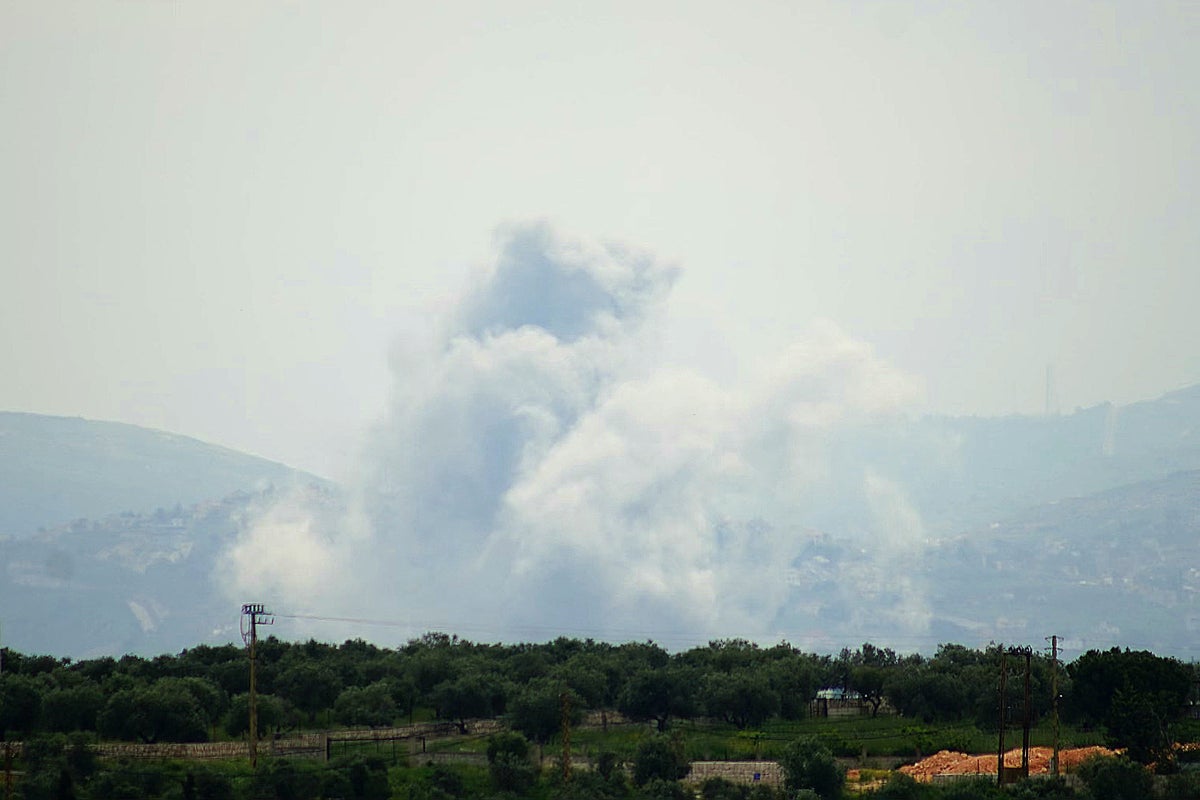
The ink on the extended April ceasefire hadn't even dried before the smoke started rising again over southern Lebanon. We're told there's a truce, a "cessation of hostilities" meant to last until May 17, yet the reality on the ground in places like Nabatieh and Tyre looks nothing like peace. On Friday, May 1, the facade of this diplomatic agreement cracked wide open as Israeli airstrikes tore through several southern towns, leaving at least 17 people dead. Among the casualties were two children, a grim reminder that "precision strikes" and "buffer zones" rarely protect the most vulnerable.
Honestly, the term "ceasefire" feels like a cruel joke to the families in Nabatieh al-Fawqa. While diplomats in Washington and Beirut talk about "good-faith negotiations," residents are busy digging their neighbors out from under pulverized concrete. This isn't just a one-off violation. It's part of a pattern where the rules of engagement are rewritten daily, and the cost of that ambiguity is being paid in Lebanese lives.
The Nabatieh Bloodshed and the Myth of Protection
The most devastating news from this latest round of strikes came out of Nabatieh al-Fawqa and Kfar Roummane. In Nabatieh, the Lebanese Health Ministry confirmed that an Israeli strike killed two people and left ten others wounded. Not far away, in Kfar Roummane, rescue teams spent hours pulling five bodies from the wreckage of a building that was hit overnight. These weren't remote military outposts; they were residential areas where people thought they had a temporary reprieve from the war.
In the town of Jibsheet, the tragedy took an even more personal turn. A single strike on a home killed an entire family—parents and their two young children. You have to wonder what "military infrastructure" was worth the price of an entire lineage. Further south in Zibdin, six people were killed by a drone strike while they were reportedly gathered near a local cemetery.
The sheer volume of strikes is staggering. On Thursday alone, the Lebanese National News Agency reported over 70 airstrikes and artillery shells hitting the Tyre and Bint Jbeil districts. If this is what a ceasefire looks like, it's hard to imagine what "escalation" would actually entail.
Why This Ceasefire is Different and Why it's Failing
You have to look at the timeline to understand why we're in this mess. This current 10-day truce, which was later extended, followed a massive offensive that began back on March 2. That offensive was a response to the broader regional conflict involving Iran, making Lebanon a secondary battlefield for a much larger war.
- The Buffer Zone Pretext: Israel claims its continued strikes are necessary to enforce a "buffer zone" and prevent Hezbollah from regrouping.
- The Disarmament Demand: During talks led by U.S. Secretary of State Marco Rubio, Israel has pushed for Hezbollah's total disarmament.
- Hezbollah’s Stance: The group has called the talks a "free concession" and hasn't stopped its own operations, leading to a cycle of "retaliatory" strikes that never end.
The problem is the "right to self-defense" clause. The April 16 agreement explicitly preserves Israel's right to act if it perceives a threat. In practice, this gives the IDF a green light to strike almost any target they deem "linked to Hezbollah infrastructure" without officially ending the truce. It’s a loophole big enough to fly a squadron of F-15s through.
The Human Cost of Diplomatic Limbo
Since the formal resumption of hostilities in March 2026, the numbers are numbing. Over 2,600 people have been killed. More than 1.2 million—about a fifth of Lebanon's population—have been forced to flee their homes. Many are living in overcrowded shelters that were already at a breaking point during the 2024 conflict.
I’ve seen how this plays out in real-time. Families pack their entire lives into the back of a car, drive north, and then return a week later when a "ceasefire" is announced, only to be targeted in their own living rooms. It’s a psychological warfare that’s just as damaging as the physical bombs. The UN has asked for over $300 million to deal with the humanitarian crisis, but as of mid-April, less than a quarter of that was funded.
What Needs to Change Right Now
If you're following this news, don't get distracted by the diplomatic jargon. "Cessation of hostilities" doesn't mean "peace." It’s a temporary pause that is being used by both sides to reposition and probe for weaknesses.
- Demand Clearer Terms: A ceasefire that allows "defensive strikes" in residential areas isn't a ceasefire. International mediators need to define exactly what constitutes a violation.
- Focus on Nabatieh and Tyre: These areas are being hit hardest despite being civilian hubs. Watch for reports from the Lebanese Health Ministry rather than just military briefings.
- Pressure for Aid: The displacement crisis in Lebanon is a ticking time bomb. Support organizations like the Lebanese Red Cross or the Islamic Risala Scout Association, who are the ones actually pulling people out of the rubble in Nabatieh.
The reality is that Lebanon's fate is currently tied to a broader U.S.-Iran negotiating track. Until that larger fire is put out, southern Lebanon will likely remain a "gray zone" where truces are signed in capital cities and ignored in the villages. Stop looking for the "end" of this war in a press release; look for it in the skies over Nabatieh. When the drones stop circling, then you'll know the ceasefire is real.