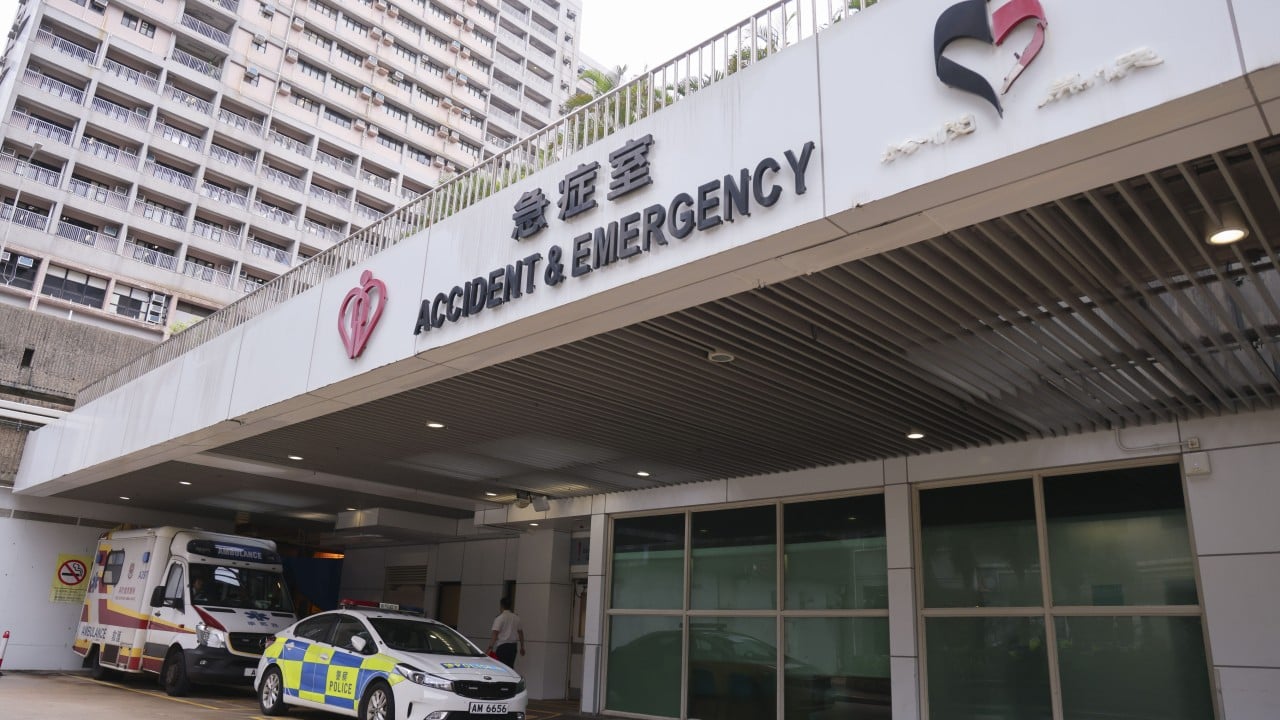
The media machine has a predictable, exhausting playbook for sudden tragedies. When an eight-year-old girl collapses and dies in her home on Hong Kong’s Lantau Island, the press immediately rushes to fulfill a specific role. They feed the public appetite for panic, tracking emergency response times, fixating on preliminary autopsy reports, and hinting at systemic failures or hidden environmental hazards.
This isn't journalism. It is a morbid fixation on the anomaly, disguised as public interest.
The immediate reaction to sudden, unexplained pediatric deaths is almost always to demand a macro-level investigation. People want to blame the government, the climate, the hospital transit system, or an undetected outbreak. But looking at an isolated, deeply tragic biological event through the lens of societal failure is a fundamental misunderstanding of human biology and risk distribution.
The Statistical Illusion of the Unprecedented Event
Every time a child collapses unexpectedly, the public discourse shifts to an defensive posture. Parents demand answers, schools review emergency protocols, and commentators analyze the geography of Lantau Island to determine if the remoteness of the location played a role in the outcome.
Let's dissect the reality of pediatric mortality.
When you strip away the emotional weight—which is undeniable for the family but paralyzing for objective analysis—sudden unexplained death in children (SUDC) remains an statistical anomaly that defies conventional public health intervention. According to historical data from organizations like the SUDC Foundation and international pediatric registries, these events occur in a fraction of a percent of the population, often driven by underlying, asymptomatic genetic cardiac anomalies or undiagnosed neurological channels that no routine school physical would ever catch.
The media coverage implies that if we just analyze the timeline tightly enough, we can prevent the next one.
We can't.
Pediatric Emergency Incidents: The Reality vs. The Perception

[Perception: Systemic Failure] -> Media Focus -> Public Anxiety -> Ineffective Policy Change
[Reality: Biological Anomaly]  -> Clinical Review -> Targeted Screening -> Realistic Risk Assessment
Investing millions into localized panic responses or restructuring emergency dispatch protocols based on a single outlier event is an ineffective allocation of public resources. I have spent years analyzing how health systems react to high-profile crises, and the pattern is always the same: agencies divert funding from high-yield preventative care—like routine immunization and basic pediatric nutrition—to fund highly visible, low-yield emergency measures that serve only to soothe public anxiety.
The Localization Fallacy: Lantau Island Is Not the Problem
A prominent narrative thread in local reporting focuses heavily on geography. Lantau Island, with its mix of rural terrain and concentrated residential pockets like Discovery Bay and Yat Tung Estate, is frequently painted as a logistical nightmare for emergency services. The subtext is clear: If this happened in Central or Kowloon, the outcome would be different.
This premise is deeply flawed.
In cases of sudden catastrophic collapse, whether triggered by a fulminant viral myocarditis or a congenital long QT syndrome, the biological window for successful resuscitation is measured in minutes, often seconds. The presence of an advanced trauma center down the street rarely shifts the needle in a true out-of-hospital cardiac arrest involving an underlying genetic defect.
Deflecting the conversation toward regional infrastructure is a lazy cop-out. It allows the public to avoid a much harsher, more uncomfortable truth: the human body is a highly complex, occasionally fragile biological system, and sometimes it fails without warning. No amount of urban planning or smart-city infrastructure can fully insure a population against the inherent risks of being alive.
Why Mass Screenings Are a Dangerous Fixation
Whenever these tragedies hit the headlines, a vocal contingent of parents and medical commentators demands mandatory, universal cardiac screening for all school-aged children. It sounds logical on the surface. If asymptomatic heart conditions cause sudden collapse, we should just test every child in Hong Kong with an electrocardiogram (ECG).
This is where the lazy consensus falls apart completely under medical scrutiny.
Universal screening programs are notorious for producing high rates of false positives. In pediatric cardiology, a minor, benign variation in an ECG tracing can easily be misread as a life-threatening pathology.
Imagine the downstream consequences of a mandatory screening mandate in Hong Kong:
- Thousands of healthy children are pulled from sports and subjected to invasive, unnecessary cardiac catheterizations.
- The psychological trauma of telling a family their child has a "ticking time bomb" in their chest, only for it to be a false alarm.
- The absolute bottlenecking of the public healthcare sector, delaying care for children with known, treatable chronic illnesses.
The European Society of Cardiology and the American Heart Association have debated this for decades. The data consistently demonstrates that mass, un-targeted screening creates more harm, anxiety, and procedural risk than it prevents in actual saved lives. We must accept the limitations of predictive medicine.
The Ethics of Transforming Grief Into Public Spectacle
There is a distinct lack of clinical distance in modern newsrooms. The rush to publish granular details about a family's worst day—the exact time of the police call, the specific emergency ward, the imagery of relatives outside the morgue—does not serve the public interest. It serves a voyeuristic algorithms engineered to monetize grief.
True public health communication focuses on actionable data. If there is no active contagion, no environmental toxin, and no systemic safety hazard, the incident is a private medical tragedy. Treating it as a breaking news event implies a threat to the community that simply does not exist. It breeds a culture of hyper-vigilance and paranoid parenting, where every minor childhood fever or fainting spell is viewed as a precursor to sudden death.
We have managed to build a society that is safer than at any point in human history, yet our tolerance for unavoidable risk has plummeted to zero.
Pivot the Resources to Where They Matter
If we genuinely care about saving children's lives in Hong Kong, we need to stop reacting to the anomalies and start doubling down on the statistical certainties.
Stop demanding systemic overhauls every time a tragedy occurs on an island. Stop calling for sweeping medical mandates that do more harm than good. Instead, focus on the unglamorous, high-impact interventions that actually move the needle on pediatric health metrics.
Increase funding for targeted genetic counseling for families with a confirmed history of early cardiac death. Train the general public in high-quality, immediate bystander CPR, which remains the only intervention that actually improves survival rates during an out-of-hospital collapse. Maintain a cold, rational perspective on risk, rather than letting the emotional gravity of a single headline dictate public policy.
The hard truth is that we cannot engineer a world entirely devoid of tragedy. Pretending we can isn't just naive—it’s actively damaging the stability of our healthcare system.