Silence rarely arrives softly in a war zone. It drops like an anvil, heavy and sudden, suffocating the space between heartbeats.
For months, the rhythm of existence has been measured in explosions, the shrieking tear of air sliced by steel, and the low, constant thrum of drones circling above like mechanical vultures. But beneath the sensory overload of physical destruction lies something far more corrosive. It is the language used by those steering the machinery of state. Words matter. When translated from political rhetoric into policy, words become shrapnel.
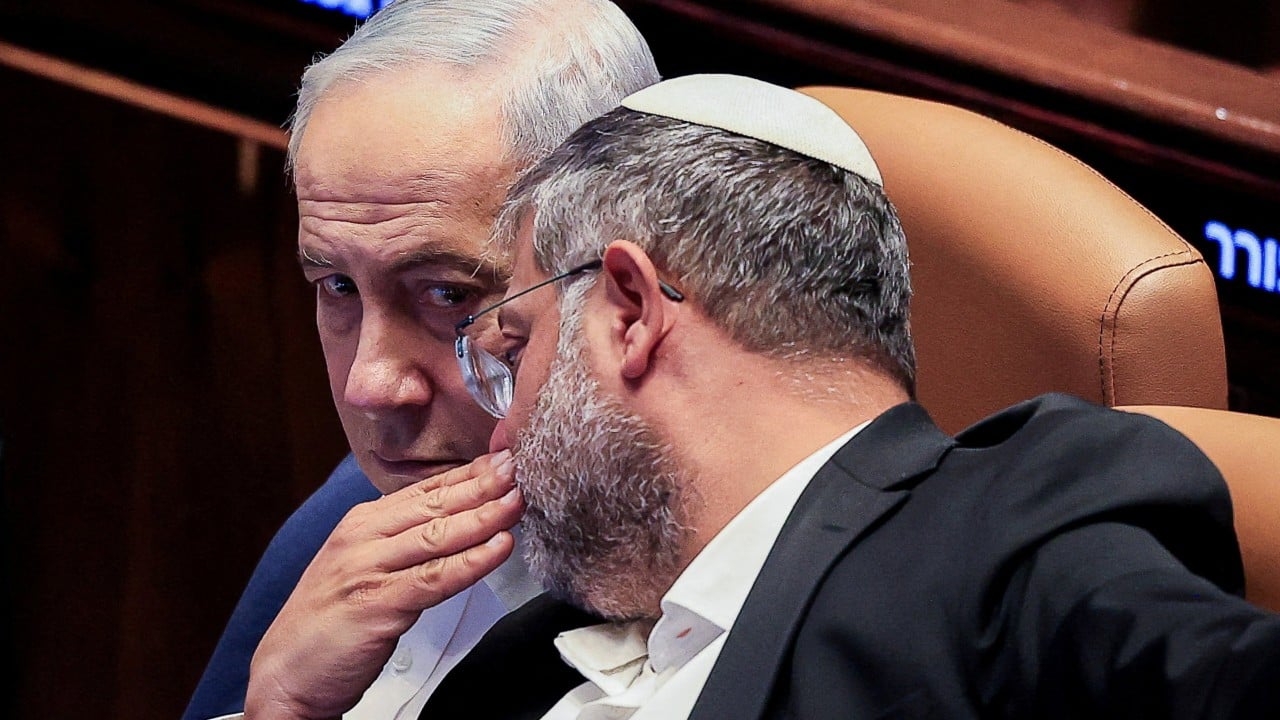
Consider the chilling calculus recently offered in public view by Israel's National Security Minister, Itamar Ben-Gvir. While addressing security strategy and the ongoing military campaign in Gaza, the far-right politician did not speak in the muted, clinical jargon of diplomats. He pushed for escalation with a stark numerical target, urging authorities to ensure that military operations eliminate "thirty to forty every night" in the besieged strip.
Numbers. Quantities. Quotas of death tossed casually into a conference room, stripped of flesh, breath, and history.
To understand the weight of such a statement, you have to step away from the podiums of Jerusalem and walk the fractured streets of Khan Younis or Deir al-Balah. Imagine a concrete frame stripped of its walls, sagging under the gray weight of powdered dust. Inside sits a father, clutching a plastic gallon jug of lukewarm water, listening to the night bleed into dawn. He does not know statistics. He only knows subtraction. Every sunrise means someone is missing from the mattress on the floor.
When a cabinet minister quantifies human elimination as a nightly quota, he is not merely describing a tactical objective. He is domesticating atrocity. He is turning annihilation into a routine administrative chore, akin to checking spreadsheets or clearing a backlog of emails.
History teaches us a grim, repetitive lesson. Whenever political actors begin treating human lives as units to be processed, the moral guardrails of a society dissolve from the inside out. We have seen this script before in various dark chapters of the twentieth century. It always begins with vocabulary. It shifts from defense to retribution, from retribution to cleansing, and finally to an industrialized arithmetic of survival.
Ben-Gvir's demand did not emerge in a vacuum. It represents the vocal, aggressive edge of a broader ideological shift within Israeli politics, where hardline factions have steadily leveraged ongoing security crises to normalize policies once deemed beyond the pale. By framing extreme violence as an insufficient daily minimum rather than a tragedy to be avoided, these leaders actively undermine international humanitarian law while eroding the internal moral fabric of the nation they claim to protect.
Critics within Israel and across the global stage quickly condemned the remarks, pointing out that such declarations violate the basic tenets of distinction and proportionality under the laws of war. Yet condemnation alone floats away like smoke. The chilling reality is that these sentiments are no longer whispered in backrooms; they are broadcasted, debated, and treated as legitimate policy options on prime-time television.
The human cost of this political theater is paid entirely in blood and ruin. On the ground, humanitarian workers describe an environment where infrastructure has ceased to exist, hospitals function as makeshift morgues, and millions are trapped in a relentless loop of displacement. When leaders demand thirty or forty deaths a night as a baseline metric of success, the entire apparatus of the state bends toward fulfilling that morbid quota.
We must confront the profound danger of this trajectory. It is not just about the immediate physical devastation unfolding across the strip, though that catastrophe is staggering enough. It is about what happens to a society that listens to quotas of slaughter and learns to nod along. It is about the soul of a region sliding deeper into an abyss of endless vengeance.
The night falls again over the Mediterranean coast. Somewhere in the dark, a child whimpers, startled by the distant rumble of artillery. Somewhere in an office, a politician counts upward, demanding more. And the dark swallows them both.