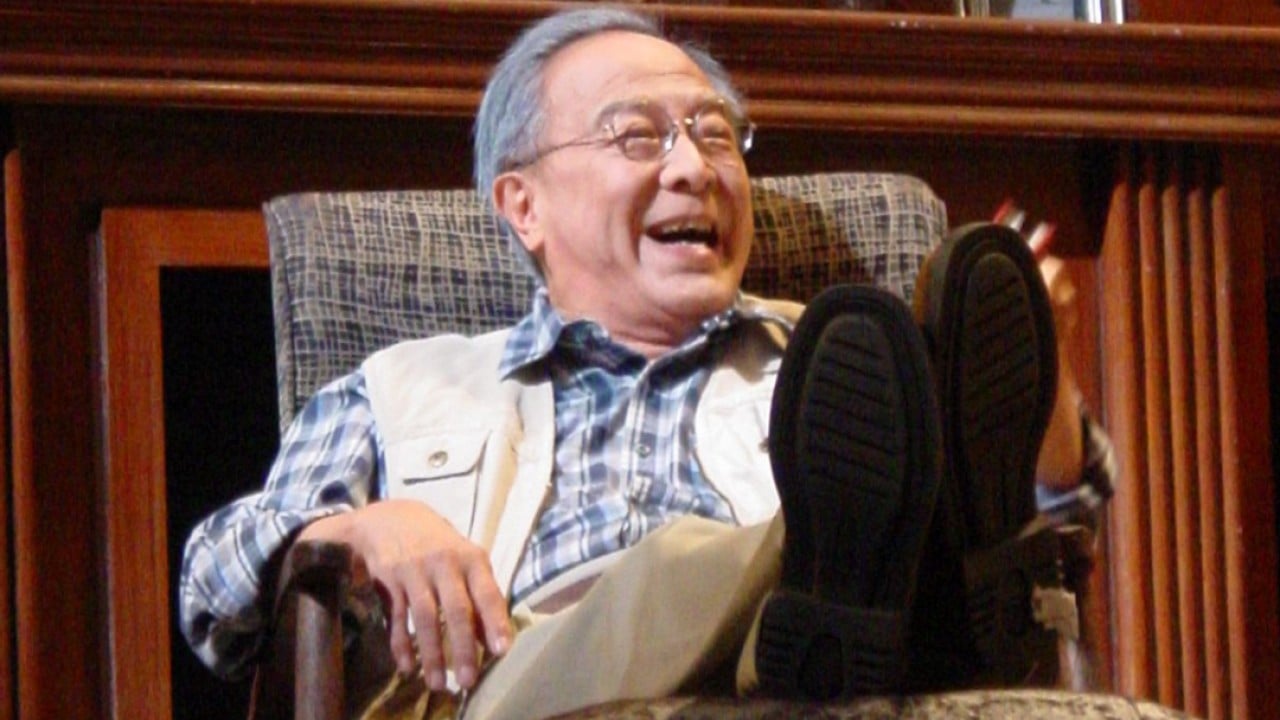
Hong Kong just lost the man who single-handedly built its modern theatrical DNA. Chung King-fai, known to everyone simply as "King Sir," passed away peacefully in his sleep at the age of 89.
If you've ever watched a gripping Hong Kong stage play, a classic TVB drama, or even tracked the meteoric rise of icons like Chow Yun-fat, you're looking at his direct handiwork. He wasn't just a veteran actor or a director with a long resume. He was the foundational architect of the city's performing arts. While casual fans know him for his distinct, gravelly voiceovers and late-career television roles, his true impact lies in how he imported global avant-garde art and turned it into Cantonese culture.
The American Education That Rewrote Hong Kong Art
Born in Bangkok in 1937 before his family relocated to Wan Chai as an infant, Chung didn't take the traditional route into entertainment. He sought out formal, rigorous training abroad at a time when local drama was mostly unstructured. He headed to the United States, earning a Bachelor of Arts in Speech and Drama from Oklahoma Baptist University, followed by a Master of Fine Arts from the prestigious Yale School of Drama.
When he returned to Hong Kong in 1962, he brought back a massive wave of Western theatrical philosophy. Local stages were dominated by traditional opera and standard Cantonese melodramas. Chung changed that instantly. He introduced local audiences to the Theatre of the Absurd and American realism, translating and staging Cantonese versions of seminal works.
- Death of a Salesman: His 1964 production with the Hong Kong Baptist College Dramatic Society brought Arthur Miller's crushing critique of the American Dream straight to a local audience, generating a massive HK$40,000 profit at the time.
- The Zoo Story: He forced audiences to confront Edward Albee's sharp, minimalist existentialism.
- Broadway Musicals: He was the first to adapt major Western musical structures into the Cantonese vernacular, proving that local language could carry the weight of Western theatrical pacing.
He didn't just copy paste Western scripts. He understood that for these heavy emotional pieces to work, they had to resonate with the specific social anxieties of Hong Kong. He localized the subtext, making foreign struggles feel intensely familiar to local theatergoers.
Building the Infrastructure from Scratch
Great artists perform, but true titans build institutions so the art survives them. Chung realized early on that Hong Kong couldn't rely on self-taught hobbyists if it wanted a world-class arts scene.
In 1977, he co-founded the Hong Kong Repertory Theatre, creating a permanent, professional platform for actors and directors to hone their craft full-time. But his crown jewel was the Hong Kong Academy for Performing Arts (HKAPA). Starting in 1983, he spearheaded the planning for the territory's first dedicated tertiary arts institution. When it opened its doors in 1985, Chung stepped in as the founding Dean of the School of Drama.
He stayed in that role until 2001. Think about the sheer volume of talent that passed through those doors during his 18-year tenure. He designed a comprehensive curriculum that balanced acting, playwriting, and directing. He forced students to study Western dramatic theory while respecting local performance styles. If you see a Hong Kong actor today with immaculate vocal control or razor-sharp physical timing, there's a near-certain chance they were trained by Chung or by someone he personally certified.
The Mentor Who Discovered Chow Yun-fat
Chung's influence spilled heavily into mainstream television and cinema. In 1967, he joined TVB as a scriptwriter and talent scout during the station's infancy. Later, he moved to Rediffusion Television (which became ATV) as a director and producer.
His most significant pop-culture contribution might be his role as the ultimate gatekeeper of the TVB Artiste Training Class. He possessed an uncanny eye for raw star power. When a young, lanky, and unpolished kid named Chow Yun-fat auditioned for the program, most of the panel wasn't impressed. Chow lacked traditional leading-man polish at the time. Chung saw something else—a rare presence and an undeniable emotional ceiling. He pushed for Chow's acceptance into the program, effectively launching the career of one of international cinema's greatest icons. He did the same for Leslie Cheung, recognizing early on that the young performer possessed a magnetic quality that could transcend both music and screen.
Chung didn't hoard his knowledge for the elite theater crowd. He brought his distinct dignity to mainstream TVB sitcoms like Welcome to the House (2006) and intense dramas like The Dance of Passion (2006). Even if you didn't know his theater background, you knew his voice—deep, authoritative, yet incredibly warm—as the narrator for the legendary ATV documentary series Stories from Afar.
A Decorated Career of Quiet Excellence
The sheer volume of accolades Chung collected throughout his life reflects a career of relentless output. He won Best Actor eight times and Best Director four times at the Hong Kong Drama Awards. The government recognized his monumental cultural footprint by awarding him the Bronze Bauhinia Star (BBS) and later the Silver Bauhinia Star (SBS) in 2013.
Yet, those who worked with him closely remember the man, not the medals. Fellow artists consistently describe him as a consummate gentleman. He was calm, impossibly polite, and approached every single rehearsal with a quiet seriousness that demanded everyone else level up. He didn't yell or throw tantrums; his authority came from his sheer competence and his deep, genuine love for the craft.
His death marks the end of an era, but his blueprint remains intact. The institutions he built continue to pump out the city's best creative talent, and his students are currently running the major theater companies, television networks, and film sets across the region.
To honor King Sir's legacy, don't just mourn his passing. Go book a ticket to a local stage play. Watch a classic Cantonese adaptation of a global script. Support the independent theater companies struggling to find their footing in a changing cultural landscape. The best way to keep his memory alive is to ensure that the curtains keep rising on the Hong Kong stage.