Most royal conservation stories sound like glorified PR stunts. A ribbon gets cut, a press release goes out, and nothing really changes on the ground.
That isn't what's happening in Norfolk. Recently making waves in related news: The £92,000 Wedding Ring Scandal Exposing Britain’s Charity Oversight Crisis.
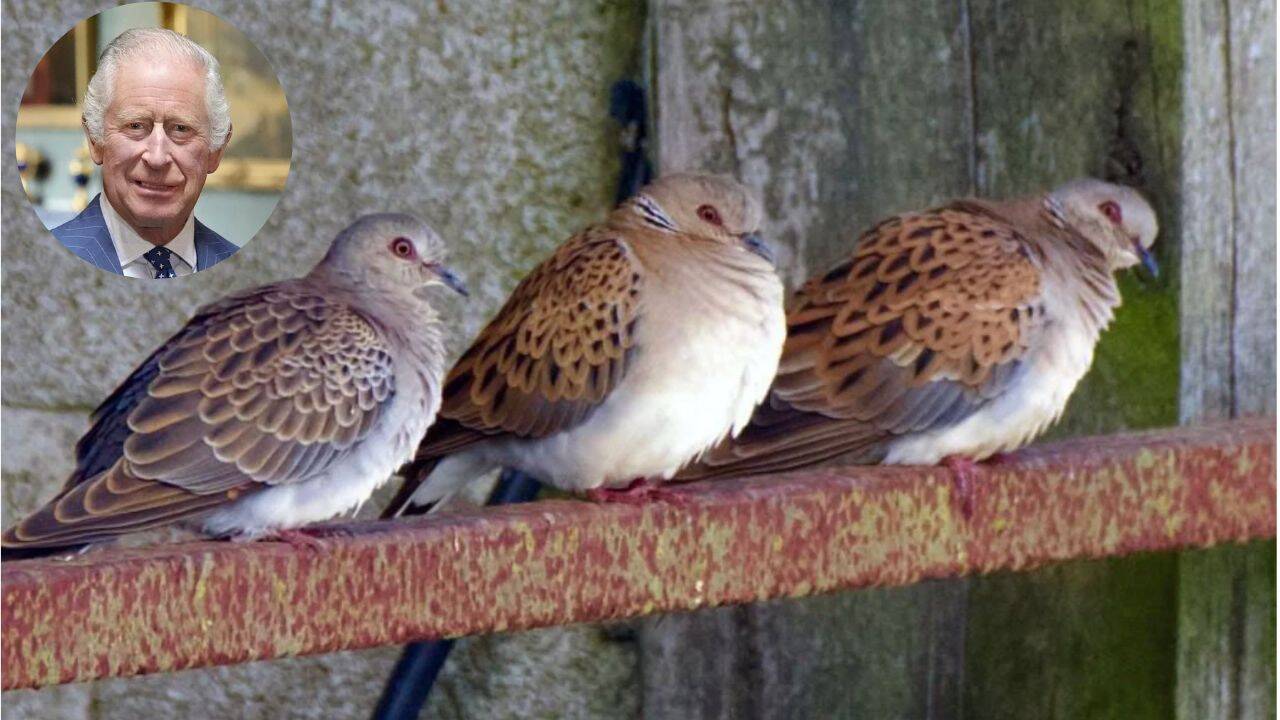
Across the 20,000-acre Sandringham Estate, King Charles’s land management team has pulled off something conservationists have struggled with for decades. They've reversed the local collapse of the European turtle dove, the UK’s fastest-declining bird species. While national populations plummeted by roughly 98% since the late 1960s, Sandringham didn't just hold the line. They quadrupled their breeding pairs in just a few years.
You might assume a royal estate has endless money to throw at rare birds, making their success impossible for regular farmers to copy. You'd be wrong. The secret behind Sandringham's turtle dove recovery isn't royal privilege or massive budgets. It's dirt-cheap, messy agriculture that breaks almost every rule of modern, tidy farming. More information into this topic are detailed by Reuters.
Why the UK Lost Almost All Its Turtle Doves
Before we get into what Sandringham did right, you have to understand why these birds vanished in the first place.
The European turtle dove (Streptopelia turtur) isn't your standard city pigeon. They're smaller, migratory, and ridiculously picky eaters. Unlike woodpigeons that happily gorge on rapeseed leaves or garden birdseed, turtle doves rely almost entirely on the tiny seeds of arable weeds. Think fumitory, chickweed, scarlet pimpernel, and black medick.
For centuries, traditional British farming created a paradise for them. Fields weren't sprayed clean. Hedges grew thick and thorny. Margins stayed wild.
Then came post-war agricultural intensification. Broad-spectrum herbicides wiped out the "weeds" that kept adult birds alive and fed their chicks. Farmers ripped out dense hedgerows to make room for massive combine harvesters, destroying the thorny scrub where turtle doves build their flimsy twig nests.
By the time the 2020s rolled around, the bird that inspired the famous "Twelve Days of Christmas" lyric was staring down total extinction in Britain. If you wanted to hear their signature purring call—a soft, hypnotic turr-turr—you had to know exact coordinates in East Anglia or Kent, and even then, you'd probably strike out.
What Sandringham Actually Changed on the Ground
When the Sandringham Estate decided to tackle the crisis, they didn't build fancy aviaries or start a captive breeding program. They partnered with Operation Turtle Dove, a coalition led by the RSPB, Natural England, Pensthorpe Conservation Trust, and Fair to Nature.
I've walked enough farmland conservation projects to know where most of them fail. Farmers plant a pretty strip of wildflowers, tick a subsidy box, and wonder why the target species never shows up. Wildflowers look great on Instagram, sure, but tall, dense grass is a death sentence for a turtle dove. These birds have tiny legs. They can't wade through knee-high vegetation to find food. They need bare, patchy soil where they can walk easily and peck at fallen seeds.
Sandringham's estate team got their hands dirty and focused on three specific, unglamorous habitats.
1. Low-Input "Weedy" Seed Plots
Instead of chasing maximum yield on every square inch of arable land, Sandringham carved out dedicated plots specifically designed to grow weeds. They cultivated the soil lightly in early spring and deliberately withheld herbicides and fertilizers.
What popped up would give a conventional agronomist a heart attack. Fumitory, bird's-foot trefoil, and wild clover carpeted the ground. Because the soil wasn't choked with nitrogen fertilizer, the plants stayed sparse enough for turtle doves to land and forage safely.
2. Thick, Untidy Scrub and Hedgerows
A turtle dove's nest looks like someone threw twelve sticks into a bush and hoped for the best. Because their nests are so fragile, predators like magpies, jays, and grey squirrels raid them constantly if there isn't heavy cover.
Sandringham stopped flailing their hedges into neat, boxy shapes every autumn. They let blackthorn, hawthorn, and bramble grow wild, wide, and impenetrable. They also created scrubby pockets near the feeding plots. When a parent bird only has to fly fifty yards from a dense thorny bush to a seed-rich patch of bare earth, chicks survive. It's basic math. Less energy spent flying means more energy spent growing.
3. Shallow Ponds and Watering Holes
People forget that seed-eating birds need water constantly. Unlike insect-eaters that get moisture from caterpillars and beetles, doves eat dry, hard seeds. They also produce "crop milk" to feed their hatchlings, a process that demands serious hydration.
The estate restored old farm ponds and dug shallow scrapes with gently sloping edges. Deep, steep-sided drainage ditches are useless to a small dove; they'll drown trying to get a drink. Shallow, muddy margins give them safe, easy access to water right next to their feeding grounds.
The Numbers Behind the Norfolk Turnaround
Results in wildlife conservation usually move at a glacial pace. You plant trees today and wait thirty years to see if anything cares.
Turtle doves, however, respond fast when you fix their food supply. Historically, a turtle dove pair in the UK used to raise two or three broods per summer. As weed seeds disappeared, they struggled to raise even one, meaning the population couldn't replace the adults dying on migration.
At Sandringham, the baseline surveys before the targeted habitat work showed just a handful of singing males—around four territories across the entire estate. Once the RSPB-backed feeding plots and scrub management took hold, those numbers didn't just creep up. They exploded. Within a few breeding seasons, Sandringham recorded well over a dozen singing males, representing roughly a fourfold increase.
Even better, tracking showed the birds weren't just passing through. They were staying, pairing up, and successfully fledging multiple broods in a single summer. That makes Sandringham one of the strongest breeding hubs left in the entire United Kingdom.
King Charles’s Organic Farming Philosophy Isn't New
If you think King Charles jumped on the rewilding bandwagon because it's trendy, you haven't been paying attention. Long before he took the throne, he converted his Duchy Home Farm at Highgrove to a fully organic system back in 1985. At the time, agricultural commentators mocked him relentlessly, calling him an eccentric out of touch with modern science.
When he took over management of the Sandringham Estate from Prince Philip in 2017, he immediately began transitioning the Norfolk land to organic principles as well.
Here's why that matters for the birds. Organic farming bans synthetic pesticides and artificial fertilizers across the entire rotation, not just on a tiny "wildlife corner" at the edge of a field. When you stop drenching thousands of acres in chemicals, insect populations rebound, soil microbes recover, and native seed banks wake up. The turtle dove plots at Sandringham aren't isolated islands surrounded by a chemical desert; they're part of a functioning, chemical-free agricultural ecosystem.
The Elephant in the Room Hunting and Migration
I'd be lying to you if I claimed habitat management in Norfolk solves everything. Conservation is messy, and turtle doves face a massive threat thousands of miles away from King Charles’s estate.
Every autumn, UK turtle doves fly south through France, Spain, and Portugal, crossing the Sahara to winter in West Africa. For decades, hunters along the Western European flyway shot hundreds of thousands of them every single year—often legally, under outdated quotas that ignored the species' collapse.
In 2021, the European Union finally instituted a temporary hunting moratorium across France, Spain, and Portugal. Scientists from the RSPB and European partners immediately noticed a bump in survival rates. When you stop shooting breeding adults on their way home, more birds make it back to places like Sandringham.
Still, that ban isn't permanent. Hunting lobbies in southern Europe push every single year to reopen the season, arguing their local populations are stable. Meanwhile, droughts and agricultural expansion in their West African wintering grounds in Mali and Senegal squeeze the birds from the other end. Sandringham can build the finest five-star breeding habitat in England, and it won't mean a thing if the birds get blasted out of the sky over the Pyrenees or starve in the Sahel.
Why Small Landowners Should Copy the Sandringham Blueprint
You don't need 20,000 acres or a royal title to make this work. In fact, Operation Turtle Dove relies heavily on regular, working family farms across East Anglia, Kent, and Sussex to connect the dots between larger reserves.
If you manage rural land, own a large garden near arable fields, or advise local farmers, you can replicate Sandringham's exact setup on a single acre.
- Stop mowing and spraying field corners. Pick a sunny, south-facing edge next to a thick hedge. Cultivate the top few inches of soil in March or April to expose the natural seed bank, and walk away. Let the native weeds take over.
- Sow a bespoke turtle dove seed mix. If your soil's seed bank is dead from decades of spraying, drill a specialist low-density mix containing fumitory, bird's-foot trefoil, black medick, and common vetch. Keep the sowing rate low—about half what you'd use for a normal crop—so bare earth stays visible between the plants.
- Leave your hedges alone for three years. Cut them on a three-year rotation rather than annually, and never cut all your hedges in the same winter. You want messy, tangled growth at least ten feet high and wide.
- Offer supplementary grain during arrival. When turtle doves first arrive in late April and early May, wild weeds haven't set seed yet. Scattering a small amount of hemp, millet, and canary seed on a patch of bare ground near dense cover gives exhausted migrants immediate fuel to start breeding.
The UK government’s Sustainable Farming Incentive (SFI) actually pays farmers in England to create these exact winter bird food plots, scrubby margins, and low-input arable areas. It isn't charity; it's a funded business decision that turns unproductive, shaded field corners into profitable conservation assets.
What You Can Do Right Now
If you aren't a farmer, you can still back the exact model working at Sandringham.
First, support the organizations doing the actual fieldwork on the estate. Check out Operation Turtle Dove to see live distribution maps, listen to recordings of their purring call, and learn how to report sightings if you're lucky enough to spot one between May and August. Recording sightings helps researchers track where Sandringham's fledglings disperse as the population expands.
Second, pay attention to where your food comes from. Look for labels like Fair to Nature or certified organic products when buying flour, oats, and rapeseed oil. Those certifications aren't empty marketing fluff—they legally require farms to dedicate at least 10% of their land to managed wildlife habitats, directly funding the messy, weed-rich margins that keep turtle doves alive.
Sandringham proved the birds aren't doomed. Give them weeds, thorny bushes, and shallow water, and they'll bounce back faster than anyone thought possible.