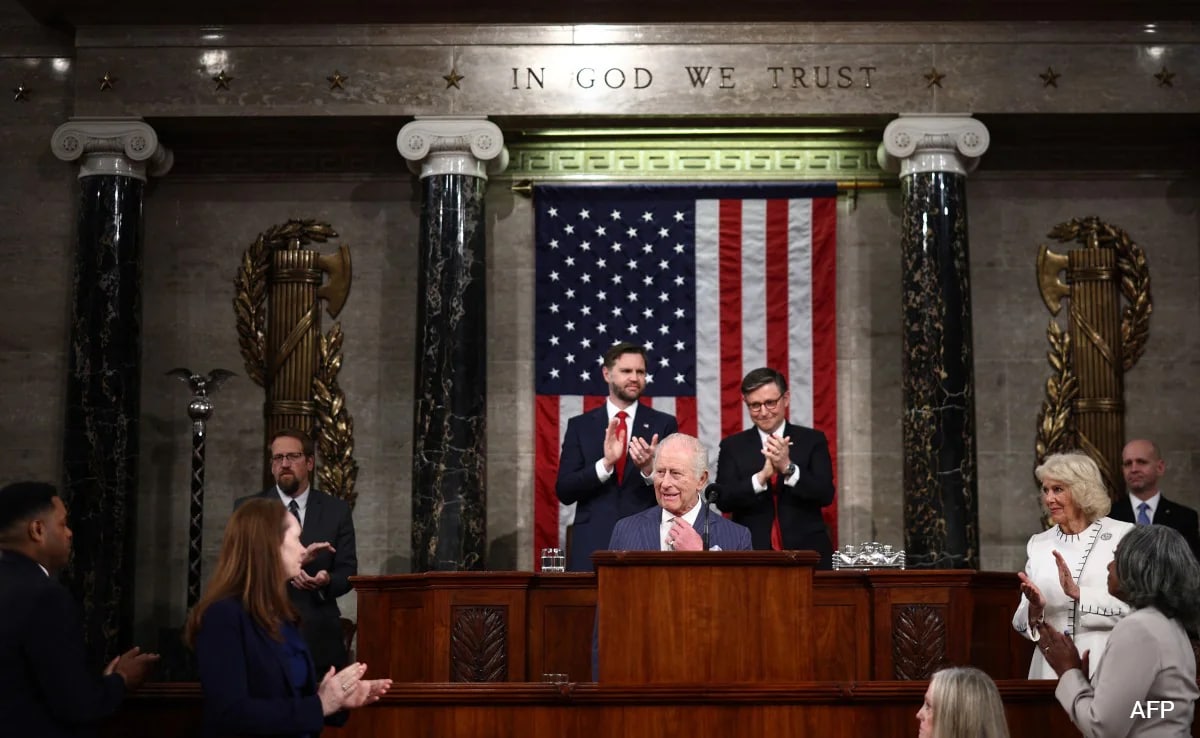
Watching King Charles III stand before a joint session of the U.S. Congress this week, you couldn't help but feel the desperation behind the pomp. This wasn't just a victory lap for the 250th anniversary of American independence. It was a high-stakes rescue mission. While the headlines focus on the "stay united" soundbite, the subtext is a frantic attempt to patch up a "Special Relationship" that’s currently screaming in the ICU.
Let's be blunt. The relationship between President Donald Trump and Prime Minister Keir Starmer isn't just "strained"—it’s toxic. Trump has spent the last month mocking Starmer at White House events, calling him out for hesitating on the Iran war and ridiculing his need to "ask his team" before committing British ships. Starmer, for his part, has publicly admitted he's "fed up" with the economic chaos triggered by Trump’s foreign policy. This isn't just a political spat; it's a structural breakdown. If you liked this post, you should check out: this related article.
The King as a Diplomatic Shield
The King’s address on April 28, 2026, was a masterclass in saying everything without saying anything at all. When he spoke about the "spirit of 1776" and the "unshakeable resolve" of democracy, he wasn't just reciting history. He was pleading with American lawmakers to look past the current occupants of Downing Street and the White House.
He knows Starmer is on the ropes back home, battling scandals involving Peter Mandelson and Epstein-related fallout that the U.S. media seems strangely uninterested in. By evoking the memory of his five-times-great-grandfather, George III, and the first president, George Washington, Charles was reminding the room that the U.S.-U.K. bond is bigger than two men who can't stand each other. For another look on this story, refer to the recent update from USA Today.
Why the Iran War Changed Everything
The real wedge between London and Washington right now is the conflict in Iran. Trump wants total commitment. Starmer, wary of skyrocketing energy bills and the ghost of the Iraq War, has tried to play a game of "de-escalation and diplomacy." It hasn't worked.
- Trump has openly denigrated the British military's strength.
- The Pentagon has reportedly floated the idea of reviewing the U.S. stance on the Falkland Islands—a move that would be a total betrayal in British eyes.
- Spain has already closed its airspace to U.S. jets, and Starmer’s refusal to grant similar access to U.K. bases early on has made him a target of Trump’s "America First" ire.
When the King mentioned that "our Alliance cannot rest on past achievements," he was addressing the very real fear that the U.S. might actually walk away from its traditional partners.
NATO and the Climate Elephant in the Room
You can't talk about this visit without mentioning the policy gulf. Charles is a lifelong environmentalist. Trump is currently gutting climate regulations. Charles heralded NATO as the "heart of our collective defense." Trump has spent his second term threatening to pull the plug on the alliance entirely.
The King’s speech was littered with subtle digs. He spoke about the "disastrously melting ice-caps" and the "shared responsibility to safeguard nature." In any other era, these would be platitudes. In 2026, they're a direct challenge to the White House's current trajectory. It’s a risky move for a monarch who is supposed to be politically neutral, but honestly, what does he have to lose? If the U.S. pulls out of NATO, the U.K.’s security architecture evaporates overnight.
What This Means for You
If you're wondering why a speech in D.C. matters for your wallet, look at the oil prices. The spat between Starmer and Trump over the Strait of Hormuz is one reason your energy bills are swinging like a pendulum. When the two biggest allies in the West can't agree on how to handle a global energy chokepoint, the markets freak out.
The King’s visit is an attempt to stabilize that volatility by projecting an image of stability that doesn't actually exist on the ground. It’s theater, but it’s necessary theater.
The Mandelson Shadow
Adding to the mess is the Christian Turner scandal. The new U.K. Ambassador to the U.S. was caught on tape saying Starmer was "on the ropes" and suggesting the "Special Relationship" now belongs to Israel, not Britain. That kind of talk makes the King's job nearly impossible. He’s trying to sell a "vibrant, diverse, and free society" while his own diplomatic corps is questioning the Prime Minister's survival.
Next Steps for the U.K. and U.S.
The State Dinner might provide some glossy photos, but the real work happens in the corridors of the Capitol. If you’re following this, don't look at the King—look at the Congressional response.
- Watch the NATO funding bills: If Congress continues to bypass the President's rhetoric to fund European defense, the King's "stay united" message found a mark.
- Monitor the Falklands rhetoric: If the State Department clarifies its support for British sovereignty, the diplomatic "charm offensive" worked.
- Keep an eye on the May elections: If Starmer’s Labour party gets crushed, this whole Royal visit will be remembered as the last gasp of a dying administration.
The "Special Relationship" has survived world wars and cold wars, but it’s never faced a rift this personal and this public. Charles did his part. Now we wait to see if anyone in Washington was actually listening.