The recent escalation in kinetic exchanges between Israeli forces and Iranian infrastructure, coupled with the targeting of U.S. diplomatic facilities in Baghdad, marks a transition from shadow warfare to a state of calibrated overt attrition. This shift is not merely an increase in violence but a fundamental reconfiguration of the regional security architecture. The current conflict cycle is governed by a logic of "competitive escalation," where each actor seeks to establish a new ceiling for acceptable aggression without triggering a total theater war. However, the shrinking window between provocation and response suggests that the traditional mechanisms of deterrence have entered a period of terminal decay.
The Mechanics of Precision Attrition
The strikes on Tehran and the simultaneous rocket and drone attacks in Baghdad must be analyzed as a single, integrated operational theater. While the actors differ—state-level air assets in the Tehran strikes and non-state or hybrid "Resistance Axis" proxies in Baghdad—the strategic intent is synchronized. We can categorize the current operational environment into three primary functional layers:
- The Atmospheric Layer (Israel vs. Iran): High-end, long-range precision strikes targeting air defense nodes, missile production facilities, and command-and-control (C2) centers.
- The Sub-State Layer (Proxies vs. U.S./Israel): Asymmetric saturation attacks using low-cost loitering munitions and unguided rockets to force the expenditure of expensive interceptors.
- The Diplomatic-Psychological Layer: The deliberate targeting of sovereign territory (Tehran) and diplomatic protected zones (US Embassy, Baghdad) to signal the irrelevance of prior "red lines."
The Israeli strikes in the vicinity of Tehran represent a targeted degradation of Iran's Integrated Air Defense System (IADS). By neutralizing S-300 or similar radar and battery arrays, Israel is not just destroying hardware; it is creating "corridors of vulnerability." This forces the Iranian military to choose between static defense of high-value leadership targets and the protection of mobile missile launch platforms.
The Cost-Exchange Ratio of Saturation Attacks
The rocket and drone attacks on the U.S. Embassy in Baghdad demonstrate the effectiveness of the Low-Cost Saturation Model. In this framework, the objective is not necessarily the destruction of the target, but the exhaustion of the defender’s logistics chain.
Consider the economic and technical variables:
- The Munition Delta: An improvised 107mm rocket or a primitive fixed-wing drone may cost between $500 and $20,000.
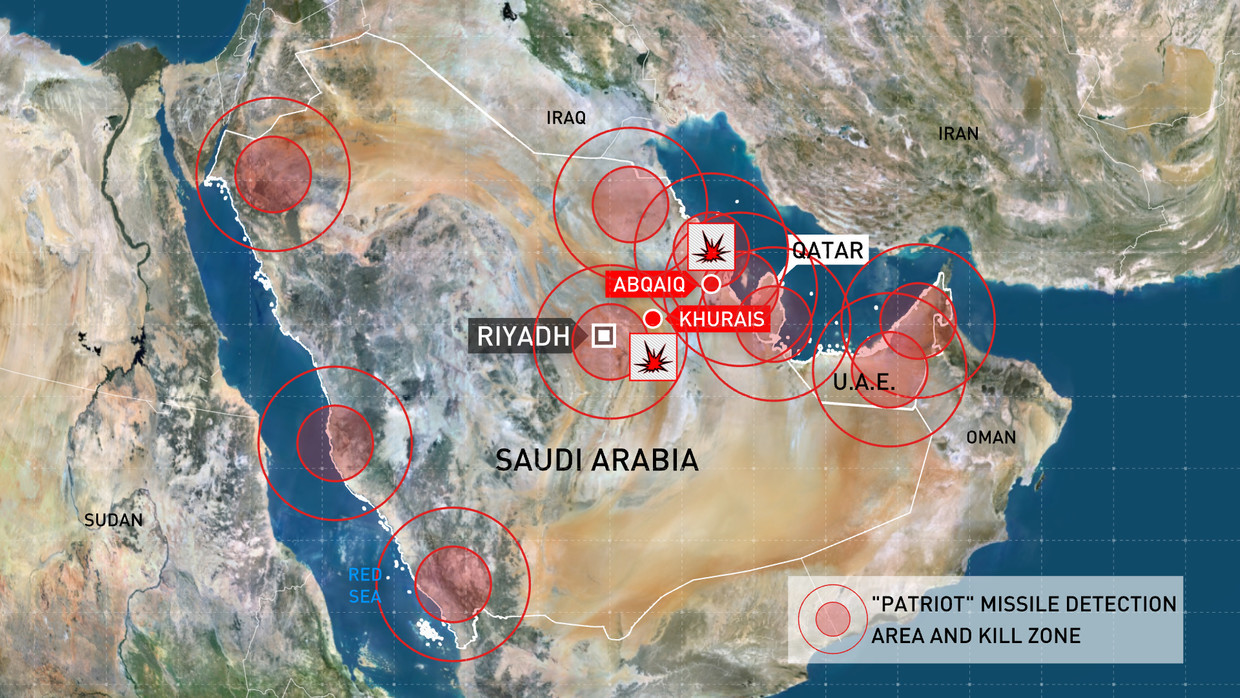
- The Interception Tax: C-RAM (Counter Rocket, Artillery, and Mortar) rounds or terminal interceptors like the Iron Dome’s Tamir or the Patriot’s PAC-3 cost significantly more, ranging from $40,000 to $3 million per engagement.
- Logistical Latency: A defender’s magazine depth is finite. By launching multi-vector attacks (simultaneous drones and rockets), the attacker attempts to overwhelm the C2 system’s tracking capacity, leading to "leakers" that reach the target.
This creates a negative cost-exchange ratio for the U.S. and its allies. The persistence of these attacks, even if 95% are intercepted, serves to degrade the political will of the intervening power by demonstrating a perpetual state of insecurity that high-technology defense cannot fully solve.
Structural Erosion of Deterrence
The core problem in the current West Asia conflict is the failure of "Tit-for-Tat" game theory. In a stable deterrent relationship, a response is intended to return the status quo to a state of equilibrium. In the current environment, responses are being used to expand the strike envelope.
When Israel strikes deep within Iranian territory, it validates the Iranian logic for further proxy mobilization in Iraq and Yemen. This creates a feedback loop where the "cost of inaction" is perceived to be higher than the "risk of escalation." The following variables are now driving the decision-making matrices of all involved parties:
- Intelligence Primacy: The ability of Israel to conduct strikes in Tehran suggests a significant penetration of Iranian security protocols. This creates an "internal security tax" on the Iranian regime, forcing them to divert resources from external operations to internal purges and counter-intelligence.
- The Baghdad Buffer: For Iranian-aligned groups in Iraq, the U.S. Embassy acts as a convenient, high-visibility pressure valve. Attacks here serve as a "proof of life" for the resistance narrative without requiring the Iranian state to claim direct responsibility, maintaining a level of plausible (though thinning) deniability.
- Technological Proliferation: The transition from unguided rockets to GPS-guided loitering munitions means that even "proxy" forces now possess the capability for precision strikes once reserved for first-tier nation-states.
Geopolitical Friction and the Oil Variable
Despite the intensity of these kinetic exchanges, the global energy market has shown a degree of "crisis fatigue." Historically, a strike on Tehran or a drone swarm in Baghdad would trigger a significant risk premium in Brent Crude pricing. However, the current market is pricing in a containment hypothesis.
This hypothesis assumes that neither the U.S. nor Iran can afford a full-scale maritime closure of the Strait of Hormuz. Because approximately 20% of the world's liquefied natural gas and oil passes through this chokepoint, a total escalation would result in a global economic shock that would isolate whichever party triggered it. Therefore, the conflict is currently bounded by economic reality, even as the military reality becomes increasingly volatile.
The limitation of this hypothesis is that it assumes rational-actor behavior under extreme stress. As C2 nodes are targeted and "fog of war" increases, the probability of a miscalculation event increases. A "miscalculation event" occurs when a tactical-level commander makes a decision—such as sinking a high-value naval asset or causing mass casualties in a diplomatic zone—that forces a strategic-level response that neither government originally intended.
Strategic Recommendation for Risk Mitigation
The current trajectory suggests that tactical successes (e.g., successful strikes on missile depots) are being decoupled from strategic outcomes. To regain stability, the focus must shift from kinetic dominance to escalation management.
For regional stakeholders and international observers, the primary indicator of further escalation will not be the number of rockets fired, but the target selection criteria. If strikes transition from military/logistical targets to energy infrastructure or civilian leadership hubs, the "containment hypothesis" will be invalidated.
The immediate strategic priority must be the hardening of "soft" diplomatic and logistical nodes in Iraq while simultaneously establishing a direct de-confliction line that bypasses proxy intermediaries. Relying on "messages sent through third parties" is too slow for a combat environment where drone flight times are measured in minutes.
The survival of the current regional order depends on the ability of both primary states to accept a "stalemate of discomfort" rather than pursuing a "mirage of total victory." The strikes in Tehran and Baghdad are symptoms of a system searching for a new equilibrium; if that equilibrium is not found through diplomatic signaling, it will be dictated by the exhaustion of one side’s kinetic capacity.