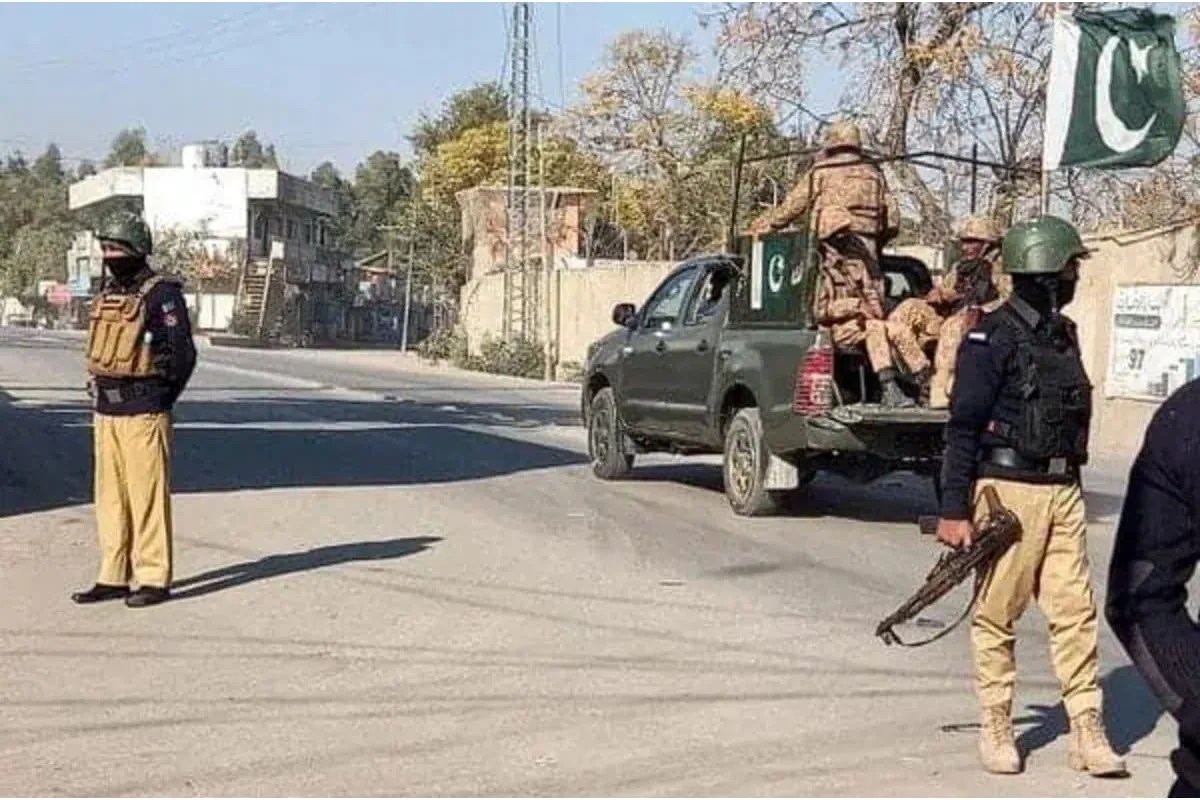
Five militants dead. Another press release from the military media wing. Another set of headlines treating a tactical raid in Balochistan like a turning point.
It isn't.
When coverage frames security operations in Balochistan around body counts—five killed here, eight captured there—it sells a comforting fiction. The story implies that kinetic pressure is steadily grinding an insurgency down to zero. Anyone who has spent years tracking counterinsurgency doctrine, borderland politics, or South Asian security affairs knows how shallow that reading is.
A firefight removes individuals. It does not erase grievances, geography, or generational resentment.
The Body-Count Trap in Counterinsurgency
Conventional coverage loves a clean tally. Numbers feel concrete. Five militants eliminated sounds like progress you can point to on a map or read aloud on a television panel.
In asymmetrical conflict, numbers are often the least reliable metric of strategic health.
Insurgent networks operating in rugged, sparsely populated terrain do not function like standing armies with a single center of gravity. They are decentralized, cellular, and deeply embedded in local social fabrics. When a cell loses five fighters in an intelligence-based operation or ambushed movement, two things happen almost immediately. First, surviving operatives tighten communications and disperse. Second, recruitment pipelines—fed by economic marginalization, political alienation, and perceived state neglect—quietly replenish the ranks.
I have watched analysts and commentators across South Asia celebrate tactical raids for years only to act stunned six months later when attacks spike in another district. That surprise comes from confusing tactical attrition with strategic resolution.
Eliminating armed actors is a police and military necessity when lives and infrastructure are under threat. Calling it a decisive blow against the root conflict is lazy analysis.
Why People Ask the Wrong Questions About Balochistan
When a headline announces a security operation in Balochistan, public curiosity usually clusters around a predictable set of questions. People ask how many militants were killed, which group was behind the violence, and whether the army is finally winning control of the province.
Each of those questions starts from a flawed premise.
"Is a kinetic crackdown ending the unrest?"
Kinetic operations disrupt immediate plots and punish active combatants. They do not resolve underlying political and economic drivers.
Balochistan is Pakistan's largest province by land area and its smallest by population density. That combination—vast rugged territory, porous borders, sparse settlements, and limited state service delivery—creates an environment where coercive force alone hits diminishing returns. Security forces can hold highways, guard major corridors, and conduct raids. Holding hearts, minds, and local legitimacy across hundreds of thousands of square kilometers of mountains and desert is a completely different problem.
As long as local populations feel excluded from decision-making and resource benefits, every heavy-handed sweep risks creating new recruits faster than the old ones are neutralized.
"Who is really behind the violence?"
Headline summaries often reduce complex unrest to neat labels: separatist factions, cross-border proxies, or external interference.
Reality is messier. External actors and rival states do exploit internal fault lines in unstable regions—that is standard geopolitical behavior, not a conspiracy theory. Yet external meddling only gains traction where domestic friction already exists. If a province enjoyed broad political trust, fair economic distribution, and strong local governance, outside intelligence agencies would have far less local oxygen to work with.
Blaming everything on foreign hands is convenient. It absolves domestic institutions of hard governance reforms. Crediting every attack purely to local grievance is equally incomplete. Both forces interact in a feedback loop.
"Why do major infrastructure projects keep becoming flashpoints?"
Large-scale connectivity and resource initiatives—whether ports, highways, or mining ventures—are frequently pitched as economic salvation for underdeveloped regions.
On paper, investment brings jobs, trade, and modernization. On the ground in Balochistan, mega-projects often trigger intense suspicion. Local communities frequently ask a pointed question: who actually owns the wealth, who gets skilled jobs, and who bears the security burden?
When locals perceive mega-projects as extractive rather than inclusive, infrastructure itself becomes a target. Concrete and steel do not create peace on their own. Fair revenue sharing, transparent contracts, and visible local dividends determine whether a project builds stability or fuels backlash.
Lessons From Counterinsurgency Theory
To understand why five eliminated militants rarely shift the strategic equation, look at classical counterinsurgency thinkers like David Galula and Sir Robert Thompson, as well as modern conflict researchers studying insurgencies from South Asia to the Middle East.
A core principle runs through decades of serious conflict studies: insurgency is a political struggle waged through armed means.
Military force creates space. Politics has to fill it.
If military pressure is applied without parallel political outreach, economic inclusion, and accountable administration, the conflict settles into a long war of attrition. Security forces spend blood and treasure containing flare-ups. Militants adapt their tactics—shifting from large formations to small cells, hit-and-run ambushes, targeted intimidation, or disruptions to transit routes.
Imagine a scenario where security forces double their raid frequency over two years and eliminate dozens of active fighters, while local youth unemployment stays high, political representation feels hollow, and grievances over missing persons or local resources remain unresolved. What happens in year three? You get a new generation of angry young men who view the state solely through the barrel of a gun.
That is not a guess. It is the documented pattern of protracted insurgencies worldwide.
The Blind Spots of State-Centric Reporting
Much of the mainstream reporting on Balochistan relies heavily on official briefings and security statements. There is a structural reason for that: access to active conflict zones is restricted, independent verification is difficult, and official press releases are fast and accessible.
The downside is predictable. Coverage mirrors the state's framing.
An operation is described in clean, clinical terms—militants killed, arms recovered, area cleared. The human cost on civilians, the strain on local communities caught between armed groups and security sweeps, and the long-term political fallout rarely get equal weight.
Good reporting does not mean ignoring security threats or pretending armed groups are benign. Armed attacks against civilians, security personnel, and workers are real and brutal. Good reporting means refusing to mistake a tactical press release for a strategic diagnosis.
What Actually Works (And What Doesn't)
If kinetic raids alone do not end an insurgency, what does?
There is no magic wand, and anyone promising a quick fix is selling snake oil. Serious conflict resolution requires simultaneous pressure and political engineering.
Stop Measuring Success by Casualties
Security agencies need clear operational metrics, sure. Public analysis needs better ones.
Real progress looks like fewer civilian casualties over multi-year stretches, safer local commerce, functioning schools and clinics, and growing local trust in civilian institutions. A single day's body count tells you almost nothing about whether the province is safer next year.
Pair Security With Credible Local Governance
You cannot pacify a territory through checkpoints alone if local administration is weak or distant. Empowering credible local representatives, improving basic public services, and addressing grievances through transparent legal and political channels undercut militant recruitment far more durably than another raid.
Make Economic Development Visibly Local
Projects tied to trade corridors, energy, and natural resources must visibly benefit local communities early—not decades down the line. Local hiring, technical training, fair compensation, and clear environmental and social safeguards turn skeptics into stakeholders.
Keep Border and Intelligence Pressure Sharp
None of this means dropping your guard. Violent actors who reject dialogue and target innocents must be deterred and neutralized through targeted intelligence and law enforcement. Soft-headedness in the face of armed violence is just as reckless as blind militarism.
The Downside of Taking This Contrarian View
Let's be honest about the cost of pushing this argument.
Calling out body-count narratives makes you unpopular with two crowds at once. Hardliners accuse you of downplaying national security or undermining troops doing dangerous work in harsh terrain. Activists or critics may accuse you of not going far enough or of sounding too clinical about human suffering.
Contrarian analysis also runs the risk of sounding detached when real people are dying. A sharp analytical framework should never turn human tragedy into an abstract chess game. Every killed militant, soldier, or civilian represents a real family and real grief.
Yet intellectual honesty requires separating empathy from bad strategy. Feeling sympathy for security forces or grieving for victims does not require pretending that five dead fighters solved a decades-old political crisis.
Shifting the Lens on Every Future Headline
Next time a dispatch lands with news of an operation in Balochistan and a tally of militants killed, read past the headline.
Ask who held influence in that area yesterday, and who holds it tomorrow. Ask what changed in the daily lives of ordinary residents. Ask whether the underlying political and economic pressures moved an inch.
Five militants taken off the board is a tactical event. Peace in Balochistan will be decided by what happens in courtrooms, council chambers, classrooms, and markets—long after the gunfire stops.


