The Diplomacy of Illusion
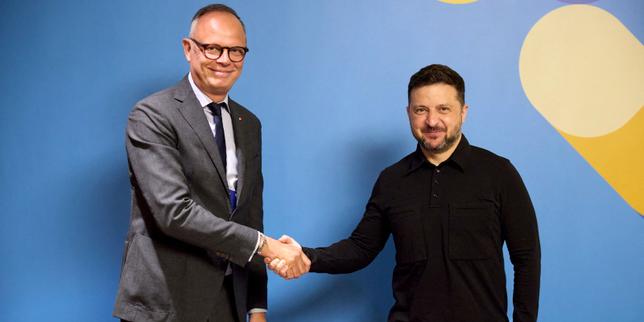
Mainstream media loves a high-profile visit to Kiev. The scripts practically write themselves. A prominent Western politician—in this case, former French Prime Minister Édouard Philippe—boards a night train from Poland, arrives under heavy security, shakes hands with Volodymyr Zelensky, and nods solemnly before a wall of cameras. The headlines frame it as a crucial moment of geopolitical alignment, a testament to unwavering European solidarity, and a strategic meeting of minds.
It is none of those things.
These repetitive pilgrimages have degenerated into a form of geopolitical theater that actively distorts the public’s understanding of the conflict. By treating symbolic visits by localized political figures as major diplomatic breakthroughs, the press feeds a comforting narrative that ignores the cold, hard math of attrition warfare. Shaking hands in Kiev does not manufacture 155mm artillery shells. It does not solve Ukraine's acute mobilization crisis. It is a low-risk, high-reward branding exercise for Western politicians looking to burnish their statesman credentials back home, wrapped in the language of international solidarity.
To understand why this matters, we have to look past the carefully staged handshakes and analyze the real, often counter-productive mechanics driving these encounters.
The Economics of a Meaningless Meeting
Let us look at the facts of this specific interaction. Édouard Philippe is a former prime minister. He is currently the mayor of Le Havre and the leader of Horizons, a mid-sized political party in France. He holds no official executive foreign policy mandate within the current French government. He cannot authorize weapons transfers. He cannot sign bilateral security treaties. He cannot commit French taxpayer funds to the Ukrainian reconstruction effort.
Yet, the coverage treats his visit with the same gravity as an official state visit by a sitting commander-in-chief. This creates a dangerous illusion of action.
[Western Politician Visits Kiev]
       │
       ▼
[Generates Positive Domestic Press]
       │
       ▼
[Creates Illusion of Strategic Support]
       │
       ▼
[Obscures Real Deficits in Materiel & Troops]
When a political figure with zero executive authority on foreign affairs spends hours occupying the time of a wartime president, it represents an opportunity cost for Ukraine. Zelensky’s administration must allocate time, security apparatus, and diplomatic bandwidth to facilitate what is essentially a domestic French political campaign stop.
I have watched political organizations and state departments burn millions of dollars and thousands of man-hours on these symbolic junkets for decades. The calculus is always the same: it provides a temporary bump in favorable coverage while requiring absolutely no concrete policy commitments.
Dismantling the "People Also Ask" Illusions
The public discourse surrounding these visits is warped by fundamentally flawed assumptions. Let us look at the questions people actually ask about these diplomatic meetings and strip away the superficial consensus.
Does this visit signal a shift in French foreign policy?
No. French foreign policy is dictated by the Élysée Palace, not by visiting mayors or party leaders, regardless of their past titles. To believe this visit alters the trajectory of European aid is to misunderstand the constitutional structure of the French Fifth Republic. Emmanuel Macron sets the defense agenda. Philippe’s presence in Kiev is about positioning himself for the 2027 presidential election, signaling to French voters that he possesses the international stature required for the job. It is domestic ambition masquerading as foreign policy.
How do these meetings help Ukraine win?
They don't. In fact, they create a false sense of security. The bottleneck for Ukraine has never been a lack of verbal commitments or international sympathy; it is a lack of industrial manufacturing capacity in Western defense sectors.
- France's total deliveries of critical equipment, while technologically advanced (like the CAESAR self-propelled howitzer), have lagged behind the sheer volume provided by the US, Germany, and the UK.
- A meeting with an influential but out-of-office politician does not accelerate the production lines of Nexter or Thales.
- It substitutes substantive logistics with optical solidarity.
The Real Risk of Optical Solidarity
The downside of this approach is profound. When the public is constantly bombarded with images of Western dignitaries visiting Kiev, it creates an expectation of inevitable success. The average voter assumes that because the diplomatic traffic is dense, the material support must be equally robust.
This gap between optics and reality is where strategy goes to die.
Consider the ammunition crisis. For months, Ukraine’s artillery units have had to ration shells, sometimes firing at a 1-to-5 or even 1-to-10 disadvantage against Russian batteries. This is an industrial capacity failure. The European Union’s previous promises to deliver one million artillery shells fell short because Western defense contractors operate on market principles and long procurement cycles, not wartime mobilization footing.
While Western politicians are taking trains to Kiev for three-hour meetings, Russian defense factories in Nizhny Novgorod are working three shifts, 24 hours a day. That is the asymmetry that determines the frontline. No amount of high-level dialogue can compensate for an industrial base that refuses to treat a war like a war.
The Pivot to Brutal Realism
If Western leaders actually want to support Ukraine effectively, the travel itinerary needs to change completely.
Stop going to Kiev. Start going to Brussels, Munich, and Warsaw.
Instead of politicians flying into a conflict zone to extract a quote and a photo, they should be locked in boardrooms with the CEOs of defense conglomerates, hammering out multi-year, guaranteed procurement contracts that allow factories to build new assembly lines. They should be confronting the legal and bureaucratic red tape that prevents the rapid transfer of seized Russian central bank assets directly to Ukrainian defense procurement accounts.
Traditional Approach:
[Politician] ──> Travels to Kiev ──> Shakes Hands ──> Promises "Continued Support" ──> Status Quo Maintained

The Realist Approach:
[Politician] ──> Locks Boardroom ──> Signs 5-Year Contract ──> Overrides Bureaucracy ──> Shells Hit the Frontline
The true metric of European commitment to Ukraine is not the prominence of the visitors in the capital, but the volume of tonnage crossing the Polish border every week. Anything else is just noise.
The current strategy relies on the hope that public enthusiasm will sustain a protracted war of attrition. But enthusiasm wears thin when it becomes clear that the symbolism does not translate into systemic territorial defense or successful counter-offensives. By over-indexing on PR triumphs, Western elites are setting up their domestic audiences for a harsh awakening when the realities of industrial warfare clash with the polished narratives of the evening news.
Stop celebrating the arrival of another Western politician in Ukraine. Start demanding to see the shipping manifests of the defense factories. If the manifests are empty, the meetings are worse than useless—they are a distraction from the reality of defeat.