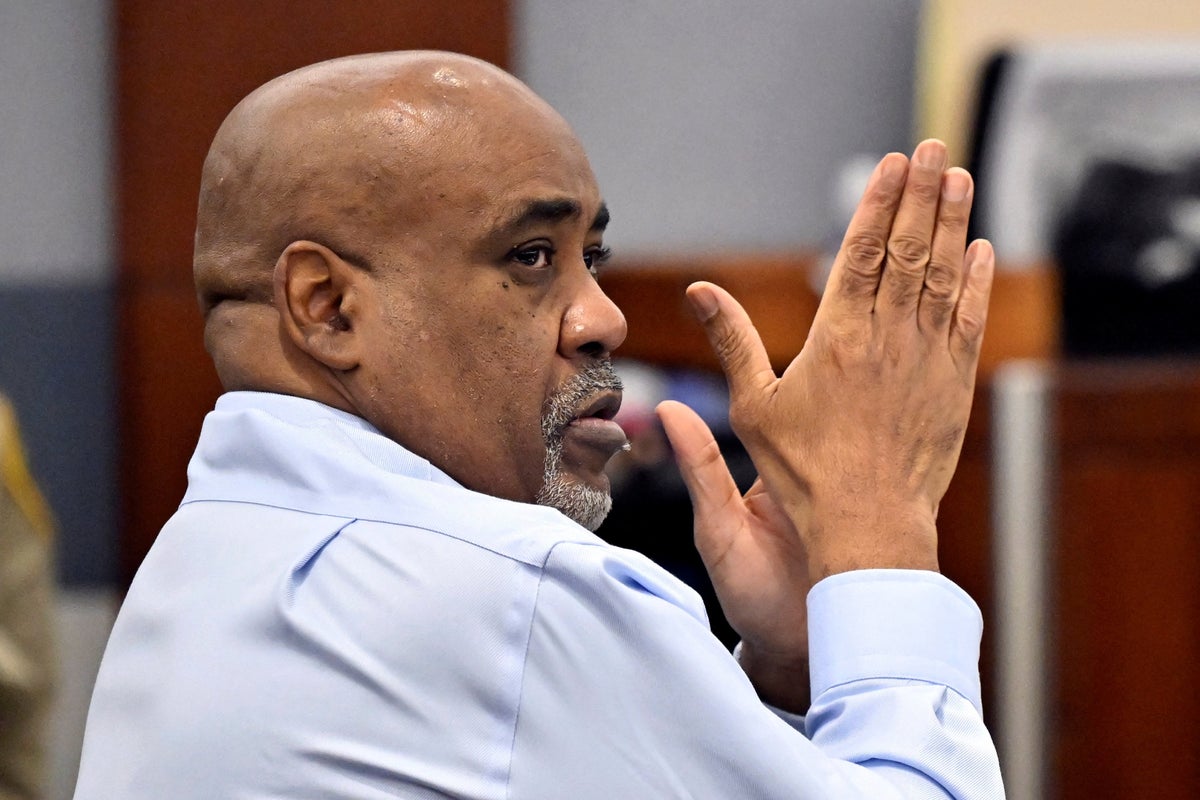
The legal establishment is currently losing its collective mind over the opening statements in the Duane Keffe D Davis trial. Media pundits and armchair legal analysts are treating defense attorney Michael Sanfts strategy like a courtroom suicide mission. When Sanft told a Las Vegas jury not to believe his own client, pointing to a slide emblazoned with the word bullshit to describe Davis's years of media interviews and memoir boasts, the mainstream consensus was swift: the defense has completely imploded.
They are missing the entire point.
This is not a mistake. It is a calculated, ice-cold legal counter-punch designed to exploit the fundamental weakness of a thirty-year-old murder case built almost entirely on clout-chasing folklore. To understand why this strategy is genius rather than disastrous, you have to stop looking at the trial through the lens of Hollywood courtroom drama and start looking at the cold arithmetic of reasonable doubt.
The Myth Of The Untouchable Confession
The lazy consensus in modern criminal journalism is that a public confession is an absolute death sentence. If a man goes on television, sits down with documentary crews, and publishes a book detailing how he secured the weapon used in the 1996 drive-by shooting of Tupac Shakur, he is cooked. Case closed. Put him away.
Except that perspective ignores the ecosystem of modern street culture and true crime monetization. I have watched defendants, influencers, and marginal figures fabricate entire criminal personas for decades because notoriety pays the mortgage. In the post-gangsta rap economy, self-incrimination is often a currency. Book sales, podcast appearances, and documentary fees depend entirely on a subject sounding dangerous, central, and involved.
Sanft is not calling his client a liar by accident; he is weaponizing the exact economic incentive structure that prosecutors are trying to use against Davis. Imagine a scenario where a washed-up former gang figure spends years embellishing his proximity to a historic murder because every time he claims he was the mastermind, his speaking fees go up and his book gets another print run. When the state picks up that media product and tries to use it as a sworn ledger of absolute truth, the defense does not need to prove an alternative alibi. They just need to expose the product as commercial performance.
Weaponizing Thirty Years Of Institutional Decay
The real crisis in the prosecution's case is not that Keffe D lied—it is that the state has nothing else. Let us look at the hard data of this investigation. We are thirty years removed from a crime scene where original police work was fragmented by institutional distrust between local departments. Detectives have rotated out, memories have eroded, and paperwork has vanished.
When a murder investigation relies on a thirty-year latency period, physical evidence degrades into near-irrelevance. The state is forced to lean heavily on the defendant's own mouth because their forensic trail is a ghost town. By owning the narrative that Davis is a compulsive exaggerator, the defense turns the state's primary witness—Davis himself—into a liability for the prosecution.
Every time a prosecutor plays an audio clip of Davis boasting about the white Cadillac or handing off the firearm, the jury is now forced to ask a devastating preliminary question: Is this actual historical testimony, or is this just another aging hustler spinning yarns for a payday? The defense has successfully shifted the burden of corroboration. Instead of proving Davis didn't say it, they are daring the state to prove that any of it actually happened outside of a manuscript.
The Paradox That Actually Works
Critics argue that this creates an impossible paradox: how do you convince a jury your client is a liar during the opening statements, but a truthful witness if he chooses to take the stand later?
This criticism misunderstands the nature of criminal trials. A defendant does not need to be a choirboy to be not guilty; they only need the state to fail to cross the threshold of reasonable doubt. If Davis takes the stand—or even if he stays seated—the defense's core thesis remains intact. They are not arguing that Davis is an honest man telling a different version of the truth. They are arguing that the prosecution is building a first-degree murder conviction on the foundation of a known hustlers promotional material.
In high-stakes litigation, you play the cards you are dealt. When your client has spent decades flapping his gums in front of cameras, you cannot pretend those interviews do not exist. Ignoring them is professional malpractice. Trying to explain them away as literal truth is impossible. The only viable move is to devalue the currency entirely.
The legal establishment hates this strategy because it refuses to play by their polite, orderly rules. But while the talking heads on television call it a blunder, watch the jury box. They are being asked to send a man to prison for the rest of his life based on stories told to podcasters and book publishers. By telling the jury that his client is full of noise, Sanft has given them the exact permission structure they need to reject a hollow case.
Stop looking for clean confessions in a culture built on myth-making. The defense isn't losing its mind. They are blowing up the state's case from the inside out.


