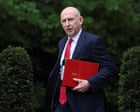
Keir Starmer just lost his defence secretary, and the timing could not be worse. John Healey walked out the door because the government refuses to spend what it takes to protect the country. It is a massive blow to Number 10. Healey was a known Starmer loyalist. Now, he is the loudest critic of the government's military budget.
This is not just another political drama. It is a fundamental disagreement on national security. Healey made it clear that the upcoming Defence Investment Plan (DIP) is completely inadequate. He states it will leave the UK less safe during a period of massive global instability. If a prime minister cannot convince his own defence minister that the country is safe, why should the public believe him?
The Breaking Point of the Defence Investment Plan
The trouble centers on the long-delayed Defence Investment Plan. The Ministry of Defence finished calculating the costs for this strategy back in January. Since then, the Treasury and the Prime Minister stalled. When Healey finally received the full financial breakdown, he realized it was a disaster.
The budget numbers simply do not add up. The government promised to hit a defence spending target of 2.58% of GDP, but there is a major catch. That increase is backloaded. Most of the cash will not arrive until 2030.
Healey called this timing absurd. The military needs resources right now. Operations are stretched, and units need to be ready to fight within the next two years. Pushing funding out to 2030 ignores the immediate threats facing the UK and its allies.
Starmer Warned of War but Cut the Budget Anyway
The hypocrisy of the situation is what drove Healey to resign. Just months ago, Starmer stood at the Munich Security Conference and warned that Russia could attack a NATO ally by 2030. He knew the risks. Yet, when the time came to fund the response, the Prime Minister backed down.
The UK is on track to reach 2.6% of GDP in defence spending next year anyway, purely based on existing commitments. The new funding plan actually slows down that momentum. It treats national security like a secondary issue to be balanced by Treasury accountants rather than a primary duty of the state.
Healey refused to manage a decline. He explicitly stated that accepting this budget would force him to make decisions that reduce military readiness. It would place active personnel on operations at a much higher risk. Instead of signing off on a compromised plan, he chose to walk.
Why the Treasury Always Wins the Budget Wars
The real villain in Healey's resignation letter is the Treasury. Rachel Reeves has kept a tight grip on spending since Labour took office. The economy is stagnant, and the government is desperate to avoid spooking the markets.
But the armed forces are already at a breaking point. Royal Navy ships lack crew, the Army is at its smallest size since the Napoleonic era, and the RAF lacks sufficient airframes. The Strategic Defence Review highlighted these gaps a year ago, but the Treasury ignored the warnings.
This is a classic British political pathology. Ministers talk about global leadership while underfunding the actual hardware required to project power. Healey’s departure exposes this gap between political rhetoric and fiscal reality.
The Immediate Fallout for the Government
This resignation leaves Starmer completely exposed on national security. The Defence Investment Plan was supposed to showcase a modern, prepared UK. Now, it will be viewed as a cost-cutting exercise that forced out a respected secretary of state.
The timing is equally brutal for Labour. The party recently suffered significant losses in local elections, and poll numbers are dropping. Losing a key cabinet member over national security undermines one of Starmer's core arguments: that Labour can be trusted with the safety of the nation.
The government must now find a replacement willing to accept a bad budget. Anyone who takes the job will immediately be seen as a Treasury puppet. They will have to defend a plan that the previous minister explicitly said would make the country less safe.
What Needs to Happen Next
The government cannot pretend this is business as usual. To fix this crisis, the Prime Minister needs to take immediate steps to restore confidence in the UK's defence posture.
- Frontload the Funding: Scrap the 2030 timeline. Move the financial resources into the next 12 to 24 months to address critical ammunition shortages and equipment maintenance backlog.
- Be Honest About the Threat: If the government believes a major conflict is possible by the end of the decade, the budget must reflect a wartime footing, not fiscal austerity.
- Reform Defence Procurement: Stop wasting existing funds on broken procurement cycles. Ensure that every pound spent goes directly to front-line capability.
Healey did what few politicians do. He put his principles ahead of his career. By resigning, he forced a vital debate about military funding into the open. The government can no longer hide behind vague promises of future spending while the current military structure crumbles.