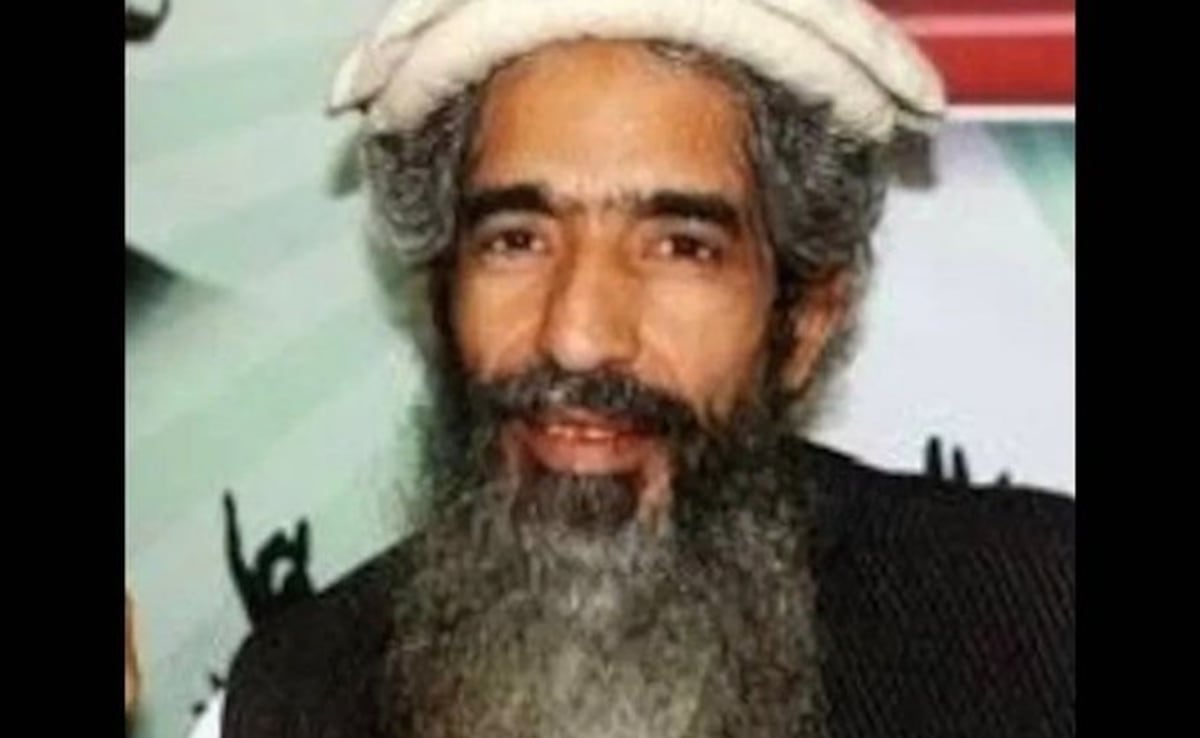
The rain in the Punjab province doesn't just fall; it settles like a heavy, humid blanket over the district of Jhelum. It is a place of ancient history and modern secrets, where the air often carries the scent of damp earth and diesel exhaust. On a Tuesday that felt like any other, the routine of a quiet neighborhood was shattered by the rhythmic, violent crack of gunfire. When the smoke cleared, a man lay dead in his vehicle. He wasn't just another victim of regional instability. He was Amir Hamza.
To the local shopkeeper, he might have been a face in the crowd. To the global intelligence community, he was a ghost finally pinned to the earth. Hamza was the second-in-command of Lashkar-e-Taiba (LeT), a man whose influence stretched far beyond the borders of Pakistan, weaving through the dark history of the 26/11 Mumbai attacks and into the very fabric of modern insurgency.
His end was swift. Unidentified gunmen on motorcycles—the preferred chariot of urban shadows—intercepted his car. They didn't miss.
The Architect in the Background
We often think of terror organizations as monolithic blocks, but they are more like fractured mirrors, reflecting the ambitions and ideologies of the men who lead them. While Hafiz Saeed acted as the public face, the orator, and the lightning rod for international sanctions, men like Amir Hamza were the structural steel. They did the work. They managed the logistics. They ensured the ideology translated into action.
Hamza wasn't a man of many press releases. He operated in the "second chair," a position that offers a peculiar kind of longevity. In the hierarchy of LeT, being the deputy meant having enough power to move mountains but just enough anonymity to avoid the immediate glare of a drone's lens or a high-profile raid. Until Tuesday.
Consider the sheer weight of a decade spent in the shadows. For years, the Indian government pointed toward Hamza as a key conspirator in the 2008 Mumbai attacks. While the world watched the fires burn at the Taj Mahal Palace Hotel, Hamza was part of the machinery that kept the operation fueled. He wasn't holding a rifle on the docks; he was holding the blueprint.
A Pattern of Vanishing Acts
The death of Amir Hamza is not an isolated event. It is a verse in a much longer, bloodier poem. Over the last eighteen months, a strange and lethal phenomenon has gripped the region. One by one, high-ranking officials of banned organizations—men who once felt untouchable within the sovereign borders of Pakistan—are being erased.
- Adnan Ahmed, a top LeT commander, met a similar fate.
- Maulana Rahimullah Tariq, an associate of Jaish-e-Mohammed, was gunned down in Karachi.
- Paramjit Singh Panjwar, a figurehead of the Khalistan Commando Force, was eliminated in Lahore.
The list grows. The methods remain consistent. The perpetrators remain nameless.
This creates a palpable tension in the streets of cities like Jhelum and Muridke. There is a feeling of being watched, not by the law, but by an invisible hand that has decided the statute of limitations on certain lives has finally expired. For those within these organizations, the realization is setting in: the sanctuary is gone. The walls have grown thin.
The Invisible Stakes of a Cold War
Why does the death of one man in a mid-sized Pakistani district matter to a reader thousands of miles away? Because the death of Amir Hamza represents a shift in the global security equilibrium. When the "unidentified gunmen" strike, they aren't just removing an individual; they are disrupting a network that has spent thirty years perfecting the art of asymmetrical warfare.
Logistics matter. If you remove the man who knows where the money is hidden, how the recruits are moved, and which officials can be bought, the organization doesn't just lose a leader—it loses its memory. LeT is currently a ship where the officers are disappearing from the bridge one by one.
There is a psychological cost to this kind of attrition. Imagine living a life where you never sit with your back to a door. Every motorcycle engine that revs too loudly in the street makes your heart skip. Every unexpected knock is a potential death sentence. This is the current reality for the remnants of the LeT leadership. The "human element" here isn't one of sympathy, but of cold, hard consequence. The shadows they once used for cover have turned against them.
The Geopolitical Chessboard
The official narrative from Islamabad is often one of denial or deflection. Following Hamza's death, the usual accusations flew across the border. Pakistan often points toward "foreign hands," implying that Indian intelligence agencies are conducting a campaign of extrajudicial targeted killings. India, conversely, maintains a stance of strategic silence or outright denial, often pointing toward internal rifts and "inter-gang rivalry" within the militant groups themselves.
The truth likely sits in the gray space between those two poles.
The region is a pressure cooker. With the Taliban firmly entrenched in Afghanistan and various militant factions vying for dwindling resources and relevance, internal purges are common. However, the surgical precision of these hits suggests a level of intelligence and capability that goes beyond mere street-level thuggery.
Hamza’s death is a message. It says that the past is never truly buried. It says that the protection once afforded by distance and bureaucracy is failing.
The Silence After the Storm
In the aftermath of the shooting in Jhelum, the police cordoned off the area. They collected shell casings. They filed reports that will likely gather dust in a filing cabinet. But the real story isn't in the police report. It’s in the void left behind.
Amir Hamza lived a life dedicated to a violent cause, believing himself to be a soldier in a holy war. He died in a car on a rainy street, caught in the crosshairs of a world that had moved on from his brand of chaos and was now systematically tidying up the loose ends.
There is no ceremony for men who live in the dark. There is only the sudden, violent transition from a person of immense, hidden power to a headline that fades within forty-eight hours.
The Jhelum River continues to flow, indifferent to the blood spilled on its banks. It has seen empires rise and fall; it has seen the most powerful men in the world reduced to dust. As the investigation into Hamza's death continues, the organizations he helped build are forced to look over their shoulders. They are discovering that while they were busy planning for the future, the past was quietly catching up, one motorcycle ride at a time.
The street in Jhelum is quiet now. The glass has been swept away. The rain has washed the pavement clean. But the silence that remains isn't peaceful. It’s the heavy, expectant silence of a theater before the final act, where everyone knows the ending, but no one wants to be the next person to step into the light.