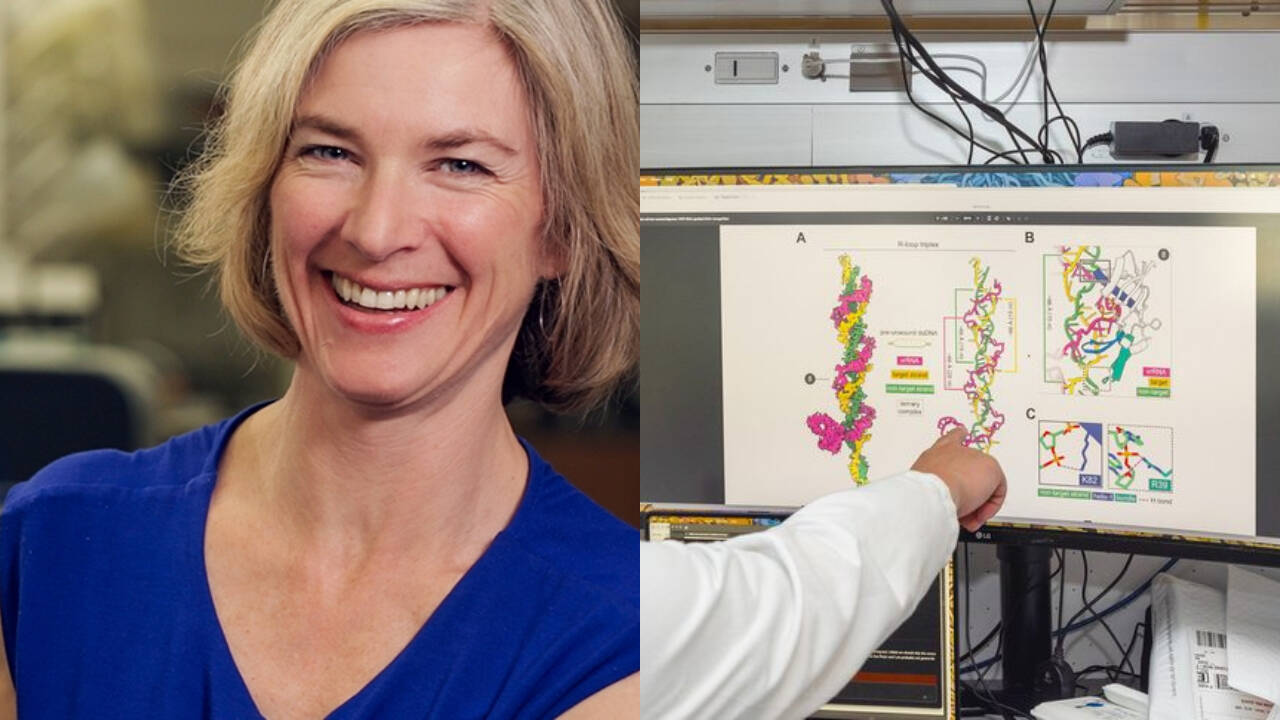
Jennifer Doudna and her team just found an ancient CRISPR ancestor sporting a gapped DNA code, and the biotech commentariat is losing its collective mind. Headlines scream about rewriting evolutionary history, unlocking primordial secrets, and discovering a hidden genetic engine waiting to be harnessed.
Save the champagne.
The lazy consensus is that every weird microbe pulled from a hot spring or a swamp represents the next revolutionary tool for human gene editing. We love the narrative of digging up ancient molecular fossils and immediately putting them to work in sleek modern laboratories. It makes for fantastic press releases and easy grant renewals. But biology does not care about our narrative arcs.
Most ancient mechanisms are evolutionary dead ends for a reason. They were clunky, inefficient, and prone to catastrophic error. Finding a gapped DNA code in a primitive defense system tells us how ancient microbes fumbled their way through survival, not how we should build better therapeutics for human diseases.
The Fallacy of Primordial Perfection
There is a persistent romanticism in science communication that assumes older means purer or inherently superior. We look at an ancestral protein and assume it possesses some untainted raw power that modern Cas enzymes lost over millions of years of specialization.
I have watched venture capital flow into early-stage platform companies chasing every newly cataloged microbial oddity, only to watch millions burn in optimization cycles trying to fix structural inefficiencies that evolution abandoned for a reason.
Let us look at the mechanics. This newly detailed ancestor features gaps in the DNA code it targets or processes. In evolutionary terms, a gap is not a feature; it is a compromise. It is a molecular patch job executed by an organism under metabolic stress trying to fend off bacteriophages with a toolkit that barely functioned. Translating that architectural quirk into a precision medicine tool is like trying to win a Formula One race by bolting a chariot wheel onto a modern chassis because it looks historic.
Precision Requires Rigor, Not Nostalgia
The real work of gene editing is not about collecting rare genetic pokemon. It is about thermodynamic stability, off-target minimization, and delivery vectors that can actually cross cellular membranes without triggering an immune massacre.
When researchers champion these ancient variants, they usually gloss over the fundamental physics of the system. A gapped code introduces structural ambiguity. Ambiguity is the sworn enemy of precision medicine. If you want to cure sickle cell anemia or target a stubborn oncogene, you do not want an enzyme that tolerates loose structural alignments because its great-great-grandfather evolved in a sulfur vent. You want absolute, unyielding fidelity.
Doudna is a titan of biochemistry, and her lab generates peerless structural data. The mapping of this ancestor is a triumph of structural biology. But the leap from biochemical curiosity to therapeutic platform is where rigorous science goes to die at the altar of marketing hype.
The Questions We Should Be Asking
People look at these discoveries and ask how soon we can engineer this into a clinical trial. That is the wrong question entirely.
The better question is why this specific genomic architecture survived as long as it did before being outcompeted by streamlined modern variants. The answer usually points to niche environments where selective pressure favored sloppy, rapid adaptation over high-fidelity precision. Humans do not live in hydrothermal vents. Our cellular environment demands clinical exactness.
Admitting the limitations of these ancestral systems does not make for viral journalism. It requires acknowledging that evolution is largely a graveyard of discarded prototypes. Not every ancient artifact belongs in a clinic.
Stop treating every academic paper out of Berkeley as a ready-to-deploy product roadmap. Let the structural biologists map the past, but keep the therapeutic pipeline focused on what actually survives contact with human biology.