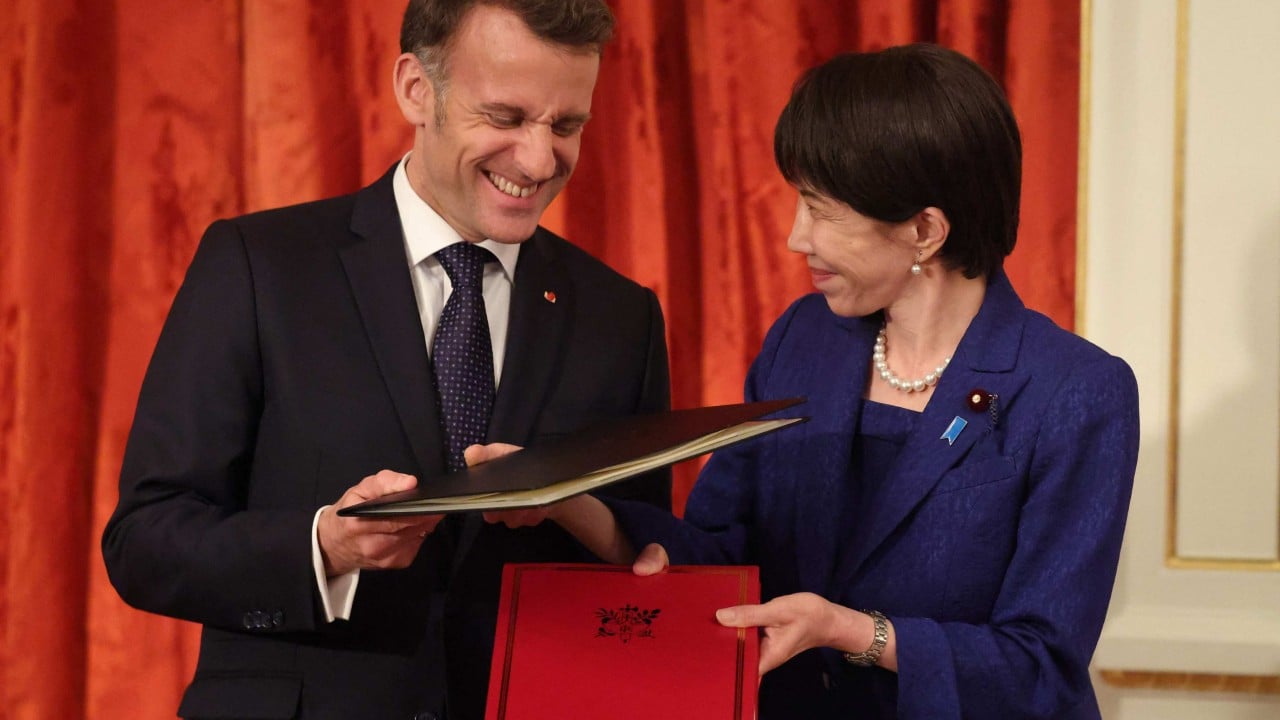
Dependence is a dangerous thing. Japan and France aren't waiting around for the next global supply chain collapse to realize that. They've decided to build a concrete road map for the supply of critical minerals because the status quo is essentially a ticking time bomb for their high-tech industries. If you think this is just another diplomatic handshake, you're missing the point. It's about survival in the electric vehicle and semiconductor markets.
China controls the vast majority of the processing for rare earth elements, cobalt, and lithium. That's a problem when geopolitical tensions rise. Tokyo and Paris are looking at the math and realizing that "diversification" isn't just a buzzword. It's the only way to keep their factories running. This partnership isn't just about digging holes in the ground. It covers everything from exploration to recycling and financial backing.
The Reality of the Japan France Minerals Partnership
The deal isn't some vague promise. It's a strategic alignment between two nations that have a lot to lose. Japan is a leader in high-end electronics and automotive tech. France has huge ambitions for its "Battery Valley" in the north. They need the same things: lithium, nickel, cobalt, and graphite.
Working together makes sense because they bring different strengths to the table. France has strong diplomatic ties in Africa and parts of the South Pacific. Japan has some of the world's best processing technology and a massive pool of capital through organizations like JOGMEC (Japan Organization for Metals and Energy Security).
I've seen these trade agreements come and go. Usually, they're all talk. But this one feels different because the urgency is real. You can't build a green economy on a foundation of "maybe we'll get the materials."
Breaking the Monopolies
Let's be blunt. One country dominates this space. China handles about 60% of worldwide rare earth mining and a staggering 85% of the processing. If Beijing decides to flip a switch and restrict exports—which they've done before—the rest of the world grinds to a halt.
Japan knows this better than anyone. Back in 2010, they faced a squeeze on rare earths during a maritime dispute. They learned their lesson the hard way. Since then, they've been obsessed with securing alternative sources. France is now catching up to that same reality. They're realizing that moving away from Russian gas was just the first step. Moving away from total reliance on a single mineral supplier is the next, much harder step.
Moving Beyond Simple Extraction
Mining is messy. It's expensive. It takes forever. Most mining projects take 10 to 15 years to go from discovery to production. That's too slow for the pace of the energy transition. This road map focuses on speeding things up by sharing the risk.
Joint Investment and Risk Sharing
When a Japanese company and a French company go into a third country—say, Kazakhstan or Australia—to start a mining project, the risk is halved. They share the cost of the geological surveys. They share the political risk. They share the infrastructure costs.
It's also about setting standards. Japan and France are pushing for "high-standard" mining. This means better environmental protections and fairer labor practices. Some might call that "corporate social responsibility," but it's actually a savvy business move. If you build a mine that destroys the local environment, you're going to get kicked out eventually. Sustainable mining is more stable mining.
The Recycling Factor
We can't just keep digging things up. There isn't enough easily accessible ore on the planet to meet the projected demand for 2030 and 2050. Japan is already a world leader in "urban mining." That's the process of recovering precious metals from old phones, laptops, and car batteries.
France is investing heavily in this too. The road map includes a massive focus on circular economy tech. Instead of shipping a dead EV battery back across the ocean, they want to strip it down and reuse the minerals right there in Europe or Japan. It's cheaper in the long run. It's also way better for the planet.
Why This Matters for Your Wallet
You might think this is just high-level geopolitics. It's not. The price of your next car or smartphone depends on this. If the supply of lithium is constricted, the price of batteries stays high. If battery prices stay high, EVs stay expensive.
France wants to produce 2 million electric vehicles a year by 2030. They can't do that if they're fighting for scraps of nickel on the open market. By locking in these supply chains now, they're trying to ensure that French and Japanese manufacturers have a competitive edge. They're trying to prevent the kind of price spikes that make consumer goods unaffordable.
The Geopolitical Chessboard
This isn't happening in a vacuum. The U.S. has the Inflation Reduction Act (IRA). The EU has the Critical Raw Materials Act. Everyone is scrambling.
Japan and France are essentially forming a "buyers' club." They want to influence global prices and ensure they aren't outbid by larger superpowers. It's a smart play. By aligning their road maps, they can present a united front when negotiating with resource-rich nations in Africa, South America, and Southeast Asia.
African Interests and European Diplomacy
France still has significant influence in several African nations that are rich in minerals. However, that influence is being challenged by other global powers. Bringing Japan into the mix offers those African nations a different kind of partner—one focused on technology transfer and infrastructure rather than just extracting raw materials and leaving.
What's Actually in the Road Map?
Expect to see specific targets for mineral stockpiling. Japan already does this well. They keep months of supply on hand for emergencies. France is looking to replicate that model.
There will also be a heavy emphasis on "mapping." Not just physical maps of the earth, but maps of the entire supply chain. They want to know exactly where every gram of cobalt comes from. If a refinery in a third country is using unethical practices, they want to find an alternative before it becomes a PR disaster or a supply bottleneck.
Stop Thinking This is Only About Batteries
While EVs get all the headlines, these minerals are used in everything. Defense technology, wind turbines, medical imaging equipment, and fighter jets all require these materials.
France has a massive defense industry. Japan is increasing its defense spending significantly. You can't build a modern military without high-strength magnets and specialized alloys. This mineral road map is as much about national security as it is about the environment. If you don't have the minerals, you don't have a modern economy. Period.
Challenges Nobody Wants to Talk About
It sounds great on paper. In practice, it's incredibly hard. Mining is local. You can have all the agreements you want in Paris and Tokyo, but if a local community in a third country says "no," the project dies.
There's also the issue of cost. Processing minerals in a way that meets French or Japanese environmental standards is way more expensive than doing it the "dirty" way. Companies have to be willing to pay a premium for "clean" minerals. So far, the market isn't always willing to do that. Governments might have to step in with subsidies to bridge that gap.
How to Track This Progress
Don't look at the press releases. Look at the money. Watch for announcements of joint ventures between Mitsubishi or Sumitomo and French firms like Eramet. Watch for new refinery projects breaking ground in France or Japan.
If you're an investor or just someone interested in the future of tech, keep an eye on the "Rules of Origin" in trade deals. These rules dictate how much of a product must be sourced from "friendly" nations to qualify for tax breaks. This road map is designed to make sure French and Japanese products always make the cut.
Diversifying away from a single source is the most important economic shift of the decade. Japan and France are just the ones brave enough to admit they can't do it alone.
Start looking at your own supply chains. If you're in manufacturing, find out where your raw materials come from. If it's a single source, you're at risk. Look into secondary sourcing now. Support the development of recycling programs in your local area. The era of cheap, easy, single-source minerals is over. Get ready for a much more complex, but hopefully more stable, multi-polar world.