China just dropped a bombshell about its aviation tech, and military analysts are scrambling.
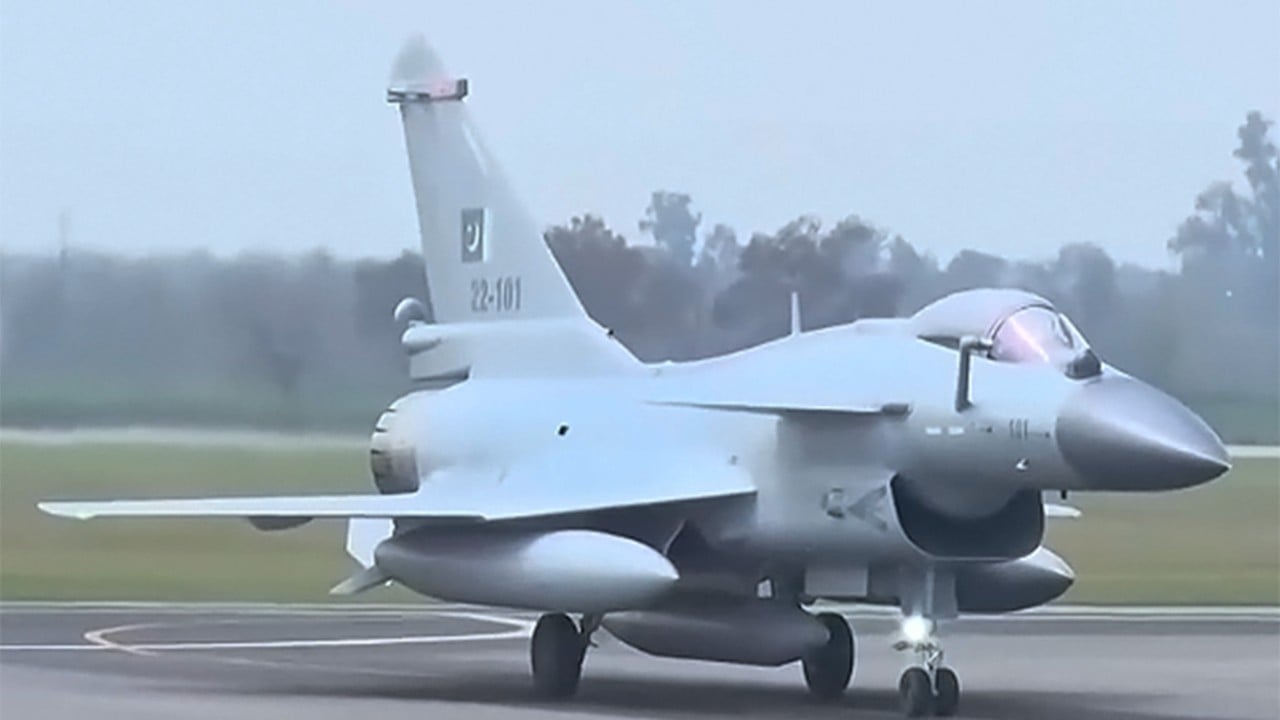
State broadcaster CCTV recently confirmed that Chinese-made J-10CE fighter jets dominated Qatar's Eurofighter Typhoons with a staggering 9-0 scoreline in mock combat. It happened during the Zilzal-1 joint exercises in Qatar. Military forums are melting down over this. Western enthusiasts are making excuses, while state media is cheering.
But if you look at the actual tech, the result makes sense.
The aviation world often underestimates Chinese hardware. This exercise showed that the gap between Western fourth-generation platforms and Chinese exports has evaporated. It isn't just about a lucky streak. It is about how modern air combat relies on specific hardware advantages that China now mass-produces.
The Reality Behind the Nine Zero Scoreline
People want to know how a single-engine Chinese jet swept the floor with a twin-engine European powerhouse. The Eurofighter Typhoon is legendary. It is agile, fast, and expensive. Qatar operates both platforms, buying the J-10CE from China and the Typhoon from BAE Systems. This gave them the perfect chance to pit them against each other.
The 9-0 sweep occurred in beyond-visual-range (BVR) combat simulations.
In the modern sky, you rarely see your enemy. You lock onto a blip on a screen from eighty miles away and fire. The jet with the better radar and longer-reaching missile wins every single time. That is where the J-10CE caught the Typhoon off guard. China equipped the export version of the J-10C with an advanced Active Electronically Scanned Array (AESA) radar and PL-15E long-range air-to-air missiles.
Qatar's Typhoons are incredibly capable in close-in dogfights. Their thrust-to-weight ratio is monstrous. But in these specific exercises, they couldn't get close enough to use that brute strength. They were targeted, locked, and hypothetically shot down before their own sensors could track the Chinese jets.
How China Upgraded the J-10CE for Modern BVR Combat
The J-10 design started decades ago as a basic delta-wing fighter. It looked decent but lacked teeth. Over the last decade, Chengdu Aircraft Industry Group completely overhauled the internal architecture.
- AESA Radar Capabilities: The J-10CE uses a modern AESA radar that tracks multiple targets simultaneously while resisting electronic jamming. Older mechanical radars on early-batch Typhoons struggle to match this detection speed.
- The PL-15E Factor: This missile changes everything. It features a dual-pulse rocket motor. It flies further and maintains high energy during the terminal phase of flight, making it incredibly difficult for an enemy pilot to evade.
- Integrated Electronic Warfare: The jet carries an internal electronic warfare suite that actively distorts enemy radar returns.
The J-10CE is a highly digitized asset. It isn't just a copy of Western tech anymore. It features specific design choices optimized to counter Western tactics.
What This Means for Global Arms Markets
This exercise changes the math for developing nations looking to buy fighter jets.
For a long time, if you wanted top-tier aviation tech, you went to Washington, Paris, or London. Russian options are currently unappealing due to supply chain issues and poor combat performance in recent conflicts. That leaves a massive opening. China is filling it aggressively.
The J-10CE offers roughly 90% of the capability of an American F-16 Block 70 or a Eurofighter Typhoon at a fraction of the acquisition and maintenance costs. Pakistan already bought a fleet of them to counter India's French-made Rafales. Now, Middle Eastern nations are watching closely. Qatar’s exercise proved that buying Chinese hardware doesn't mean settling for second-rate gear.
Geopolitical Waves in the Middle East
The Zilzal-1 exercise wasn't just a casual training flight. It was a massive geopolitical statement.
Qatar maintains deep ties with Western militaries. Hosting Chinese jets for intense mock battles shows that Gulf nations are diversifying their strategic partnerships. They don't want to rely solely on Washington or Europe for security. By testing Chinese jets against their own Western fleet, Qatari pilots gained direct insight into Chinese combat philosophy.
This sends a clear message to Western defense contractors. The monopoly on high-end fighter tech is dead. If Western firms keep inflating prices and attaching political strings to arms sales, buyers will look East.
Spotting the Nuance in Exercise Data
We have to keep things real. Mock battles are highly scripted environments.
We don't know the exact rules of engagement used during Zilzal-1. Sometimes, exercises purposefully handicap one side to test specific systems or tactics. It is entirely possible the Typhoons were ordered to fly with older radar modes to see how well the Chinese sensors could exploit them. Or maybe the Qatari pilots flying the Typhoons had fewer hours on the airframe than the Chinese pilots.
But even with those caveats, a 9-0 sweep cannot be ignored. You don't get that result through luck or slight pilot mismatches. The J-10CE proved it can detect, track, and engage a premier European fighter before the European asset can retaliate.
Track defense procurement trends over the next year. Watch how Pakistan deploys its J-10CE fleet along its borders, and look for signs of other Middle Eastern or African nations quietly requesting pricing data from Beijing. The aerial balance of power is shifting, and it's happening faster than anyone expected.