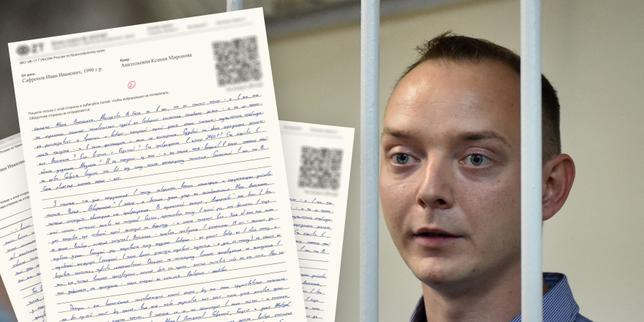
You don't expect a convicted journalist sitting inside a Russian penal colony to drop nineteenth-century French literature into a public statement. But Ivan Safronov isn't your average political prisoner. When the former defense reporter compared his captivity to Victor Hugo's Les Misérables, he wasn't just being dramatic. He was holding up a mirror to a justice system that treats truth-telling as high treason.
If you've followed Safronov's case, you know the broad strokes. He's a brilliant former reporter for Kommersant and Vedomosti who got locked away for twenty-two years on absurd charges of state treason. The state claims he leaked military secrets to Czech intelligence. His colleagues and defense lawyers know the real reason: he wrote stories the Kremlin wanted buried. If you liked this piece, you might want to read: this related article.
Comparing yourself to Jean Valjean is a heavy lift. Valjean spent nineteen years in the hulks for stealing a loaf of bread to feed his starving family, chased endlessly by Javert. Safronov didn't steal bread. He reported on Russian arms deals, jet fighter deliveries to Africa, and military contracts that officials wanted kept in the dark. Yet, the parallel works on a psychological level. Both men understand what it means to be hunted by an uncompromising machine. Both men know the exact weight of stolen years.
The Reality of Writing from Behind Bars
Most people can't fathom what happens to a journalist when they disappear into the Russian penal system. You vanish from newsrooms, your social media accounts go dark, and your bylines turn into historical archives. But Safronov refuses to let his voice be entirely muffled. Letters slip out. Messages make their way to independent media outlets operating from exile. For another angle on this story, refer to the recent update from Reuters.
These letters matter because they puncture the silence the state tries to manufacture. Dictatorships and authoritarian regimes rely on quiet compliance. They want political prisoners to fade away, forgotten in damp cells, so the public moves on to the next news cycle. Safronov's invocation of Jean Valjean is a direct refusal to fade. It reminds the world that human consciousness survives inside concrete boxes.
Think about the absurdity of his conviction. The Federal Security Service claimed that open-source information Safronov gathered and published online constituted classified state secrets. Read that again. Information already floating around the public internet was packaged by prosecutors as a capital offense. It’s a chilling message to any remaining independent reporters in Russia: digging into military matters won't just get you fired; it will get you buried.
Why the Jean Valjean Metaphor Cuts Deep
Victor Hugo wrote Les Misérables to expose the cruelty of a legal system that destroys human lives over minor infractions while shielding systemic corruption. When Safronov writes, "Like Jean Valjean, I know what captivity is and I know how to appreciate freedom," he is weaponizing literature against his jailers.
Prison strips away your agency. Every hour is managed, every interaction is monitored, and every physical comfort is stripped down to bare survival. In that environment, intellectual freedom becomes the only territory the state can't fully occupy. Safronov is telling anyone willing to listen that physical walls cannot cage an active mind. He understands freedom not as an abstract philosophical concept, but as something tangible, painful, and worth fighting for.
We live in an era where press freedom is under assault globally, not just in authoritarian strongholds, but through political hostility, surveillance, and economic pressure. Yet, Russia’s treatment of Safronov represents a particularly brutal throwback to Soviet-style silencing tactics.
What Happens When Truth Becomes Treason
When journalism is criminalized, society loses its immune system. Without reporters willing to track military spending, state contracts, and covert operations, corruption runs rampant. Safronov’s old beats weren't glamorous gossip columns. They were hard-nosed investigations into where billions of rubles in defense spending actually went.
The state didn't lock him away because he was a foreign spy. They locked him away because he was too good at his job. He knew the sources, he understood the defense sector inside and out, and he refused to practice self-censorship.
If you want to support independent journalism today, you have to look past the clickbait and pay attention to the people paying the ultimate price for holding power accountable. Safronov's letters are not just personal dispatches from a harsh penal colony. They are testaments to resilience. They show us that while authoritarian governments can lock up a man's body, they cannot force his pen to apologize.
Read his words carefully. Remember his name. And the next time someone tells you that journalism doesn't matter anymore, think about a man doing twenty-two years in a Russian penal colony because he wrote the truth. Freedom isn't a given. Ivan Safronov knows that better than anyone.


