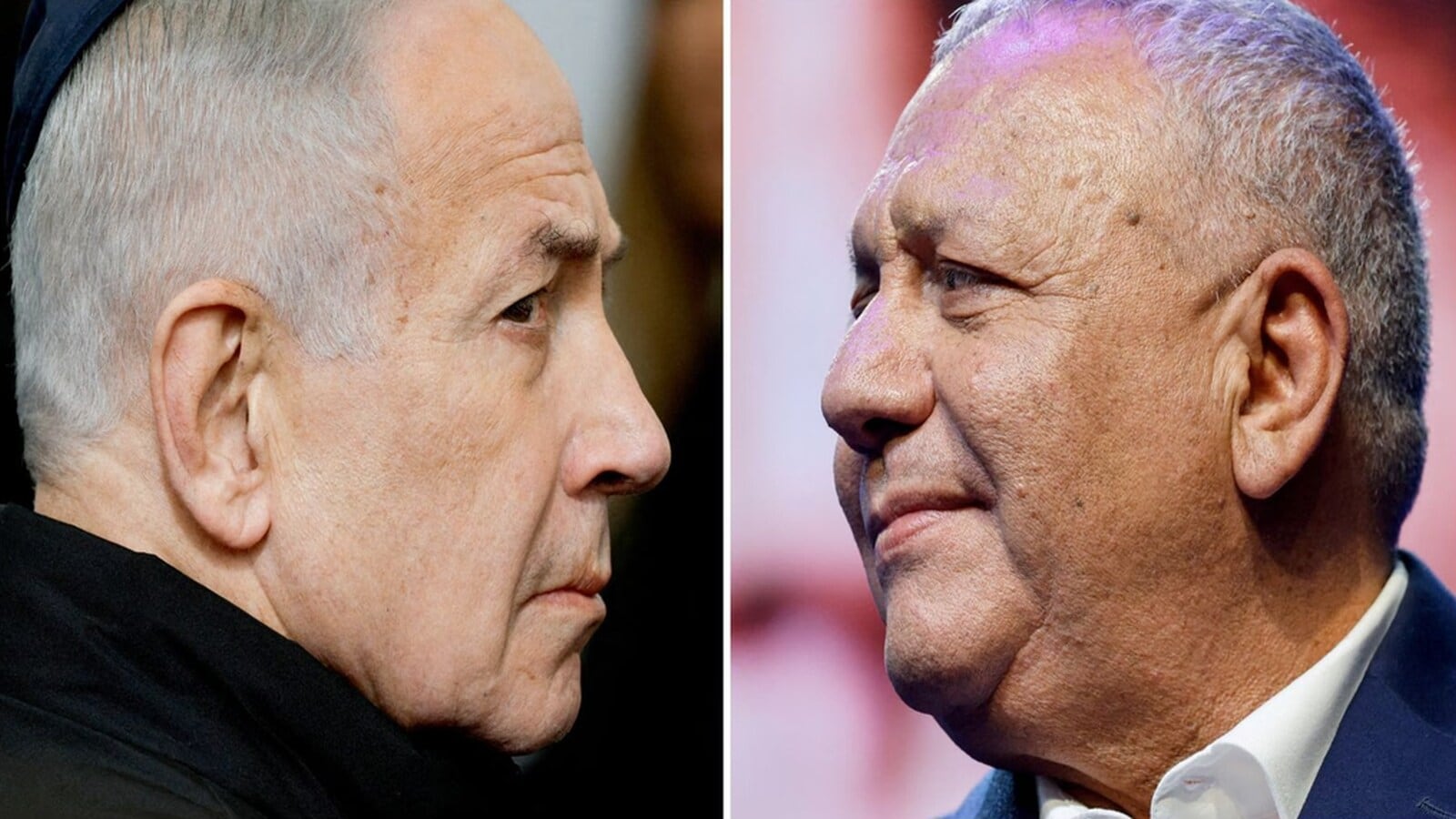
Israeli parliamentary politics is rarely decided by the charismatic appeal of individual leaders; it is governed by the rigid mathematics of the 61-seat Knesset threshold and the ideological veto points of smaller, single-issue factions. Framing the future of Israeli governance as a binary choice between Benjamin Netanyahu and Gadi Eisenkot obscures the underlying structural constraints that dictate coalition viability. Whether Israel trends toward a consolidated right-wing bloc or a centrist-led unity administration depends entirely on how prospective prime ministers manage four systemic bottlenecks: the Haredi conscription impasse, the Arab-Israeli electoral threshold, judicial-executive friction, and the diplomatic endgame in Gaza and the northern border.
Standard political commentary treats Israeli coalition building as a personality contest between competing political brands. In practice, assembling a functional majority in a proportional representation system with a 3.25 percent electoral threshold functions as a multi-variable optimization problem. A party leader must maximize seat count without triggering defections from incompatible ideological partners. Every seat gained on the right flank of a coalition frequently costs two seats on the center-left flank, creating a zero-sum boundary condition that neither Netanyahu nor Eisenkot can bypass through rhetoric alone.
The Structural Architecture of the 61-Seat Threshold
To evaluate the viability of any post-election coalition, one must first strip away campaign narratives and examine the Knesset's mathematical floor. Out of 120 seats, 61 are required to pass a vote of confidence and form a government. Historically, this threshold has been breached only when a dominant anchor party successfully aggregates smaller factions into a disciplined voting bloc.
The modern Israeli electorate is divided into three non-overlapping segments:
- The Right-Religious Bloc: Anchored by Likud, alongside ultra-Orthodox (Shas, United Torah Judaism) and religious-nationalist (Religious Zionism, Otzma Yehudit) parties.
- The Zionist Center-Left Bloc: Comprising centrist formations (Yesh Atid, National Unity), secular right-wing Netanyahu critics (Yisrael Beiteinu), and remnants of the traditional labor movement (The Democrats).
- The Arab Factions: Primarily Ra'am (United Arab List) and Hadash-Ta'al, representing Palestinian citizens of Israel.
A stable coalition requires either total unity within Bloc 1, a super-coalition merging Bloc 2 with defectors from Bloc 1, or an unprecedented alliance between Bloc 2 and Bloc 3. Because Bloc 3 remains a political third rail for most Jewish-Israeli voters following the October 7 attacks and the subsequent multi-front war, the mathematically viable pathways shrink dramatically.
The Likud Anchor Model
Benjamin Netanyahu’s operational model relies on absolute bloc discipline. By positioning Likud as the indispensable gravitational center of the right-religious camp, Netanyahu eliminates the alternative coalition options of his junior partners. Neither the Haredi parties nor the far-right nationalists can join a center-left government without alienating their core constituencies.
This creates an asymmetric dependency. Netanyahu’s partners possess maximum leverage over policy—such as budget allocations for yeshivas or settlement expansion—because losing a single four-seat faction collapses the government. Conversely, Netanyahu retains supreme survival utility because his removal triggers an immediate loss of power for the entire bloc. The vulnerability of this model lies in external shocks. When national security crises or severe economic contractions erode Likud’s baseline support below 25 seats, the combined total of the right-religious bloc drops beneath the 61-seat floor, rendering the entire architecture non-functional.
The National Unity Aggregation Strategy
Gadi Eisenkot, operating within the broader centrist space alongside figures like Benny Gantz, represents an alternative structural approach: the broad-tent national consensus model. Rather than relying on ideological homogeneity, this strategy aims to capture the median Israeli voter—historically hawkish on security, pragmatic on diplomacy, and secular-traditional on state-religion issues.
The operational hypothesis behind an Eisenkot-led or Eisenkot-anchored ticket is that a former IDF Chief of Staff with deep operational credibility can peel away soft-right voters from Likud without alienating center-left voters. If a centrist list can capture 30 to 35 seats, it alters the coalition geometry by becoming the largest faction, thereby securing the presidential mandate to form the first government.
However, capturing the plurality of seats does not equate to securing 61 mandates. A centrist plurality still faces a severe assembly deficit. Even if a center-right/center-left alignment reaches 55 seats, bridging the final six-seat gap requires bringing in either the ultra-Orthodox parties or the Arab factions. Both options carry severe internal contradictions that threaten immediate coalition implosion.
Four Systemic Veto Points
Any coalition scenario—whether led by Netanyahu, Eisenkot, or a third compromise figure—must clear four structural hurdles. Failure to resolve even one results in legislative paralysis and early elections.
1. The Haredi Conscription Impasse
The demographic expansion of Israel's ultra-Orthodox community has transformed military service exemptions from a manageable political accommodation into an existential state crisis. Following Supreme Court rulings invalidating blanket exemptions and the acute manpower shortages exposed by prolonged multi-front military operations, the Israeli public's tolerance for non-service has collapsed.
For Netanyahu, this creates an unsolvable optimization trap. Passing legislation that genuinely drafts Haredi men into the IDF causes United Torah Judaism and Shas to bolt the coalition, immediately triggering its collapse. Conversely, passing a cosmetic law that preserves exemptions alienates soft-right Likud voters and secular reservists, bleeding seats to the opposition in the next election cycle.
For Eisenkot, the Haredi issue is an entry barrier. While ultra-Orthodox leaders have historically preferred working with pragmatic centrists over ideological secularists like Avigdor Liberman, they will not join an Eisenkot-led coalition that enforces strict universal conscription and cuts funding to non-compliant educational institutions. Thus, the very policy stance that makes Eisenkot attractive to the exhausted Israeli middle class simultaneously disqualifies him from partnering with the 16 to 18 Haredi seats needed to reach 61.
2. The Arab-Israeli Electoral Threshold and Legitimacy Deficit
In 2021, the Bennett-Lapid government demonstrated that a narrow 61-seat coalition could be formed by incorporating Mansour Abbas’s Islamist Ra'am party. That experiment operated under conditions of relative quiet and focused heavily on municipal budgets and crime reduction in Arab towns.
In the post-October 7 environment, the political cost of relying on Arab parties—even for external confidence-and-supply support—has spiked. For an Eisenkot-led coalition, incorporating Hadash-Ta'al is a non-starter due to fundamental disagreements over Zionism and military operations. Relying on Ra'am remains theoretically possible, yet doing so provides the right-wing opposition with a potent delegitimization weapon, arguing that a government reliant on non-Zionist votes lacks the moral authority to make existential security decisions.
Simultaneously, voter turnout among Arab citizens acts as a hidden multiplier in Knesset math. When Arab turnout drops below 45 percent, one or more Arab lists risk falling below the 3.25 percent electoral threshold. When a party fails to cross the threshold, its wasted votes are redistributed proportionally among the surviving parties, artificially inflating the seat count of the largest bloc. A low Arab turnout mechanically benefits Netanyahu’s right-religious bloc, potentially handing it a 61-seat majority without a single new vote cast for Likud.
3. The Diplomatic Endgame and Regional Normalization
Coalition durability is directly tied to foreign policy alignment, specifically regarding the governance of Gaza, the containment of Hezbollah in Lebanon, and potential normalization with Saudi Arabia. These issues function as binary triggers for coalition partners.
A Netanyahu-led government anchored by Bezalel Smotrich and Itamar Ben-Gvir cannot advance any diplomatic framework that includes a pathway to a Palestinian state or the return of a reformed Palestinian Authority to Gaza. Doing so crosses the explicit red lines of the religious-nationalist flank, which favors permanent military control and civilian resettlement. This constraint locks Israel into a state of perpetual low-intensity warfare and diplomatic friction with Washington, limiting access to strategic munitions and regional defense architectures.
An Eisenkot-led coalition possesses the ideological flexibility to accept a regional framework involving moderate Arab states, the United States, and a technocratic Palestinian administration in Gaza. However, executing this vision requires surviving the domestic political fallout of territorial and security compromises. If security conditions deteriorate following a diplomatic agreement, the right-wing opposition will mobilize mass protests, rapidly eroding the coalition's parliamentary majority from within.
4. The Judicial-Executive Balance of Power
The pre-war constitutional crisis over judicial overhaul was suspended rather than resolved. The fundamental disagreement over the authority of the Supreme Court to strike down Basic Laws and review ministerial appointments remains a live wire across the political spectrum.
If Netanyahu retains power with his current bloc, the structural incentives to weaken judicial oversight remain intact, driven by the desire to insulate coalition policies—particularly Haredi exemptions and settlement regularization—from legal intervention. Renewing this legislative push would immediately reignite civil unrest, threaten military cohesion among reservists, and trigger sovereign credit downgrades.
An Eisenkot administration would halt the overhaul, stabilizing institutional norms and restoring predictability for foreign investors and rating agencies. Yet, halting the overhaul does not eliminate the friction. A centrist government would still face fierce resistance from its right-wing members (such as Gideon Sa'ar or Avigdor Liberman, if included) against any attempt to entrench progressive judicial activism, forcing the coalition into a defensive, status-quo posture incapable of passing major constitutional reforms.
Scenario Modeling: Three Plausible Outcomes
Evaluating the interaction between voter behavior and these four veto points yields three distinct structural scenarios for Israel's governance.
Scenario A: The Consolidated Right-Religious Restoration
Mechanism: Likud stabilizes at 26 to 28 seats, bolstered by security fatigue and a fragmented opposition. Low Arab voter turnout eliminates one Arab list at the threshold, granting the right-religious bloc 62 to 64 seats.
Operational Reality: Netanyahu forms a government identical in composition to the 2022 coalition. To prevent immediate collapse over the draft law, the coalition passes an incremental, quota-based conscription bill that satisfies the Haredi leadership while failing to meet IDF manpower requirements. The Supreme Court strikes down the law within twelve months, triggering a constitutional standoff. Diplomatically, Israel maintains indefinite military occupation in Gaza and buffers in southern Lebanon, absorbing sustained economic friction and international isolation in exchange for domestic coalition stability.
Scenario B: The Broad Zionist Unity Government
Mechanism: Voter dissatisfaction with prolonged economic strain and governance failures pushes the centrist camp (led by Eisenkot or a Gantz-Eisenkot ticket) to 32 seats. Combined with Yesh Atid, Yisrael Beiteinu, and the center-left, the anti-Netanyahu Zionist bloc reaches 58 seats.
Operational Reality: To cross the 61-seat threshold without relying on Arab parties, the centrist leadership must execute a political extraction—either convincing a faction of Likud moderates to defect post-Netanyahu, or striking a narrow, transactional agreement with Shas based on socioeconomic welfare rather than religious legislation.
This coalition prioritizes immediate economic stabilization, establishes a state commission of inquiry into the October 7 failures, and enters a US-brokered regional security pact. However, internal ideological friction between secularists like Liberman and traditionalists within the unity camp prevents decisive action on state-religion reforms. The coalition functions as a transitional stabilization mechanism rather than a long-term ideological project, likely collapsing within two to three years over final-status diplomatic negotiations.
Scenario C: Chronic Minority Gridlock and Repeat Elections
Mechanism: Neither the right-religious bloc nor the Zionist center-left reaches 61 seats. The right-religious camp stalls at 57 seats; the Zionist opposition stalls at 53 seats, with the remaining 10 seats held by Arab lists that refuse to join or back a Zionist prime minister.
Operational Reality: Israel reverts to the 2019–2022 paralysis loop. A caretaker government remains in power for months, unable to pass a new state budget, forcing the economy to operate on a restrictive one-twelfth monthly continuation rule based on the previous year's expenditures. Strategic decision-making freezes, military procurement stalls, and the brain drain in the high-tech sector accelerates as capital relocates to jurisdictions with predictable regulatory environments.
Strategic Forecast and Operational Imperatives
The trajectory of Israeli politics will not be decided by a head-to-head debate between Benjamin Netanyahu and Gadi Eisenkot. It will be decided at the margins of the electoral threshold and within the internal leadership dynamics of the Likud party.
As long as Benjamin Netanyahu remains the undisputed leader of Likud, the party's structural incentives force it into permanent alignment with the ultra-Orthodox and far-right flanks. Under these conditions, Gadi Eisenkot’s primary strategic obstacle is not winning over swing voters, but overcoming the mathematical deficit created by the refusal of Zionist parties to coalesce with Arab factions.
Consequently, the decisive inflection point is not the general election itself, but the succession struggle within Likud. Until a post-Netanyahu Likud leadership emerges willing to sever its alliance with the far-right and enter a grand coalition with the center, Israel remains trapped between two suboptimal equilibria: an ideologically rigid right-wing government constrained by sectoral veto players, or a fragile centrist coalition lacking a sustainable parliamentary majority. Strategists, investors, and policymakers must model their medium-term exposure around persistent legislative friction, delayed structural reforms, and an elevated risk of snap elections regardless of which individual occupies the Prime Minister's Office.