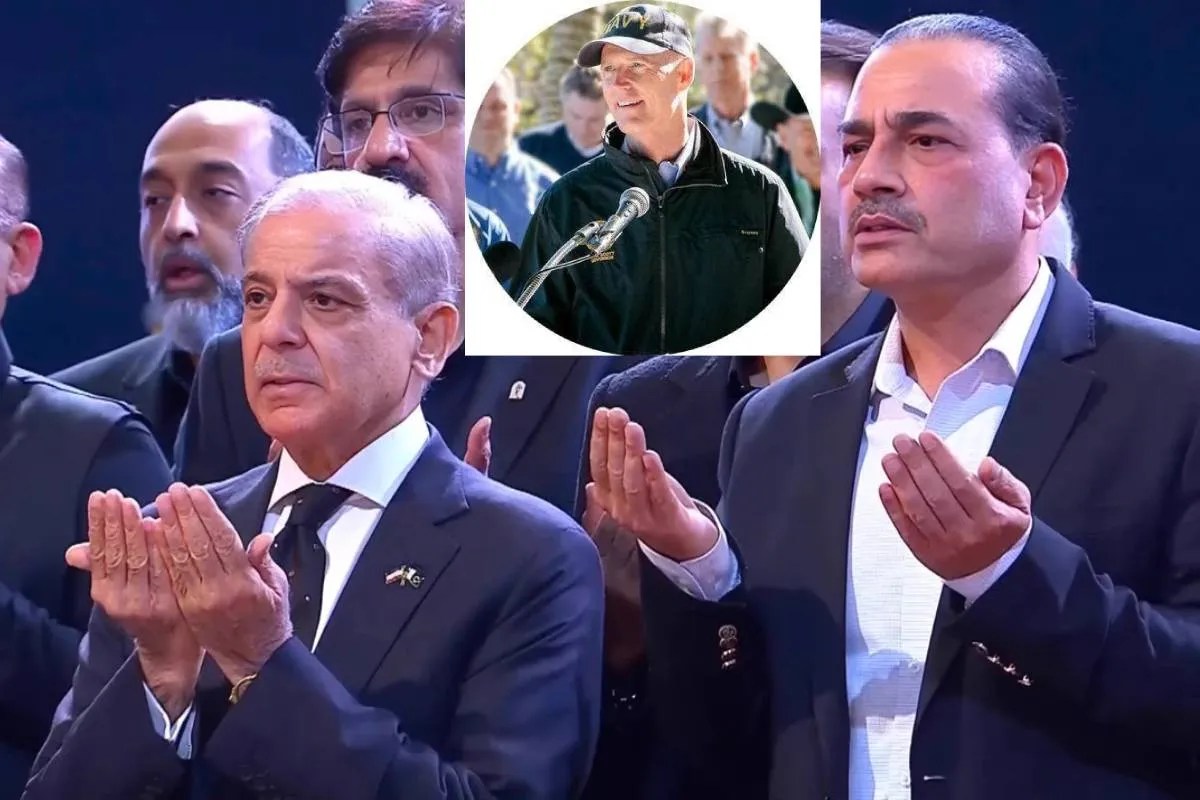
Pakistan is attempting an impossible diplomatic balancing act, and US lawmakers are losing their patience. The recent decision by Pakistani leadership to send high-level representation to Tehran to offer condolences for Ayatollah Ali Khamenei has triggered sharp condemnation from Washington, exposing the deep fissures in Pakistan's foreign policy. While Islamabad tries to maintain its fragile economic ties with the West, its geopolitical maneuvering in the Middle East is drawing fierce scrutiny from US senators who view the gesture as blatant duplicity.
This is not a simple case of neighborly protocol. It is a calculated gamble by a nuclear-armed nation facing economic ruin, trying to appease a powerful neighbor while begging for financial lifelines from Western-dominated institutions. In similar news, read about: The Geopolitical Mirage of the BRICS Anti Drug Alliance.
The Hypocrisy Charge from Capitol Hill
The reaction from Washington was swift and unsparing. US legislators, long skeptical of Islamabad's double-dealing, seized on the Tehran visit as proof that Pakistan cannot be trusted as a strategic partner. The core of the American grievance rests on a simple premise. You cannot court American development funds, military hardware, and diplomatic backing while simultaneously bowing to a regime that Washington classifies as a state sponsor of terrorism.
For years, Pakistan has managed to skate through these contradictions. It relied on its geographic importance during the war in Afghanistan to secure billions in American aid. That leverage is gone. Today, lawmakers on Capitol Hill are increasingly willing to call out what they perceive as Pakistani duplicity, openly questioning why American taxpayers should underwrite a government that pays homage to Washington's fiercest adversaries. NPR has provided coverage on this important subject in extensive detail.
Economics Versus Ideology
To understand why Pakistan took this risk, look at its borders. Pakistan shares a volatile, nine-hundred-kilometer frontier with Iran. It is a border plagued by smuggling, militant incursions, and ethnic Baloch insurgencies. Islamabad views a functional, if tense, relationship with Tehran as a domestic security requirement.
Then there is the energy crisis. Pakistan's economy is suffocating under the weight of crippling power shortages and skyrocketing electricity costs. The long-delayed Iran-Pakistan gas pipeline remains a tantalizing, albeit legally perilous, solution for Islamabad's energy starvation. Washington has repeatedly warned that proceeding with the pipeline would trigger severe American sanctions, effectively cutting Pakistan off from the global financial system. By sending a high-level delegation to Tehran, Islamabad is trying to signal to Iran that it remains committed to bilateral ties, hoping to delay any legal penalties Iran might impose for Pakistan's failure to build its segment of the pipeline.
The IMF Shadow
The danger for Pakistan is that its geopolitical grandstanding could derail its economic survival. The country is surviving on life support provided by the International Monetary Fund. Washington holds significant sway over IMF decision-making, and any serious erosion of political goodwill in the US capital could jeopardize future bailout tranches.
Pakistan's economic managers know this. They are fully aware that the country cannot survive a coordinated Western economic freeze. Yet, the civilian government operates under the heavy shadow of a military establishment that often prioritizes regional security hedging over long-term economic alignment with the West. The result is a fractured foreign policy that satisfies no one, alienating Washington while failing to secure any real economic relief from Tehran.
A Broken Strategy of Ambiguity
For decades, Pakistan's diplomatic playbook relied on strategic ambiguity. It played the US against China, and the Gulf monarchies against Iran, extracting concessions from all sides. That playbook is obsolete.
The geopolitical environment has hardened. Washington is increasingly viewing the world through the lens of zero-sum competition, demanding clear alignments from its partners. When Pakistani officials stand in Tehran offering solemn tributes, it signals to US policymakers that Islamabad has made its choice, regardless of whatever assurances Pakistani diplomats deliver behind closed doors in Washington.
Pakistan cannot afford to treat its relationship with the world's largest economy as a secondary priority. If Islamabad continues to misjudge the temperature in Washington, the cost will not be measured in diplomatic coldness, but in outright economic collapse.