The sound starts in the teeth before it reaches the ears. A low, shifting tremor that rattles the coffee cups on the desk and makes the fluorescent lights hum with a sudden, anxious urgency. Outside the hangar doors, stretching across the gray concrete of an industrial airfield, the horizon bends under the weight of an ambition forged across three distinct oceans.
Cold steel does not care about geography. Recently making headlines recently: The Silent War in the Sky Where GPS Dies.
For decades, military aviation lived in silos. Nations built their own wings, guarded their own blueprints, and paid exorbitant sums to solve the exact same physics problems in isolation. But the sky grew too complicated. The cost of admission into the upper echelon of supersonic dominance became an anchor dragged across national budgets.
Consider what happens next. Additional details regarding the matter are explored by Gizmodo.
Three nations—Japan, the United Kingdom, and Italy—looked at the rising complexity of modern skies and decided to break a century-old habit. They formed an alliance called the Global Combat Air Programme, or GCAP. Their mission is singular, massive, and terrifyingly expensive: build a next-generation fighter jet by 2035.
To pull this off, you need more than equations on a whiteboard. You need a home.
Reports indicate that the partners are zeroing in on Japan as the primary location for a massive new manufacturing facility. Not just a assembly shed, but a continent-spanning nerve center where British engineering precision, Italian design philosophy, and Japanese robotics will converge under one roof.
The Anatomy of an Alliance
Silence.
Then, the sharp click of a torque wrench.
Picture a hypothetical engineer named Kenji standing on the floor of a cavernous facility somewhere in the Japanese countryside. Kenji is not thinking about geopolitics when he checks the alignment of a composite airframe panel. He is thinking about tolerances measured in microns. He is thinking about thermal bleed-off at Mach 2.
Kenji represents the human core of this staggering industrial gamble. Behind him stands a network of major defense contractors—Mitsubishi Heavy Industries, BAE Systems, and Leonardo. These are corporate titans that used to eye each other with cold suspicion across boardroom tables in Tokyo, London, and Rome. Now, their survival depends on how fast they can share secrets.
The rationale is simple math. Developing a stealth fighter costs billions upon billions of dollars. No single nation on this shrinking planet can comfortably shoulder that burden alone without starving other critical public services. By pooling resources, sharing talent, and consolidating production lines into a central Japanese hub, the tri-nation coalition hopes to slash overhead while accelerating innovation.
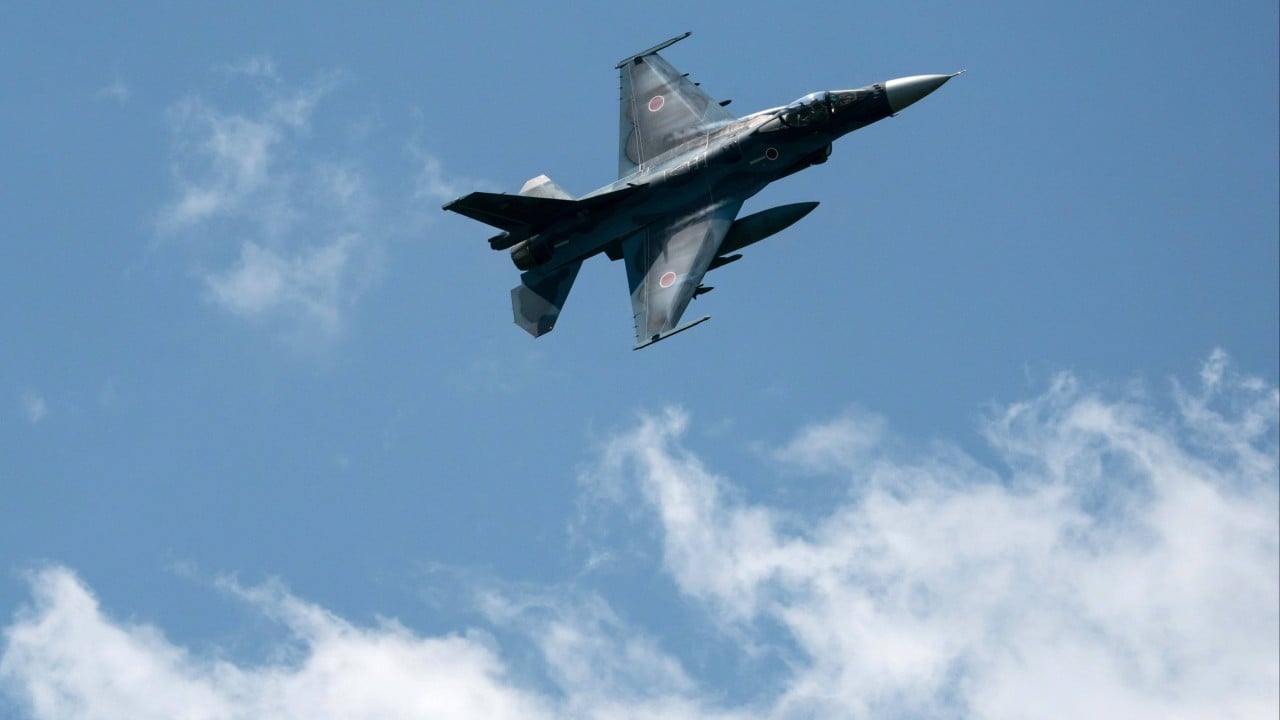
[Image of fighter jet in flight]
Why Japan
Location is destiny.
Japan sits at a crossroads of immense strategic pressure. The Indo-Pacific region is experiencing a rapid modernization of military fleets, pushing Tokyo to shed decades of self-imposed defense export restrictions and take a proactive stance on joint security. Choosing a Japanese factory site is not merely an economic convenience; it is a profound geopolitical signal.
It tells the world that security in the Atlantic and security in the Pacific are no longer separate chapters of the same book. They are the same sentence.
British aerospace workers bring decades of radar and electronic warfare wizardry developed through generations of Typhoon production. Italian engineers contribute unmatched avionics integration and aerodynamic agility. Japanese factories provide state-of-the-art semiconductor manufacturing, advanced robotics, and an uncompromising dedication to manufacturing discipline.
Put them together, and you get a manufacturing ecosystem unlike anything seen since the Cold War.
The Heavy Price of Tomorrow
Nothing comes free.
Critics whisper of friction. Language barriers, cultural clashes in management styles, and the sheer logistical nightmare of moving classified defense technology across international borders create daily hurdles. Who owns the intellectual property when a British software engineer updates a flight-control algorithm running on a Japanese-built processor inside an Italian fuselage?
These are not trivial questions. They are messy, bureaucratic landmines.
Yet, the urgency of the threat environment leaves little room for hesitation. The skies are filling with autonomous drones, hypersonic glide vehicles, and quantum-resistant encryption systems. A fighter jet in 2035 will not just be a fast airplane with a pilot inside. It will be a flying supercomputer, a central node in a vast, interconnected web of tactical data.
If you fall behind, you vanish.
The Horizon Beckons
Back on the tarmac, the vibration fades. The coffee settles.
Far above the clouds, a solitary jet breaks the sound barrier, leaving behind a white scar of vapor that dissolves slowly into the blue. Down below, blueprints are being redrawn. Land is being surveyed. Contracts are being signed in quiet rooms where history is rewritten sentence by sentence, rivet by rivet.
The factory floor in Japan is still mostly empty space, waiting for the massive gantries to rise and the first sheets of carbon fiber to arrive. But the machinery is already in motion. Three flags fly over the blueprint, fluttering in a wind that refuses to stand still.