The "squeeze" on Iran’s oil industry isn't a new story, but the 2026 version of it has turned into a strangulation. For years, Tehran played a cat-and-mouse game with Washington, using a "ghost fleet" of aging tankers and a web of front companies to keep the lights on. That game is essentially over. With the recent escalation into an active naval blockade and direct strikes on infrastructure, the Iranian regime is facing a reality it can't just bribe or sneak its way out of anymore.
If you're looking at the global energy market right now, you're seeing Brent crude dance around $90 to $120 a barrel, depending on which way the wind blows in the Strait of Hormuz. But for Iran, those high prices are a taunt. They have the oil—roughly 3.3 million barrels per day in potential production—but they can't move it, and more importantly, they can't stop producing it without destroying their own future. Don't forget to check out our earlier coverage on this related article.
The Blockade is Moving Beyond Paper Sanctions
In the past, "sanctions" meant paperwork. It meant the U.S. Treasury Department blacklisting a shell company in Dubai or a tanker flagged in Panama. Iran would just wait a week, rename the ship, paint over the hull, and find a new bank.
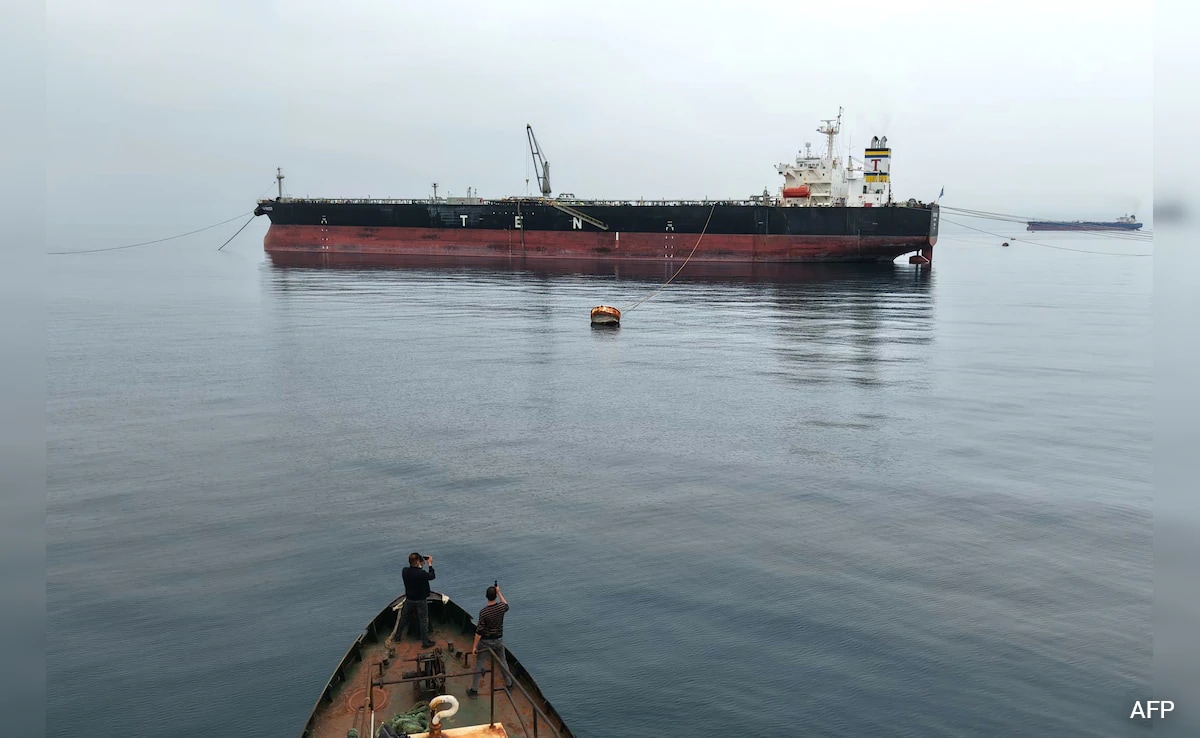
Today, the situation is physical. The U.S. naval presence in the Persian Gulf has shifted from monitoring to active interdiction. In March 2026, the closure of the Strait of Hormuz fundamentally broke the "ghost fleet" model. When you have a literal wall of steel at the world’s most important chokepoint, your digital spoofing and "flag hopping" don't matter. To read more about the background here, Reuters Business offers an excellent breakdown.
The blockade has zeroed out seaborne exports from Kharg Island, which handles over 90% of Iran's crude. Think about that: a country that needs $140 million a day in oil revenue to function is suddenly making $0 from its primary export hub. This isn't just a budget deficit; it's a total economic cardiac arrest.
Why They Can't Just Turn Off the Tap
Here’s the technical nightmare nobody talks about: you can’t just stop an oil field like you’re turning off a kitchen faucet. Iran’s fields, particularly in the Khuzestan province, are old and mature. They require constant pressure and gas reinjection to keep the oil flowing.
If Iran stops exporting because their storage tanks are full (which happened within weeks of the blockade starting), they have to "shut in" the wells. When you shut in a mature well, you risk permanent damage. Water from the lower layers of the earth can seep into the reservoir—a process engineers call "water coning." Once that happens, that oil is trapped in the rock pores forever.
The Cost of a Shutdown
- Permanent Loss: Experts estimate a forced shutdown could permanently wipe out 300,000 to 500,000 barrels per day of capacity.
- Revenue Drain: That’s roughly $10 billion to $15 billion in annual revenue gone, even if the war ends tomorrow.
- Infrastructure Decay: Without the cash from exports, Iran can’t buy the specialized parts needed to maintain these aging rigs.
Since they can't stop the wells without killing them, they’ve resorted to massive flaring. Satellite data from April 2026 shows a huge spike in "radiative heat" over Iranian oil fields. They are literally burning the gas and oil products they can't sell just to keep the pressure stable. It’s a desperate, expensive, and environmentally disastrous move.
The Ghost Fleet is Running Out of Haunts
The "Dark Fleet" was once a sophisticated network of nearly 2,000 tankers operating outside global regulations. It was Iran’s lifeline. But the U.S. and its allies have gotten much better at "shadow hunting."
In early 2026, the U.S. State Department sanctioned 14 specific "shadow vessels" and the managers behind them in one go. They’re no longer just targeting the ships; they’re going after the insurance providers and the technical managers in places like the UAE and Turkey.
The tactics that worked in 2022—like turning off AIS transponders or "spoofing" a location to make it look like a ship is in Singapore when it’s actually in the Gulf of Oman—are being countered by high-res satellite imagery and AI-driven behavior analysis. If a tanker’s "draft" (how deep it sits in the water) changes suddenly in the middle of the ocean, we know they did a ship-to-ship transfer, even if their GPS says they never moved.
The China Factor
China has been Iran’s "buyer of last resort" for years, snapping up discounted crude to fuel its massive economy. But even Beijing has limits. With the U.S. threatening 25% tariffs on any country doing business with sanctioned Iranian entities, the "Iran discount" isn't looking so attractive anymore.
Shipping Iranian oil to China now requires a level of risk that even the most aggressive Chinese "teacup" refineries are starting to question. When the U.S. Navy is physically seizing tankers like the Skipper, the "cost of doing business" starts to outweigh the savings on the barrel.
The Internal Collapse
While the world watches the tankers, the real pain is happening inside Iran’s borders. The rial is currently trading near 1.6 million per dollar. Inflation is north of 50%. This isn't just numbers on a screen; it’s a "grocery supply emergency."
Iran relies on the Strait of Hormuz for more than just sending oil out; they need it to bring food in. Roughly 80% of the region’s caloric intake moves through that water. With the blockade in place, nine grain ships were spotted sitting idle outside the Strait in March. When you can’t sell your oil and you can't feed your people, the clock starts ticking very fast.
What Actually Happens Next
If you’re waiting for a diplomatic breakthrough, don't hold your breath. The "Snapback" mechanism—the U.N. process to reinstate all pre-2015 sanctions—was triggered in late 2025 after nuclear talks failed. This isn't a temporary policy; it’s a structural shift in global trade.
If you’re tracking this for investment or geopolitical risk, keep your eyes on these three things:
- Chabahar Port: This is Iran’s only major port outside the Persian Gulf. If they can move significant volume through here, the blockade loses some of its teeth. Currently, it handles less than 10% of what they need.
- The Caspian Route: Watch for increased oil-swaps with Russia via the Caspian Sea. It’s a logistical nightmare, but for a regime in survival mode, it’s a viable "leak" in the blockade.
- Domestic Infrastructure Damage: Strikes on facilities like the Mobarakeh Steel plant and Khuzestan Steel are meant to cripple the "non-oil" economy. If these stay offline for more than six months, the regime loses its last remaining cushions.
Honestly, the "squeeze" has moved into a "break." Iran's oil industry is no longer a functioning business; it's a subsidized maintenance project designed to keep the reservoirs from collapsing. Whether the regime can survive the transition to a zero-oil economy is the only real question left.