Western observers often expect the Iranian government to crumble when top officials suddenly die. They see a system built on individual power rather than institutions. But that’s a massive misunderstanding of how Tehran actually functions. When a helicopter carrying President Ebrahim Raisi and Foreign Minister Hossein Amir-Abdollahian went down in the mountains of East Azerbaijan, the world held its breath. People expected chaos. They expected a power vacuum. It didn’t happen.
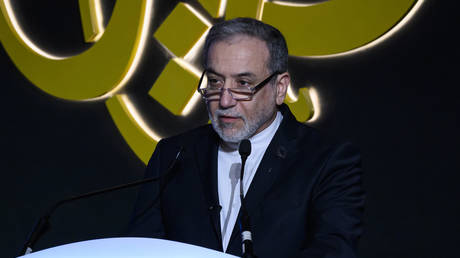
Acting Foreign Minister Ali Bagheri Kani recently made it clear that the "strength" of the Iranian state remained intact during that period. He wasn't just spinning a narrative for the cameras. He was pointing to a structural reality that most analysts outside the Middle East tend to ignore. The Iranian state is designed to survive its own leaders.
The Myth of the Power Vacuum
I’ve watched these cycles of speculation for years. Every time a high-ranking Iranian figure is removed from the board—whether by natural causes, accidents, or targeted strikes—the same headlines appear. They suggest the "regime" is on the brink.
The reality is much more boring. Iran’s constitution has a very specific, almost clinical roadmap for these exact scenarios. Within hours of the crash, the transition began. There were no tanks in the streets. There was no internal civil war. Power shifted to the Vice President and the Deputy Foreign Minister because the system is designed to be person-independent.
If you look at the Iranian political structure, the President isn't the ultimate authority. That role belongs to the Supreme Leader, Ayatollah Ali Khamenei. While the loss of a President is a massive logistical and political headache, it doesn't represent a "beheading" of the state. The brain—the Office of the Supreme Leader—stays where it is. This is why Bagheri Kani could confidently tell international media that the country’s foreign policy hadn't skipped a beat.
Foreign Policy on Autopilot
One of the biggest mistakes you can make is thinking a change in personnel means a change in direction. In Iran, the broad strokes of foreign policy are set by the Supreme National Security Council. The Foreign Minister is the face and the negotiator, but they don't decide the strategy in a vacuum.
Bagheri Kani stepped into the role with a clear mandate: keep the regional alliances strong and continue the nuclear negotiations on Tehran's terms. He didn't have to invent a new plan. He just had to execute the existing one.
- The "Axis of Resistance" stayed coordinated.
- Diplomatic outreach to Saudi Arabia and the UAE continued.
- The indirect talks with the U.S. via Oman didn't get scrapped.
It’s almost like a large corporation losing its CEO. It’s a shock, sure. The stock might dip. But the assembly lines keep moving because the middle management and the board of directors are still in the building.
Why the System Is Built This Way
You have to remember that Iran has been in a state of perceived or actual existential threat since 1979. They've lived through an eight-year war with Iraq, countless assassinations, and crippling sanctions. This has forced them to build a "deep state" that is incredibly resilient.
The Islamic Revolutionary Guard Corps (IRGC) provides a secondary layer of stability that exists outside the civilian government. Even if the entire cabinet disappeared tomorrow, the IRGC has the logistics, the intelligence, and the raw power to maintain order. Honestly, the civilian government is often just the administrative layer on top of a much more hardened security core.
When Bagheri Kani talks about "strength," he's referring to this redundancy. They have backups for their backups.
The Internal Friction No One Talks About
While the state is "strong" in terms of survival, that doesn't mean it’s happy. Don't confuse stability with popularity. The death of Raisi actually created a bit of a scramble behind the scenes. Not for the survival of the country, but for the future of the hardline faction.
Raisi was seen as a potential successor to the Supreme Leader. His death didn't break the state, but it did mess up the succession planning. This is where the real drama lies. The struggle isn't between the state and its collapse; it's between different groups of conservatives fighting over who gets the top job next.
If you’re trying to understand what happens next, stop looking for a revolution. Start looking at the internal elections and how the Guardian Council vets the candidates. That’s where the power is.
What This Means for International Relations
If you're a diplomat or an investor looking at the region, don't expect a "thaw" just because a hardline president is gone. The system produces leaders that fit its needs. Bagheri Kani’s performance on the world stage proves that the Iranian diplomatic machine is fully operational.
They're leaning into their relationships with Russia and China more than ever. They’ve realized that as long as they keep the lights on and the oil flowing—even through back channels—they can outlast the political cycles of the West.
The lesson here is simple. Structure beats personality every time. Iran’s leadership might be aging and prone to accidents, but the machinery they’ve built is young, tech-savvy, and deeply entrenched.
If you want to track the actual stability of the region, ignore the funeral processions and start looking at the movements of the Supreme National Security Council. Watch who they appoint to the "acting" roles. Those are the people who will be running the show for the next decade. Keep a close eye on the upcoming election cycles in Tehran, as they'll reveal whether the hardliners can maintain their grip or if a more pragmatic faction will be allowed to compete. This is where the real change—or lack thereof—will be decided.