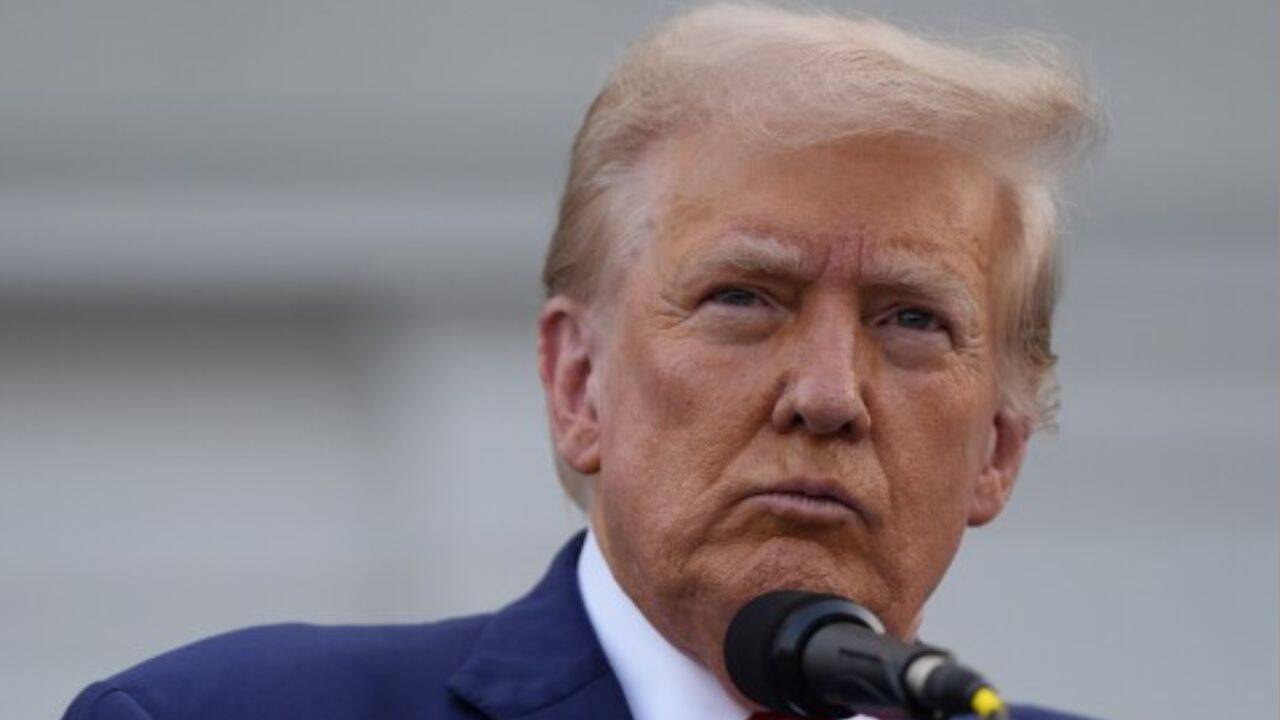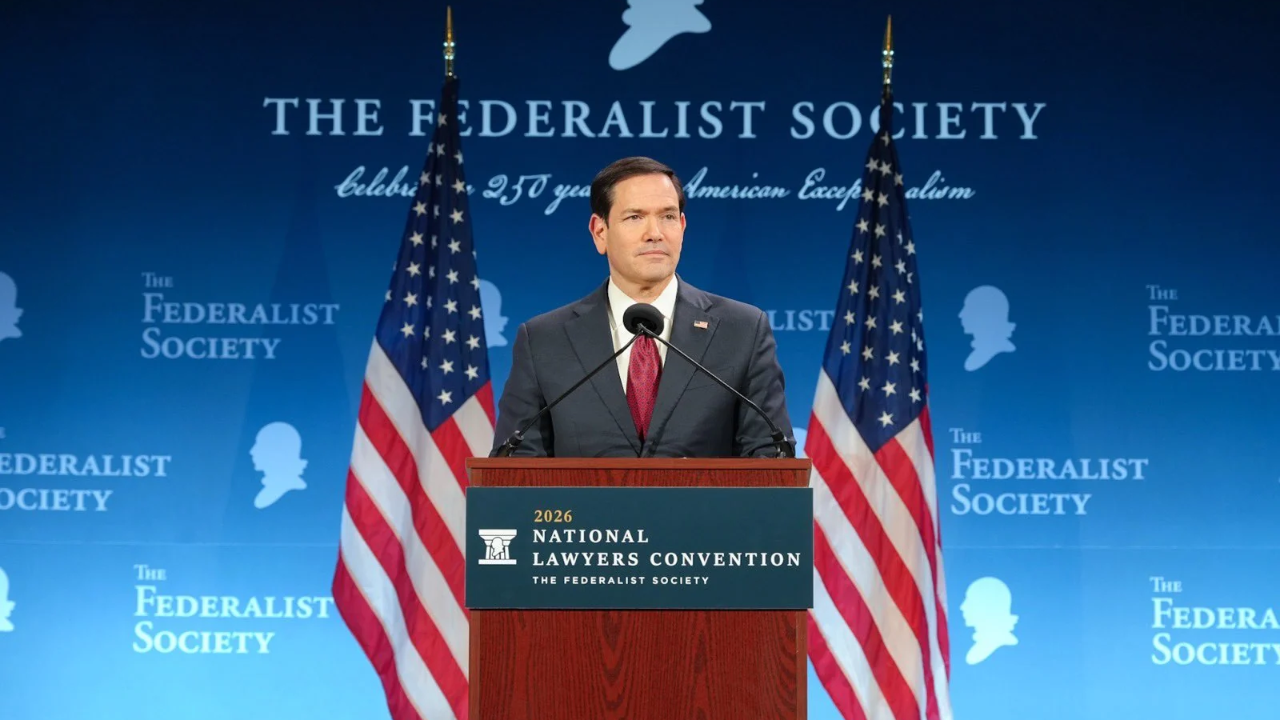
Blaming regional conflict on a single actor's "expansionist mentality" turns a complex multi-actor security system into a moral caricature. Standard wire coverage of US Secretary of State Marco Rubio's November 2026 remarks treats an ideological label as a complete explanation for Middle Eastern warfare, maritime chokepoint friction, and stalled diplomacy. A rigorous strategic breakdown replaces that shorthand with structural mechanics: how asymmetric deterrence operates, why proxy networks persist even under kinetic pressure, and where diplomatic negotiation stalls when core survival thresholds collide.
Deconstructing the Standard Headline Logic
Conventional reporting around remarks such as Rubio's at the 2026 National Convention of the American Bar Association relies on a linear cause-and-effect chain. In that framing, Tehran holds an ideological drive to expand influence, channels resources to armed partners such as Hezbollah and the Houthis, and thereby generates regional instability. Comparisons to North Korea and assertions that Iran must never acquire nuclear weapons are then presented as the natural strategic response. Learn more on a related topic: this related article.
That narrative has analytical value as a statement of Washington's official threat perception, yet it leaves three causal gaps:
- Intent versus structural incentive: A "mentality" is an unobservable psychological trait. State behavior in competitive security environments responds heavily to perceived vulnerability, domestic regime preservation, and balance-of-power shifts rather than ideology alone.
- Principal versus agent autonomy: Grouping disparate actors under a single label obscures local grievances, domestic political calculus, and independent escalatory incentives held by regional armed groups.
- Action versus reaction spirals: Framing a multi-month military confrontation involving the United States, Israel, and Iran solely around one side's ambitions flattens escalatory feedback loops across air defenses, shipping lanes, and energy infrastructure.
Distinguishing between verified observable events and analytical interpretation clarifies what is established. It is a documented fact that senior US officials have publicly attributed Middle Eastern instability to Iranian expansionism, pointed to groups like the Houthis and Hezbollah, emphasized nuclear non-proliferation, and described negotiations as deadlocked amid ongoing military tensions and maritime risks. It is an analytical hypothesis—not a directly measured fact—that ideological expansionism is the primary driver rather than a defensive-offensive security dilemma under intense external pressure. Additional reporting by Reuters delves into related views on this issue.
The Three Pillars of Asymmetric Regional Leverage
Rather than treating Tehran's regional posture as a monolithic push for territorial conquest, analysts can model it through three functional mechanisms that lower direct conventional costs while raising adversary friction.
Forward Defense Through Aligned Networks
In classic security-dilemma theory, a state facing superior conventional military power seeks buffer depth and external cost-imposition options. By cultivating ties with regional armed factions, Tehran projects influence beyond its borders and creates multi-front complications for adversaries without committing its own regular forces to every engagement.
The operational catch is principal-agent friction. Local actors possess distinct domestic constituencies and survival imperatives; they can trigger escalations that serve their own tactical goals while imposing diplomatic or military costs on their patron. Treating every regional clash as a remote-controlled move from Tehran overestimates central command control and underestimates local volatility.
Maritime Chokepoints and Energy Risk Pricing
Geography turns narrow waterways into high-leverage economic instruments. Claims of control or heightened threat activity around the Strait of Hormuz, alongside strikes affecting maritime transit and energy assets, operate by raising insurance premiums, rerouting risk, and injecting uncertainty into global energy markets.
This mechanism works through market psychology and logistics rather than permanent territorial occupation. Even localized interdiction threats or defensive strikes near key transit corridors alter commercial calculations across governments and shipping operators.
Nuclear Thresholds as Strategic Insulation
Contrasting Iran with North Korea highlights why nuclear latency or weaponization sits at the center of US strategic messaging. In deterrence theory, nuclear capability alters an adversary's cost-benefit calculation during conventional strikes or regime-pressure campaigns.
Precision conventional strikes can degrade air defenses, nuclear infrastructure, and military sites, yet airpower alone rarely resolves underlying political disputes or eliminates technical knowledge permanently. Meanwhile, coercive pressure carries its own ceiling: when a leadership believes concessions threaten regime survival, maximalist demands harden rather than soften.
Why Negotiation Stalls When Thresholds Collide
Public rhetoric in November 2026 captures a sharp bargaining paradox: statements about openness to talks coexist with warnings that a diplomatic settlement may prove impossible and lists of preconditions from Tehran that Washington dismisses as unrealistic.
Bargaining theory explains why prolonged armed friction often produces deadlocked negotiations rather than quick compromises:
- Commitment problems: Both sides face uncertainty over whether a ceasefire or memorandum will hold once immediate military pressure eases, especially after earlier truces or frameworks fail to yield a durable settlement.
- Audience costs: Leaders who frame confrontation around existential security, national honor, or "peace through strength" face steep domestic political penalties for visible concessions.
- Asymmetric reservation values: When one side prioritizes non-proliferation and regional containment while the other prioritizes regime security, sanctions relief, and regional standing, their acceptable settlement zones may fail to overlap.
- Information friction during active strikes: Ongoing defensive or retaliatory actions around sensitive sites and shipping routes signal resolve, yet they also heighten miscalculation risk when channels are strained.
A practical illustration clarifies the bottleneck. Suppose two parties negotiate over maritime security and regional restraint while strikes occur near a strategic strait. Side A views any concession on core security guarantees as inviting renewed pressure; Side B views sweeping preconditions as a refusal to compromise. Without a verified, enforceable sequencing mechanism, each side treats the other's demands as proof of bad faith.
Limits of Pure Pressure and Pure Diplomacy
Effective strategy requires acknowledging where each instrument breaks down. Relying exclusively on military pressure and economic sanctions can degrade adversary capabilities and raise internal strain, yet it frequently fails to produce compliant political behavior on a predictable timetable—and risks widening regional spillovers to energy infrastructure and third-party states.
Conversely, pursuing diplomacy without credible deterrence or clear verification risks legitimizing coercive leverage or locking in unenforceable promises. In multi-actor conflicts involving major powers, regional states, and non-state armed groups, no single policy lever acts in isolation, and every escalation carries second-order effects on trade, alliances, and civilian security.
Strategic Action Plan for Decision-Makers
Analysts, corporate risk teams, and policymakers tracking Middle Eastern security should operationalize this framework through a disciplined four-step sequence:
- Separate rhetoric from operational indicators: Track concrete military deployments, air-defense activity, shipping advisories, and diplomatic text drafts rather than relying on public speeches to gauge escalation or de-escalation.
- Map actor-specific incentives: Disaggregate Tehran's strategic goals from the local incentives of groups like the Houthis and Hezbollah, as well as regional states such as Saudi Arabia, Iraq, and Turkey, to spot where independent escalation could erupt.
- Stress-test supply chains against choke-point friction: Model scenarios involving maritime delays, higher freight and war-risk costs, and energy price spikes in the Persian Gulf and adjacent waterways rather than assuming binary war-or-peace outcomes.
- Watch for phased, verifiable off-ramps: Look for narrow, incremental confidence measures—such as maritime safety rules or localized de-escalation steps—rather than waiting for a comprehensive grand bargain in a high-friction environment.