You don't usually see a new dictator skip the biggest political theater of his life. Yet, as hundreds of thousands of mourners packed into Tehran’s Grand Mosalla complex, the most important man in Iran was nowhere to be found.
The six-day state funeral for late Supreme Leader Ayatollah Ali Khamenei was supposed to be a massive display of regime strength. Khamenei, who ruled the Islamic Republic since 1989, was killed back on February 28 alongside four family members when US and Israeli airstrikes hit Iranian targets. Because of the intense four-month war that followed, the regime had to delay the funeral until a fragile ceasefire could be hammered out with Washington.
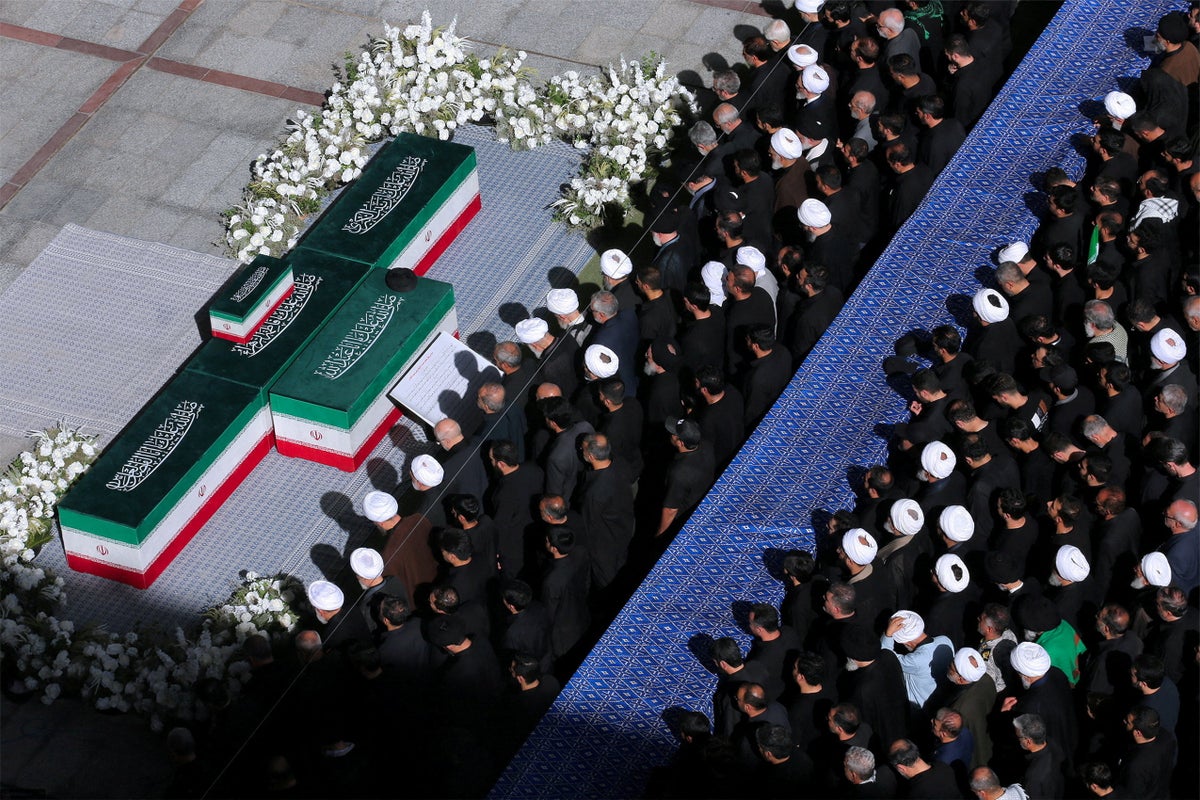
When the coffins were finally laid out under glass in the scorching July heat, three of Khamenei's sons—Mostafa, Masoud, and Meysam—stood prominently by their father's casket. They wept openly. They wiped away tears with revolutionary keffiyehs. But the second son, Mojtaba Khamenei, the man who was officially named the new Supreme Leader just ten days after the attack, didn't show up.
The Empty Space Beside the Coffin
In the Middle East, political legitimacy is visual. If you aren't seen ruling, people start wondering if you actually are. Mojtaba's absence left a massive narrative vacuum that the regime is desperately trying to fill with choreographed crowds and aggressive rhetoric.
Instead of the new Supreme Leader leading the prayers, the regime had to rely on Grand Ayatollah Jafar Sobhani, a 97-year-old cleric with no official political office. Beside him stood President Masoud Pezeshkian and Parliament Speaker Mohammad Bagher Ghalibaf. They put on a good face for the cameras, trying to project a unified leadership council. But everyone was looking at the empty space where Mojtaba should have been.
This isn't just about missing a memorial service. Mojtaba hasn't been seen in public or heard in an audio recording for over three months. He even skipped his own wife's funeral.
Regime insiders insist he's alive. According to reports from those close to his inner circle, Mojtaba was severely injured in the very same February airstrikes that killed his father. The strikes left his face disfigured and caused severe injuries to his legs. While officials claim he has recovered enough to issue written statements, they blame his current absence on extreme security concerns rather than health issues. They're terrified that if he steps into the daylight, another strike will take out the new head of the state before he even settles into the job.
A Ceasefire Broken by Death Threats
The funeral was meant to celebrate what the regime calls a "victory over a superpower," pointing to the economic benefits promised by the recent ceasefire agreement. But the mood on the ground in Tehran isn't peaceful. It's furious.
During the ceremonies, the regime's poetry recitations and speeches quickly turned into explicit calls for assassination. Radical poet Mohammad Rasouli took the stage right before the funeral prayers, demanding the death of US President Donald Trump.
"From now on the shroud is our garment. I swear by your blood; Trump's murder is our responsibility," Rasouli announced over the loudspeakers to massive cheers from the crowd. He openly asked the audience why Trump was still alive, prompting chants demanding vengeance.
Mourners even chalked "Kill Trump" messages in English directly onto the stage where the caskets rested. This puts President Pezeshkian and his chief negotiator, Ghalibaf, in a brutal diplomatic bind. They are trying to negotiate the release of $6 billion in frozen assets in Doha, yet their own state-sponsored funeral is broadcasting direct death threats against the sitting US president.
Donald Trump told media outlets that he paused peace talks for a week out of respect for the funeral events, but admitted he was surprised to see the crowds weeping, even speculating to Axios that they might be shedding "fake tears."
How the Regime Uses the Dead to Stay Alive
Iran is throwing everything it has into making this week look like a triumph of public devotion. Sunday was declared a national holiday. The state provided free transit, free meals, and free housing to bus millions of citizens into the capital from rural provinces. To keep the crowd from collapsing in the 36°C (96°F) heat, the city installed massive water-misting systems throughout the Mosalla complex.
The strategy here is obvious. The regime needs to show Washington and Israel that it still has domestic legitimacy. After a year defined by brutal domestic crackdowns that killed thousands of protesters, the leadership wants to use this "roaring sea of people" as human armor against foreign aggression.
But look closer and the fractures are obvious. The disparity between the regime loyalists getting free meals at the Mosalla and the millions of middle-class Iranians staying home in protest is wider than ever. Many regular citizens want nothing to do with a government that dragged them into a destructive four-month war.
What Happens Next
The funeral caravan is just getting started, and the logistics tell you exactly how the regime plans to use Khamenei's corpse for political leverage over the next few days.
- The Capital Procession: Monday features a massive march through central Tehran designed to maximize state TV footage of packed streets.
- The Clerical Core: On Tuesday, the body moves to the conservative seminary city of Qom to solidify backing from the clerical elite.
- The Shiite Heartland: On Wednesday, the caskets will be flown to Iraq for processions through the holy Shia shrine cities of Najaf and Karbala, a move meant to signal Iran's enduring regional influence despite the war.
- The Final Burial: On Thursday, Khamenei will finally be buried in his hometown of Mashhad.
If you want to know if Mojtaba Khamenei will actually survive as Iran’s Supreme Leader, stop watching the diplomats in Doha. Watch the burial in Mashhad on Thursday. If the final grave is dug and the new leader still hasn't shown his face to his own people, the rumors of his incapacitation will turn into an absolute crisis of legitimacy for the Islamic Republic. Watch the state media broadcasts closely for any sudden live appearances, because a regime ruling entirely through written decrees cannot hold power for long.
Khamenei Funeral Draws World Leaders Breakdown
This video provides direct footage of the funeral ceremonies inside the Imam Khomeini Grand Mosalla, showing the presence of the three brothers alongside senior military leaders and the visual absence of Mojtaba.