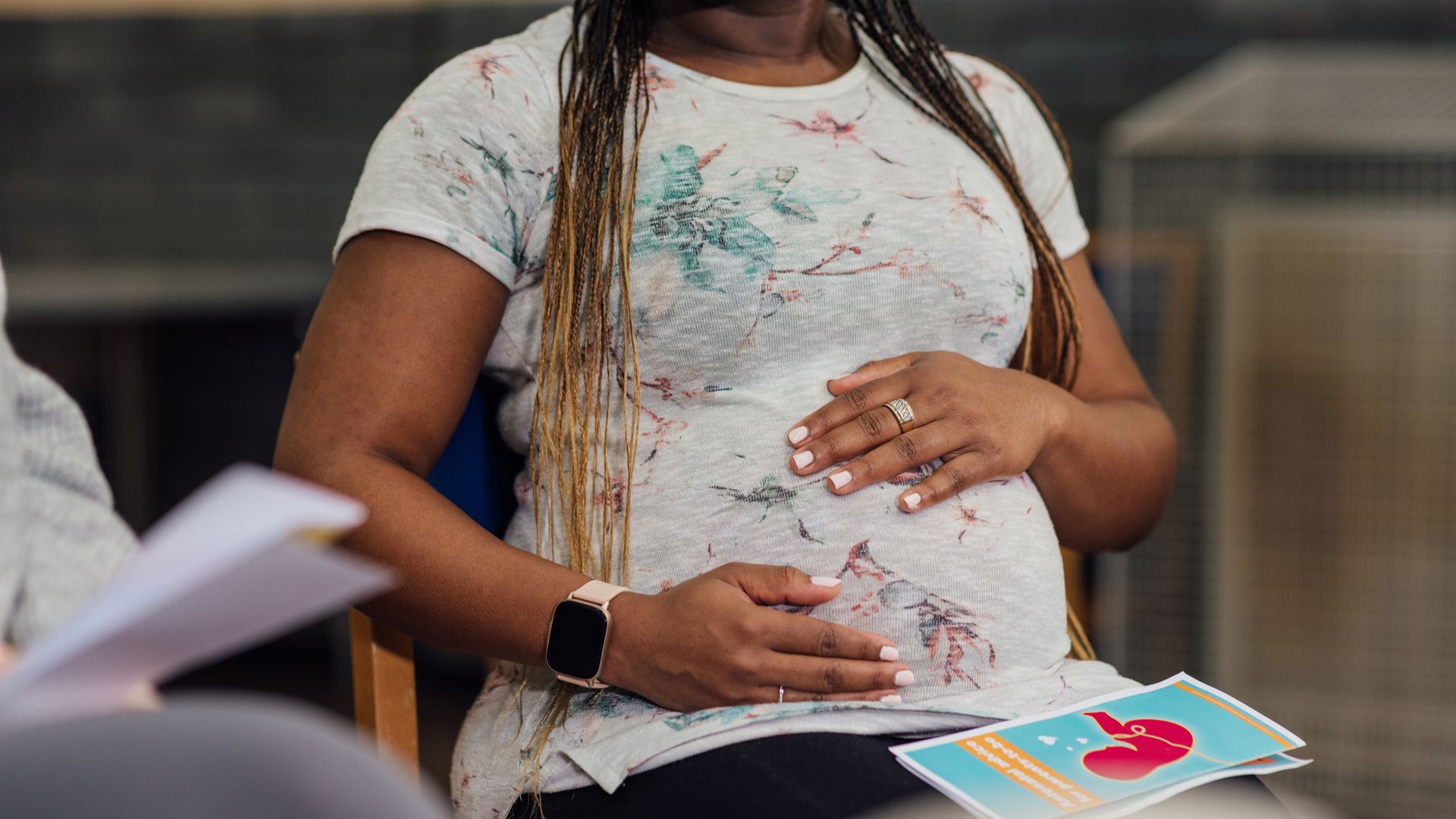
The nursery smells of lavender and milk. In the soft glow of a salt lamp, Sarah watches the rhythmic rise and fall of her six-week-old daughter’s chest. It is a moment that should be bathed in serenity, the kind of scene captured in sepia tones for a diaper commercial. But Sarah’s heart is hammering against her ribs like a trapped bird. Her palms are damp. Every time the baby shifts, a jolt of electricity shoots through Sarah’s spine, a primal alarm system that refuses to power down.
We talk about the "glow." We talk about the "miracle." We rarely talk about the biological wreckage that can follow the storm of childbirth. The world expects Sarah to be whole because the baby is whole. Yet, beneath the surface of the postpartum haze, a complex series of physiological and psychological shifts are unfolding. Sometimes, they don't shift back.
The Thief of Rest
Sarah isn't just tired. Every new parent is tired. This is different. This is Postpartum Anxiety (PPA). While Postpartum Depression gets the headlines, PPA is the quiet thief that keeps mothers awake even when the baby is finally, mercifully, asleep. It manifests as a physical tightening of the throat or a constant, intrusive loop of "what if" scenarios.
[Image of the brain's amygdala and its role in fear response]
The statistics are sobering. While nearly 80% of new mothers experience the "baby blues"—a short-lived dip in mood—roughly one in five will develop a formal perinatal mental health disorder. It isn't a character flaw. It is a chemical cascade. During pregnancy, estrogen and progesterone levels soar to astronomical heights. Within 24 hours of delivery, they plummet back to baseline. Imagine driving a car at a hundred miles an hour and suddenly slamming it into reverse. The gearbox is bound to grind.
The Body Turning Inward
Three months after delivery, Maria noticed her hair coming out in clumps. She dismissed it as "shedding," a common post-pregnancy quirk. Then came the exhaustion that no amount of caffeine could pierce, followed by a strange, persistent chill in her bones despite the summer heat.
Maria was experiencing Postpartum Thyroiditis.
The thyroid is the body’s thermostat and metabolic engine. During pregnancy, the immune system dampens itself so it won't attack the "foreign" DNA of the baby. Once the baby is gone, the immune system wakes up with a vengeance. Sometimes, it mistakes the thyroid for an intruder.
It starts with hyperthyroidism—shaky hands, weight loss, and a racing pulse. Mothers often mistake this for the "new parent jitters." But then comes the crash into hypothyroidism. The metabolism slows to a crawl. The skin grows dry. The mind becomes foggy. For Maria, the diagnosis was a relief because it proved she wasn't just "failing" at being a high-energy mom; her body was literally struggling to regulate its own energy.
The Pressure Within
We focus on the belly, but the blood tells a darker story. For some, the danger doesn't end when the umbilical cord is cut. Postpartum Preeclampsia is a ghost that haunts the weeks following birth.
High blood pressure is often a silent predator. A mother might have a lingering headache she attributes to lack of sleep. She might see "stars" or spots in her vision and blame it on the bright lights of the pediatric clinic. But inside, her arteries are under immense strain. Without intervention, this can escalate into seizures or strokes. It is the ultimate irony of the postpartum period: the very moment life is created is the moment the mother's own life becomes most fragile.
The Structural Silence
Then there are the injuries we don't name in polite company. We call it "the bounce back," a cruel phrase that implies the body is a rubber band. It isn't. It is a house that has survived a hurricane.
Consider Pelvic Organ Prolapse. It sounds clinical, almost sterile. In reality, it feels like a heavy, dragging sensation, a literal falling away of the internal structures that hold a woman together. It makes exercise painful and intimacy terrifying. Because it involves the most private parts of the body, many women suffer in a vacuum of shame. They assume this is their "new normal."
It doesn't have to be. Physical therapy for the pelvic floor is a standard of care in countries like France, yet in many other places, it is treated as an optional luxury. We have socialized mothers to believe that leaking when they laugh or feeling internal pressure is just the price of admission for parenthood. It is a lie.
The Sugar Trap
For those who navigated Gestational Diabetes during their forty weeks of pregnancy, the birth of the baby feels like a finish line. The restricted diet ends. The finger pricks stop.
But the metabolic ledger isn't wiped clean.
Women who experience gestational diabetes have a significantly higher risk of developing Type 2 Diabetes later in life. The pregnancy was a stress test for the pancreas. It revealed a vulnerability in how the body processes fuel. When the "all clear" is given at the six-week checkup, many women vanish from the medical system, their long-term metabolic health forgotten in the shuffle of vaccinations and growth charts.
The Architecture of Recovery
The medical system is designed around the "event" of birth, but the "process" of mothering lasts a lifetime. We spend months decorating a room the baby won't remember, yet we spend almost no time preparing the mother for the physiological restructuring she will endure.
Sarah sits in the nursery, her heart still racing. She finally picks up the phone. She doesn't call a sleep consultant or a lactation specialist. She calls her doctor and says four words that are harder to utter than any labor scream: "I am not okay."
The silence breaks. The healing begins.
The weight of the world doesn't belong on the shoulders of someone who has just rebuilt a human being from scratch. We owe it to the Sarahs and the Marias to look past the baby and see the woman standing in the shadows, holding it all together with shaking hands.
She is still there. She is still important. And she is far from alone.
A mother's body is a map of where she has been, but it shouldn't be a map of what she has lost.