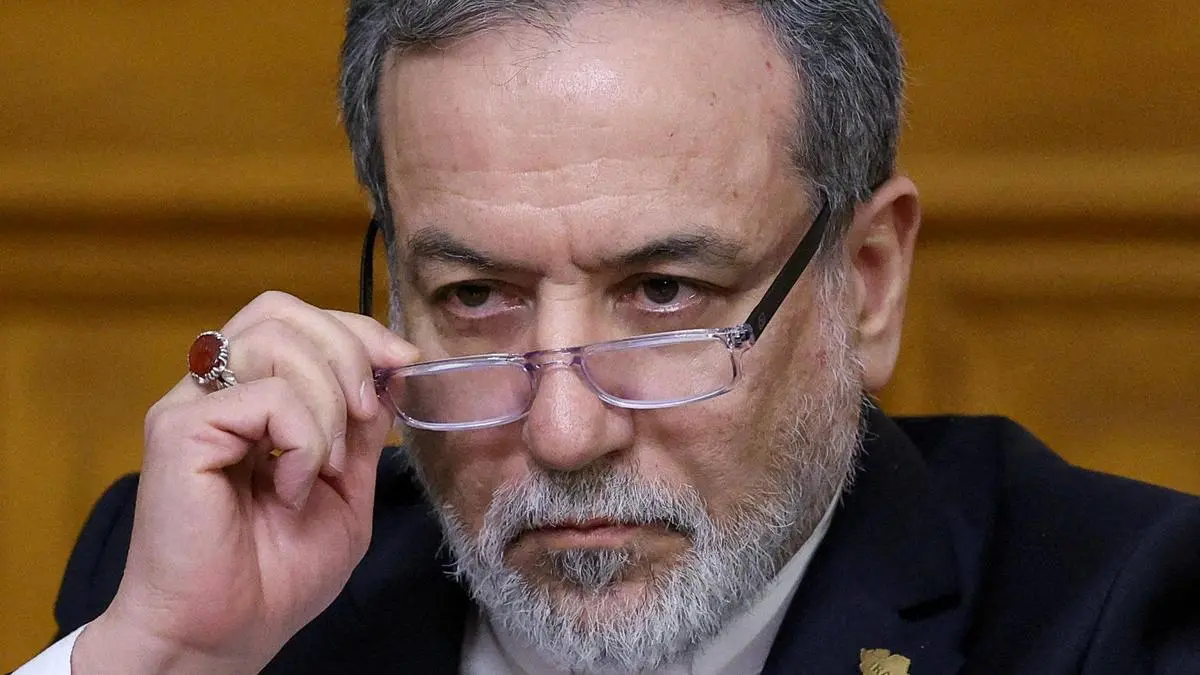
In the quiet, wood-paneled rooms of Tehran, the air doesn’t smell of revolution or gunpowder. It smells of old paper, lukewarm tea, and the crushing weight of silence. Somewhere on a desk lies a document—a proposal from Washington—that could change the caloric intake of a child in Isfahan or the price of a taxi ride in Shiraz. It is a ceasefire plan. It is a lifeline or a noose, depending on who you ask and how much they have left to lose.
The headlines tell you that Iran is "reviewing" a plan. They tell you that Donald Trump says the leaders want a deal. But headlines are skeletal things. They lack the pulse of the grandmother who counts her rials at the grocery store, watching the numbers on the digital scale climb faster than she can blink. To understand why a piece of paper in 2026 matters, you have to look past the podiums and into the eyes of the people living in the gaps between the policy shifts.
The Architecture of the Wait
Imagine a merchant named Abbas. He sells carpets in the Grand Bazaar. He isn't a politician. He isn't a general. But he is a master of the "Wait." For years, his business has been a mirror of the geopolitical weather. When the rhetoric gets hot, the tourists vanish and the shipping costs spike. When there is a whisper of a deal, the bazaar holds its collective breath.
Abbas watches the news not for the slogans, but for the nuance. Right now, the nuance is agonizing. The United States has extended a hand, but the hand is heavy with history. Iran’s Foreign Ministry spokesperson, Esmaeil Baghaei, sits before microphones and performs a delicate dance. He acknowledges the plan exists. He denies that formal talks have begun. It is a tactical standoff where every word is weighed on a jeweler’s scale.
The tension is a physical presence. It’s the vibration in a room before a storm breaks.
Donald Trump, watching from across the ocean, claims the Iranian leadership is desperate. "They want a deal," he says, with the confidence of a man who views the world as a series of closures. And perhaps he is right, though for reasons more human than he might admit. Desperation isn't just a political vulnerability; it is a cumulative exhaustion. It is the fatigue of a nation that has been sprinting on a treadmill of sanctions and proxy tensions for a generation.
The Geography of a Ceasefire
A ceasefire is rarely just about stopping bullets. In this context, it is about stopping the bleeding of a regional economy. The plan on the table involves Lebanon, Israel, and the intricate web of influence Iran has woven across the Levant.
If the guns fall silent in Beirut, the pressure valve in Tehran turns just a fraction. But the Iranian leadership faces a paradox. To accept a US-brokered deal is to risk appearing weak to their most hardline supporters. To reject it is to continue the slow suffocation of their middle class.
Consider the hypothetical map spread out in a high-security office in North Tehran. It isn’t just marked with military outposts. It is marked with supply chains. If the ceasefire holds, perhaps the drones stop flying. If the drones stop flying, perhaps the sanctions ease. If the sanctions ease, perhaps Abbas can finally import the specific silk thread he needs from abroad without paying a 400% markup to a middleman in Dubai.
These are the invisible stakes. We talk about "geopolitical leverage," but we should be talking about the cost of a loaf of bread.
The Ghost of 2018
The hesitation in Tehran isn't just stubbornness. It is memory.
Trust is a fragile currency, and in the halls of the Iranian government, the memory of the 2018 withdrawal from the nuclear deal is a scar that hasn't fully faded. They have seen the ink dry and then seen the paper torn up. This makes the "review" process slow, methodical, and deeply cynical.
They are looking for the trapdoor.
"We are not in a hurry," the official rhetoric suggests. But every day spent reviewing is another day of the status quo. The status quo is a gray existence. It is a world where young tech entrepreneurs in Tehran use VPNs to access the basic tools of the modern age, living in a digital shadow because their IP addresses are radioactive to the global market.
When Trump says they want a deal, he is tapping into a fundamental truth: no one wants to live in a fortress forever. Even the people who built the walls eventually get tired of the damp and the dark.
The Two Narratives
There are two stories being told right now, and they rarely meet in the middle.
In Washington, the narrative is one of maximum pressure finally yielding results. The idea is that if you squeeze hard enough, the internal structures of the Iranian state will have no choice but to pivot. It’s a cold, mathematical approach to diplomacy.
In Tehran, the narrative is one of "Heroic Flexibility"—a term they’ve used before to describe making concessions without losing face. It is about survival through adaptation. They aren't surrendering; they are recalibrating.
But between these two grand sagas lies the reality of the streets.
The Iranian people are among the most educated and globally connected populations in the Middle East. They watch Netflix through backdoors. They trade crypto. They know exactly what the rest of the world looks like. For them, the ceasefire isn't about the borders of Lebanon or the security of the Galilee. It is about the possibility of a normal Tuesday.
A Tuesday where you don't check the exchange rate before you go to the pharmacy. A Tuesday where "the future" doesn't feel like a threat.
The Sound of a Pen Falling
What happens if the review ends in a "no"?
The cycle resets. The rhetoric sharpens. The invisible wall grows an inch taller. But if the answer is "yes," or even a "yes, but," the world shifts.
It won't be a sudden explosion of peace. It will be a slow, cautious thinning of the clouds. It will look like a few more cargo ships docking in Bandar Abbas. It will look like a diplomat’s plane landing in a city that hasn't seen a friendly Western face in years.
Negotiation is a form of theater where the actors are terrified of the audience. The Iranian leaders are watching their own people just as closely as they are watching the White House. They know that a deal that brings no relief is a failure, but a deal that brings too much change is a risk to their very identity.
The pen is hovering.
The document sent by the US isn't just a list of terms. It is a mirror. It asks the Iranian leadership who they want to be in the final half of the decade. Do they want to be the vanguard of a perpetual resistance, or the administrators of a recovering nation?
Abbas in the bazaar doesn't care about the ideology. He just wants to see the dust settle. He wants to hear the sound of the pen hitting the paper, a sound that, if it ever comes, will be drowned out by the collective sigh of eighty million people who are tired of living in a headline.
The tea in the cabinet room is cold now. The officials are still reading. Outside, the sun sets over the Alborz mountains, casting long, jagged shadows over a city that has learned to survive on hope and spite in equal measure. The world waits for a signal. The signal waits for a consensus. And the consensus is buried under layers of pride, fear, and the quiet, desperate hope that this time, the ink might actually stick.
One signature. One border. One breath.