Silence.
That is the first thing you notice when a major international terminal dies, not the shouting, not the sirens, just the sudden, suffocating absence of that low, reassuring hum of rolling suitcases and overlapping boarding announcements that usually vibrates through the soles of your shoes.
I have stood on that cold terrazzo floor while the departure boards above me flickered from crisp white destinations to a bleeding wall of red DELAYED and CANCELLED stamps, feeling my stomach drop into my boots as my phone battery ticked down to four percent. You look around at three thousand strangers, and for a fraction of a second, the modern miracle of global travel reveals itself for what it actually is. A fragile, hyper-synchronized house of cards held together by trust.
Recently, across Europe, someone blew on the cards.
If you read the standard wire reports, the story sounds almost clinical, a sterile ledger of logistical hiccups where a series of coordinated bomb threats forced evacuations, grounded aircraft, and snarled airspace from regional hubs to major continental gateways. The headlines treat it like bad weather. A temporary inconvenience. Numbers on a spreadsheet.
They miss the point entirely. When an anonymous email or a spoofed phone call halts an Airbus A320 on the tarmac in Brussels, Lyon, or Frankfurt, the weapon isn't an explosive device packed into a carry-on bag. The weapon is doubt. And in an industry built entirely on precision timing and absolute certainty, doubt is just as effective as dynamite.
The Anatomy of a Phantom Strike
To understand how a single sentence typed into a dark bedroom can paralyze an entire continent’s transit grid, consider a hypothetical traveler—let’s call her Clara.
Clara is thirty-four, sitting in Gate B14 at a bustling European hub, clutching a lukewarm paper cup of espresso while waiting for a ninety-minute hop to attend her father’s surgery. Two hundred miles away, an airport operations center receives an encrypted message claiming an explosive is onboard an inbound regional flight. Within ninety seconds, an invisible tripwire snaps.
Security protocols in European aviation do not allow for gut feelings, probability estimates, or common sense. Under European Union aviation security regulations, specifically frameworks descending from Regulation (EC) No 300/2008, any threat deemed non-dismissible triggers an immediate, non-negotiable cascade. Authorities cannot gamble with two hundred lives on the hunch that a teenager is playing a cruel prank.
So the machine stops.
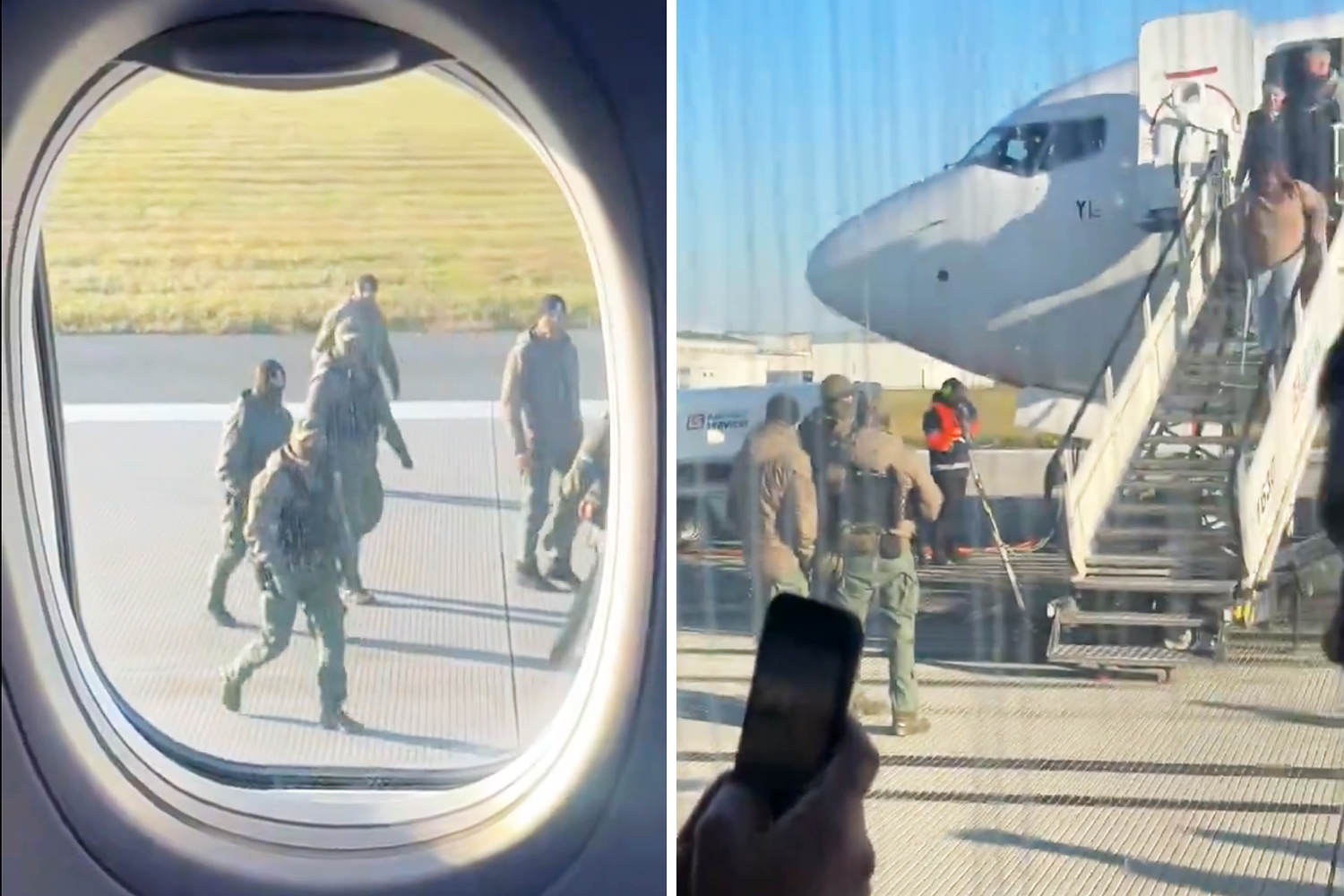
First, the targeted aircraft is isolated on a remote stand, far from the glass walls of the terminal. Emergency vehicles with flashing amber and blue lights surround the fuselage like white blood cells rushing to an infection. Passengers descend portable stairs into the biting wind, leaving behind coats, laptops, and medication, herded onto buses while bomb-sniffing dogs and tactical units sweep every overhead bin and cargo hold.
Meanwhile, back at Gate B14, Clara’s flight doesn't even share an airline with the threatened plane. Yet her screen turns red. Why?
Think of European airspace not as a highway, but as a mechanical watch. Every gear touches three other gears. When a runway closes for two hours so tactical teams can inspect an isolated jet, the inbound planes circling above burn through their reserve fuel and must divert to secondary airports. Those secondary airports suddenly run out of gates. Ground crews at those hubs get pulled off scheduled turnarounds to handle the unexpected arrivals. By the time the all-clear is given—and in almost every wave of these coordinated hoaxes, the cargo holds turn up completely empty—the crew scheduled to fly Clara to her father’s bedside has timed out under strict European flight-duty limitation laws.
They are legally forbidden from touching the controls. Clara stays on the ground. Her father goes under anesthesia alone.
Why the Hoaxes Are Spreading Now
We have seen waves of false alarms before, particularly during spikes in geopolitical tension, when copycats realize that fear is cheap and aviation security is legally bound to take the bait. What makes the recent European disruptions so unsettling isn't the sophistication of the perpetrators. Quite the opposite. It is the terrifying asymmetry of the attack.
Historically, disrupting air travel required physical infiltration, forged documents, or breached perimeters—barriers that billions of euros in post-2001 screening technology made nearly impenetrable. Today, the perimeter isn't the metal detector at Terminal 2. The perimeter is an inbox.
Law enforcement agencies across France, Belgium, Germany, and neighboring states have repeatedly traced recent waves of airport and school bomb threats to virtual private networks, encrypted messaging apps, and disposable email providers. Often, the perpetrators aren't hardened ideological operatives; they are bored adolescents, online extortionists, or digital vandals operating from thousands of miles away, hiding behind layers of proxy servers.
Yet the asymmetry is staggering.
A threat takes thirty seconds to write and costs nothing to send. Responding to it costs an airline upwards of $10,000 to $50,000 per hour in burned fuel, displaced crew accommodations, missed connection rebookings, and EU261 passenger compensation obligations—though airlines frequently invoke "extraordinary circumstances" to shield themselves from payout claims during security emergencies, leaving stranded travelers to absorb hotel and meal costs out of pocket.
Worse still is the psychological toll on the people running the system. Ask any air traffic controller or airport duty manager what happens during a multi-site hoax, and they will tell you the real danger isn't the first alert. It is the fourth.
Human beings are not wired to stay at peak adrenaline forever. When an operations center is hammered by false alarms day after day, the greatest threat becomes cognitive fatigue—the creeping, subconscious temptation to treat the next warning as just another prank. Aviation safety was written in blood precisely because human intuition fails under repetition. So officials refuse to bend the rules, accepting the economic chaos as the price of keeping the sky safe.
The Human Cost Behind the Departure Board
When news outlets tally up the damage of these European flight disruptions, they speak in macroeconomic abstractions. Forty flights cancelled. Twelve thousand passengers delayed. Two terminals evacuated.
Those numbers sanitize the reality.
Walk down the concourse during a four-hour security lockdown and you see what disruption actually looks like. You see elderly travelers sitting on the floor against concrete pillars because the plastic chairs ran out two hours ago, their ankles swelling because they can't elevate their legs. You see parents rationing the last scoop of baby formula with warm tap water from a restroom sink. You see seasonal workers, students on tight budgets, and families whose entire annual savings went into a four-day trip, watching their plans evaporate while customer service lines snake half a mile back toward baggage claim.
I remember sitting beside a young violinist during a terminal evacuation in central Europe a few winters ago. She was holding her instrument case across her chest like a shield, terrified that the security sweep would force her to leave it behind on the tarmac in freezing temperatures, which would crack the spruce wood and ruin a career she had spent fifteen years building. She didn't care about the geopolitical context or the cyber-forensics of spoofed IP addresses. She just wanted to know if she could keep her case warm.
That is the invisible stake of every anonymous threat. The perpetrators think they are striking at faceless corporations or national governments. In reality, they are stealing irreplaceable hours from ordinary lives.
How You Navigate a System Built to Freeze
If you are traveling through Europe—or anywhere in a hyper-connected aviation grid—you have to accept an uncomfortable truth: no matter how much money you spend on business class tickets or priority boarding, you cannot buy immunity from a security shutdown. When the red light flashes in the control tower, everyone stands in the same line.
Still, after years of watching airport grids lock up and slowly thaw, I have learned that the travelers who make it home aren't the ones screaming at the gate agents. They are the ones who understand how the machine breaks.
First, never check what you cannot survive without for forty-eight hours. During a bomb threat evacuation, you are frequently separated from your aircraft before your checked luggage is unloaded, and even carry-on bags can be impounded for hours while canine units clear the cabin. Essential medications, passports, chargers, and a spare layer of warmth belong on your body, not in the overhead bin.
Second, bypass the physical line the second the board turns red. When three flights cancel simultaneously, three hundred people instinctively sprint toward the nearest airline service desk. That line is a trap. By the time you reach the front ninety minutes later, every seat on alternative flights has already been claimed by passengers who called the airline’s international support desk—not the local country number, which will be jammed—or rebooked directly through the airline's mobile app while still walking off the jet bridge.
Third, know where the rails run. One of Europe’s greatest advantages over North America is that its high-speed rail network mirrors its short-haul flight corridors. If an airport hub locks down in Paris, Brussels, Amsterdam, or Frankfurt, waiting six hours for airspace to clear is often a losing bet. Jumping on a train to a neighboring city—even if it costs a hundred euros out of pocket—frequently gets you to your destination before the first delayed plane even finishes de-icing or boarding.
Finally, document everything before you spend a dime. Under European passenger rights frameworks, airlines owe you duty of care—meals, refreshments, and hotel accommodation—even when a security threat qualifies as an extraordinary circumstance that exempts them from cash compensation. Keep every receipt, screenshot every delay notification on the departure board, and never rely on a verbal promise from an exhausted gate agent.
The Fragile Miracle
Eventually, the tactical vans pull away from the tarmac. The bomb-sniffing dogs trot back toward their handlers, tongues lolling, their work done. A tired voice crackles over the terminal loudspeakers, apologizing for the inconvenience and inviting Group 1 passengers to approach the podium.
The low hum returns. Suitcases roll again. Coffee machines hiss back to life, and within three hours, the departure boards glow with the calm, rhythmic certainty of normal operations.
You board the plane, buckle your seatbelt, and look out the small oval window as the engines spool up to full thrust. It feels effortless, almost inevitable, as though human beings were always meant to hurtle across borders at five hundred miles an hour before lunch.
And then you glance down at the edge of the tarmac, where a lone security cruiser sits parked beside the perimeter fence, its amber light still pulsing slowly against the gray asphalt, reminding you that all it takes to bring the whole sky down is a whisper in the dark.