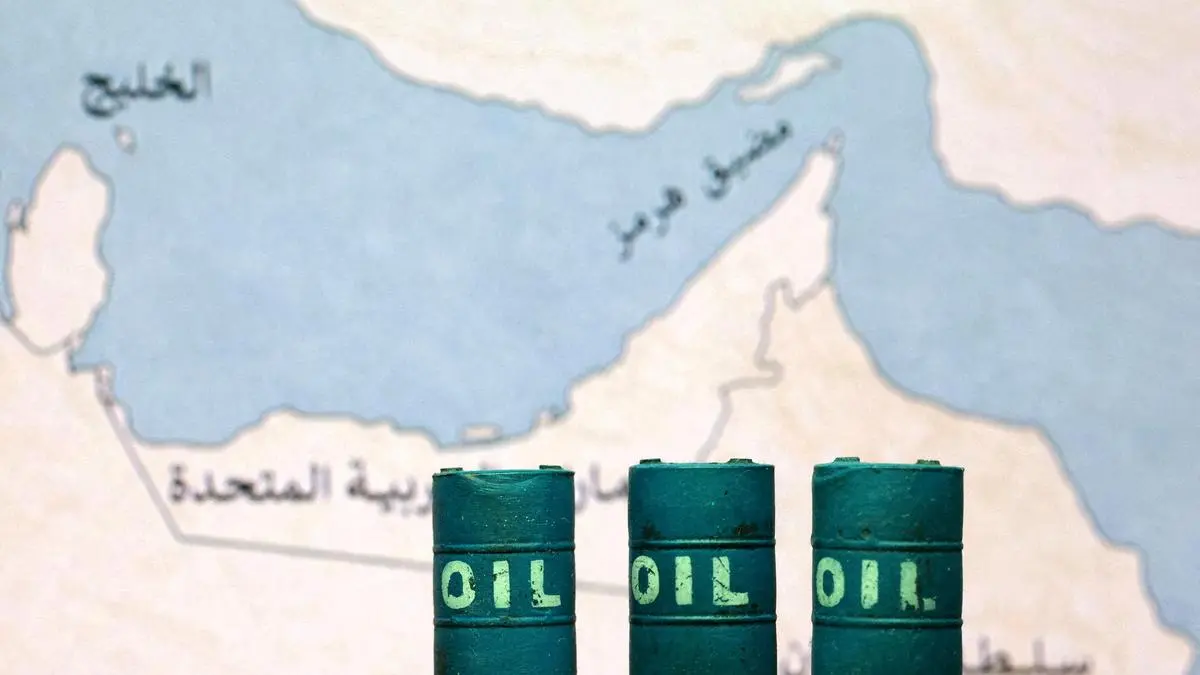
Captain Elias Thorne stares at the radar screen, a glowing emerald eye in the dim, salt-crusted bridge of the Azure Titan. Outside, the night is a heavy, humid blanket. Below his feet, two million barrels of crude oil hum with a low-frequency vibration that he feels in his marrow. He is entering a stretch of water only twenty-one miles wide at its narrowest point—the Strait of Hormuz.
For decades, this was a routine passage. A rhythmic, industrial heartbeat. You check your charts, you signal your position, and you slide through the throat of the world. But the rules of the sea are changing. The water looks the same, but the invisible lines of sovereignty have hardened.
Iran has just rewritten the manual for the world’s most vital artery. They call it "sovereign transit rules." To a bureaucrat in a distant capital, it sounds like paperwork. To Elias, and the global economy he carries in his hull, it is a tectonic shift.
The Permit and the Pressure
Under these new mandates, the Iranian government now requires vessels to obtain prior permits before entering what they define as their territorial waters within the Strait. This isn't just a courtesy call. It is a formal assertion of gatekeeping.
Consider the "right of innocent passage." It is an ancient concept, the bedrock of maritime law, suggesting that as long as you aren't shooting or spying, the ocean belongs to everyone. Iran is effectively challenging the elasticity of that definition. They are asking for a digital key to be turned long before a bow breaks the surface of the Persian Gulf.
For a captain, this introduces a new, suffocating layer of friction. Imagine driving down a highway you’ve used for twenty years, only to find a new toll booth that requires an application filed three weeks in advance. If you don't have it, the authorities don't just fine you. They can stop the car. They can take the keys.
In the shipping world, time is the only currency that truly matters. A twelve-hour delay at the mouth of the Strait doesn't just cost fuel. It ripples. It affects the price of heating oil in a suburb in Ohio. It changes the margin for a manufacturer in Seoul. It vibrates through the stock tickers in London.
The Chokehold on the Global Jugular
Why does this strip of water matter so much? Because a fifth of the world's total oil consumption passes through this needle's eye every single day.
- 20 million barrels.
- One-third of the world’s liquefied natural gas.
- Infinite geopolitical anxiety.
The Strait is a psychological pressure point. By mandating prior permits, Tehran is not just collecting data; they are exercising a "soft" blockade. They are signaling that the door is theirs to open or shut. This isn't a military maneuver involving destroyers and missiles—at least, not yet. It is a legal maneuver, which is often more difficult to fight. You can't easily shoot a regulation.
When a sovereign nation claims the right to vet every hull, they are essentially auditing the world's energy supply. They see who is buying, who is selling, and how fast the lifeblood is flowing. It turns a transit zone into a data-mining operation.
The Ghost in the Machine
Elias watches a patrol boat flicker on his starboard side. It stays just outside his wake, a silent shadow. The new rules require more than just a permit; they demand transparency that many shipping companies find intrusive. They want to know the "final destination" and the "nature of the cargo" in ways that go beyond standard manifests.
There is a technical term for this: "lawfare."
It is the use of legal systems and principles against an enemy, damaging or delegitimizing them, or tying them up in so much red tape that they simply give up. If Iran can slow down the flow of commerce through sheer administrative weight, they achieve the same leverage as a physical barrier without firing a single shot.
The psychological toll on the crews is real. These sailors aren't soldiers. They are technicians and engineers who just want to get from Point A to Point B. Now, they are pawns in a high-stakes game of maritime chess. Every radio call is a potential trap. Every request for documentation is a test of nerves.
The Economic Aftershock
We often think of the economy as a series of graphs and spreadsheets. It’s cleaner that way. But the economy is actually a physical thing—a massive, interconnected web of steel pipes, rubber tires, and cargo containers. When you put a kink in the hose at the Strait of Hormuz, the pressure builds up everywhere else.
Insurance companies are the first to react. They don't wait for a crisis; they price in the possibility of one. The moment "sovereign transit rules" were whispered, the premiums for transiting the Gulf ticked upward.
- War Risk Surcharges: These aren't just for active combat zones. They apply to areas where the "legal stability" is in question.
- Logistical Re-routing: Some companies are already looking at the long way around—the Cape of Good Hope. It adds weeks to a journey and thousands of tons of carbon emissions.
- Consumer Inflation: That extra dollar you pay for a gallon of gas or a plastic toy? It started as a permit fee or an insurance hike in the Persian Gulf.
The "invisible stakes" are the quiet deaths of small businesses that can't handle a 5% increase in shipping costs. It’s the family that has to choose between a full tank of gas and a full cart of groceries. The Strait is a mirror reflecting our own vulnerability.
A Sea of Uncertainty
The sun begins to bleed over the horizon, turning the Gulf into a sheet of hammered gold. Elias hands the watch over to his first mate. His eyes are red-rimmed. He has spent the last four hours double-checking the digital permits, ensuring every "i" is dotted in the Farsi-translated documents.
The problem with these new rules isn't just their existence; it's their ambiguity. Sovereignty is a jealous god. It demands total recognition. If a vessel from a "hostile" nation applies for a permit, will it be granted? If the permit is denied, what is the recourse? There is no international court that can force a sovereign nation to open its waters in real-time.
We are entering an era of "fragmented oceans." The dream of a unified, open sea is fading. In its place, we are seeing a patchwork of zones, each with its own gatekeeper, its own toll, and its own agenda.
Elias looks back at the narrow gap they’ve just exited. The Azure Titan cleared the passage this time. The paperwork was in order. The "sovereign" was satisfied. But as he walks toward his cabin, he can't shake the feeling that the Strait is getting narrower every year.
The water hasn't moved. The land hasn't shifted. But the space for the rest of the world to breathe is shrinking, one permit at a time. The world's pulse is no longer steady; it is at the mercy of the hand on the valve.