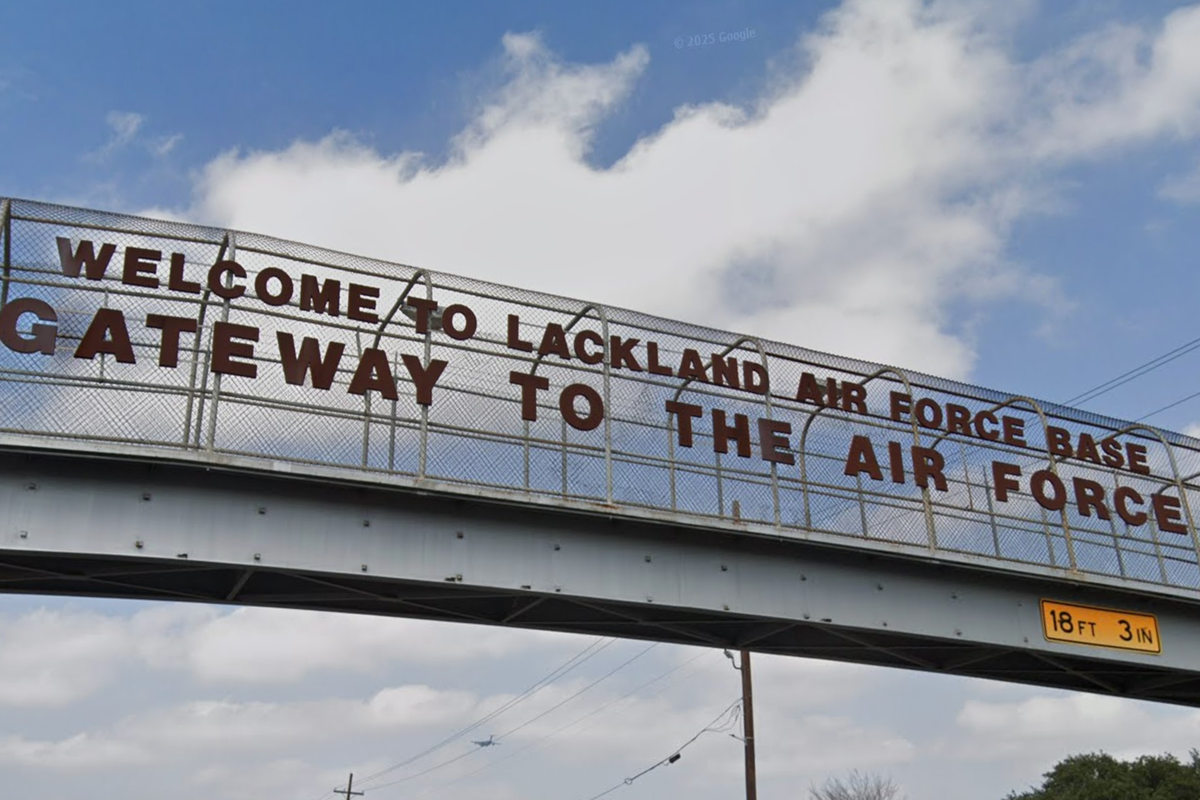
The air in an open-bay military barracks has a distinct weight. It smells of floor wax, heavy cotton uniforms, and the collective sweat of sixty strangers trying to survive their first month of basic training. At Joint Base San Antonio-Lackland in Texas, that air recently grew heavy with something else: the wet, hacking cough of an ancient enemy.
Consider a hypothetical recruit named Marcus. He is nineteen, a track runner from Ohio, and physically in the best shape of his life. Yet, three weeks into his training, his bones ache with an intensity he has never known. His chest burns. When he tries to stand for the 0400 muster, his knees buckle. He is not alone. Down the row of metal bunks, two other recruits are shivering under thin wool blankets despite the sticky Texas heat. Don't forget to check out our earlier article on this related article.
By mid-June, this scene repeated itself until nearly 300 trainees at Lackland were sickened.
What broke the line of defense at America's primary Air Force training hub was not a failure of discipline or a security breach. It was a microscopic invader that took full advantage of a sudden shift in policy at the very top of the Pentagon structure. If you want more about the history of this, Psychology Today offers an excellent summary.
The Friction of Freedom and Physics
In late April, Defense Secretary Pete Hegseth stood before the military and announced an immediate end to the decades-old mandate requiring all service members to receive an annual influenza vaccine. He framed the decision as a restoration of individual liberty, calling the long-standing requirement "overly broad and not rational." For the first time since 1945, the flu shot became entirely voluntary.
Freedom, however, reacts differently inside a spreadsheet than it does inside a crowded military squad bay.
When the choice was handed to the new arrivals at Lackland, the uptake plunged. Only 40 percent of the trainees moving through the boot camp opted to get the shot. Think about that math for a moment. More than half of the 700 new recruits arriving every single week were entering one of the most microbially volatile environments on earth with zero artificial immunity to the seasonal virus.
The results were swift. Within weeks, the virus tore through the 37th Training Wing.
Public health experts look at a military boot camp the way a physicist looks at a dry forest in lightning season. Recruits under 25 are immunologically young; they simply haven't lived long enough to encounter many of the circulating strains of respiratory pathogens. Combine that raw vulnerability with extreme physical stress, severe sleep deprivation, communal dining tables, and shared sleeping quarters, and you have an incubator.
The vaccine was never a perfect shield. Last year’s formulation reduced the chance of illness by roughly 36 percent. But in medicine, as in warfare, a partial shield is infinitely better than no shield at all. It slows the transmission. It dampens the fire. Without it, the virus ran rampant.
A Lesson from the Continental Army
We tend to view modern military dominance through the lens of hardware—stealth fighters, satellite arrays, and advanced ballistics. But history tells a far more brutal story about what actually wins or loses wars.
Before the advent of modern military medicine, the deadliest force on any battlefield was almost always disease. During the American Civil War, two-thirds of the fatalities were caused not by minie balls or grapeshot, but by uncontrolled infectious illness in the camps.
George Washington understood this intimately. In 1777, facing an enemy far more insidious than the British redcoats, Washington enacted a mandatory smallpox inoculation program for the entire Continental Army. It was a massive logistical risk, but he knew that an army confined to sickbeds could not defend a nascent nation. He chose compulsory health to ensure operational survival.
When the policy shifted away from this historical precedent this spring, the friction between political ideology and biological reality became undeniable. The outbreak at Lackland grew so disruptive that it triggered an immediate, quiet scramble behind the scenes.
The Quiet Reversal
But the real problem lies elsewhere. While a policy can be changed with the stroke of a pen in Washington, the consequences are borne by teenagers sleeping in bunk beds in San Antonio. As the case count climbed toward 300, the Air Force found itself forced to isolate sick recruits, monitor thousands of potential exposures, and dispense mass quantities of antiviral medications like Tamiflu to keep the training pipeline from collapsing entirely.
The tragedy deepened when a nineteen-year-old recruit, Keon McDaniel, suffered a fatal medical emergency during his sixth week of training at Lackland. While military officials have launched an investigation and have not explicitly linked his death to the influenza spike, the timing cast a somber, urgent shadow over the base.
The Pentagon felt the pressure. Underneath the public rhetoric of medical autonomy, the military branches quietly raised the red flag. By early May, the Army, Navy, and Air Force had all formally requested exemptions from Hegseth's voluntary policy, citing the immediate risk to force generation and readiness.
Those exemptions were quietly granted. By late June, the Pentagon partially backpedaled, allowing boot camps across all branches to reinstate the mandatory flu vaccine for incoming recruits. Chief Pentagon spokesman Sean Parnell acknowledged that the decisions were based on thorough risk assessments to safeguard vulnerable populations and maximize lethality.
The mandate is back, at least for the recruits who have no choice but to live shoulder-to-shoulder. The policy experiment lasted less than two months before the brutal reality of epidemiology forced a retreat.
The modern military recruit learns quickly that the most dangerous threats are often the ones you cannot see coming. At Lackland, the lesson was learned the hard way, leaving hundreds of young men and women coughing in the dark, waiting for the fever to break.