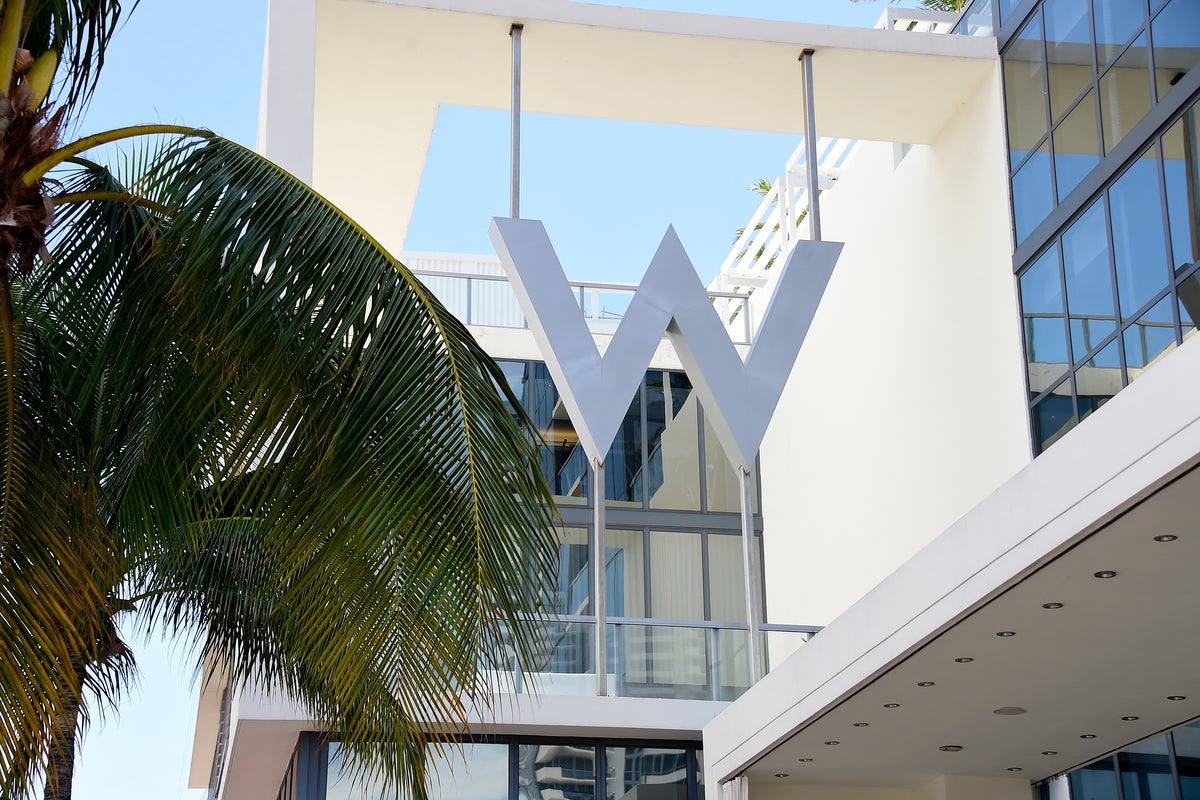
A guest walks into a sheet of floor-to-ceiling glass in a luxury hotel room, suffers a traumatic brain injury, and requires three surgeries. The mainstream media rushes to file the story under "freak accident" or "greedy corporate negligence." The public laughs it off as a case of someone not looking where they were going.
Everyone is missing the point.
This is not a freak accident. It is the predictable, mathematical consequence of an industry-wide obsession with minimalism over basic human mechanics. For the past two decades, high-end hospitality has traded psychological comfort and physical safety for a sterile, hyper-polished aesthetic. The lawsuit against the W Hotel isn't just about a poorly marked bathroom door. It is an indictment of a design philosophy that treats paying guests as obstacles to a clean photo shoot.
The Cult of Architectural Invisibility
I have spent years auditing corporate spaces and consulting on high-end commercial layouts. I have seen developers throw away millions of dollars trying to make structural elements look like they do not exist. We have entered the era of the "invisible hotel room," where handles are recessed, light switches are hidden flush against marble panels, and bathroom doors are indistinguishable from open air.
Architects call this "seamless integration." Let's call it what it actually is: hostile design dressed up as luxury.
When you strip away the visual cues that the human brain uses to navigate a space, you are not creating elegance. You are creating a cognitive minefield. The human optical system relies on contrast, shadows, and architectural framing to map out an environment. When you install an unblemished, un-toned, floor-to-ceiling glass slider directly in the path of travel without a header, footer, or manifestation graphics, you are bypassing millions of years of evolutionary biology.
You are asking a guest—who is likely jet-lagged, unfamiliar with the room layout, and perhaps waking up in the dark—to use sheer guesswork to avoid a concussion.
The False Economy of Aesthetic Perfection
The defense in these cases almost always tries to shift the blame to the guest. They argue comparative negligence. They claim the guest should have known the door was there because they used it earlier in the day.
This argument ignores how human memory and spatial awareness actually function under stress or fatigue.
[Normal Spatial Navigation] -> Relies on visual anchors (frames, handles, thresholds)
[Minimalist Spatial Navigation] -> Relies on active memory recall ("Is the glass closed right now?")
When you force a guest to rely on active memory recall just to walk to the bathroom at 3:00 AM, your design has failed. True luxury is supposed to reduce cognitive load, not increase it. It should feel intuitive.
The hospitality industry loves to brag about its obsessive focus on the guest experience. Yet, hotels consistently violate basic human-centric design principles to chase trends on social media. A brass handle or a frosted geometric band across a glass panel ruins the "clean lines" of the photographer's wide-angle lens. So, the executives opt for the invisible glass. They decide that the risk of a catastrophic lawsuit is just the cost of doing business in the modern luxury market.
Dismantling the Precedent
Let's address the inevitable pushback from the design purists. They will cite iconic structures like the glass cube at the Apple Fifth Avenue store or the sweeping glass facades of modern airport terminals. If they can use massive glass panels safely, why can't a boutique hotel?
The answer lies in scale, lighting, and expectation.
- Scale: Large public installations use thick, laminated glass that reflects light differently than a thin interior sliding door.
- Lighting: Public spaces maintain consistent, regulated lux levels that highlight the surface tension and reflections on the glass. Hotel rooms are subject to wildly shifting light conditions, from blazing afternoon sun to pitch blackness.
- Expectation: When you walk into a public plaza, your brain is on high alert. You are navigating a crowded, dynamic environment. When you close the door to your hotel suite, your brain drops its guard. You expect a sanctuary, not an obstacle course.
By mimicking public architectural trends in private, low-light residential quarters, hotels create a trap.
The Legal and Financial Reckoning
This is not an isolated incident, and it will not be the last. Insurance risk adjusters are already quietly losing their minds over this trend. The cost of defending a traumatic brain injury (TBI) claim can easily spiral into seven figures, even before a jury gets a look at the medical bills.
When a guest requires multiple craniotomies to relieve intracranial pressure, a plaintiff's attorney does not even need to argue complex liability. They just have to show the jury a photo of the glass panel and ask a simple question: Where is the warning?
The industry's current fix is usually a joke. They wait for someone to bump their nose, and then a maintenance worker sticks a cheap, aftermarket vinyl decal onto a $10,000 custom glass door. It looks terrible, it degrades the brand, and it admits fault after the fact.
The alternative is doing the hard work up front. It means firing the designers who refuse to compromise their "artistic vision" for basic ergonomics. It means realizing that a room you can break your face on is not a luxury room—it is a liability.
Stop designing spaces for cameras. Design them for human beings.