The Sunday sun hits Central, Hong Kong, with a heat that feels personal. Thousands of women sit on cardboard sheets, carving out temporary living rooms in the shadows of glass towers. They share Tupperware containers of adobo, braid each other’s hair, and laugh. To a passerby, it looks like a picnic. To the women, it is a brief reclamation of dignity.
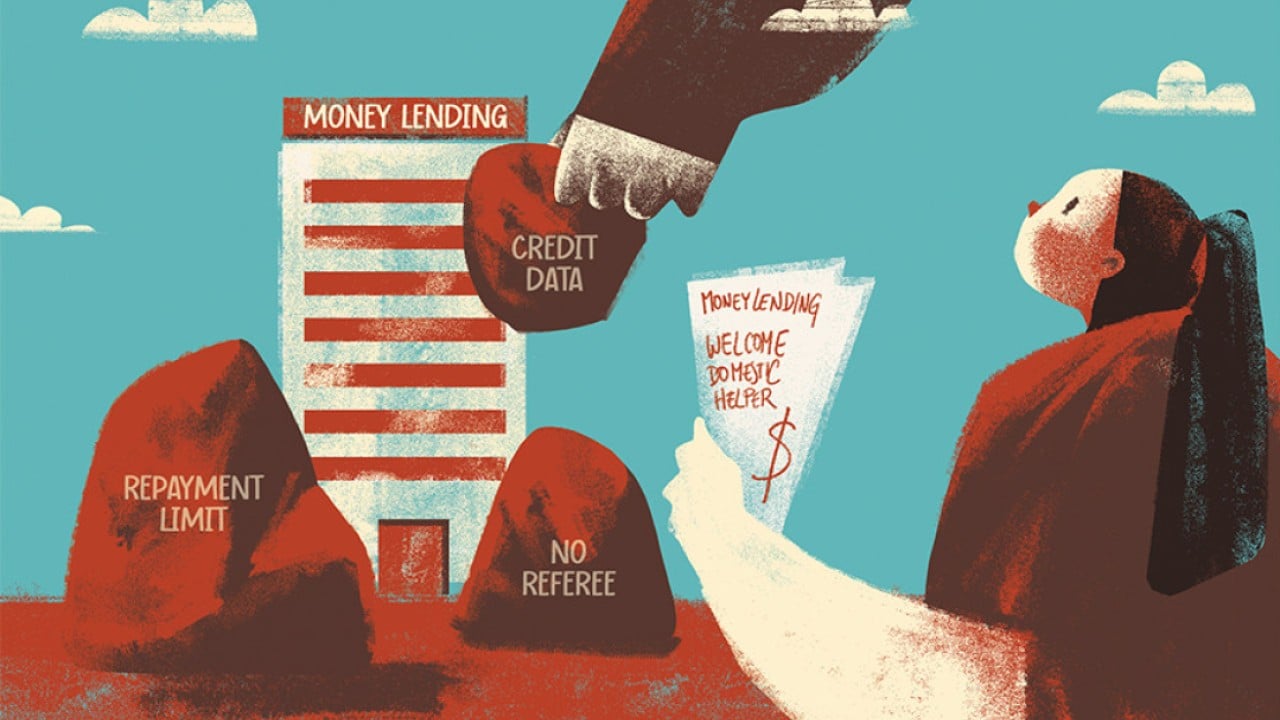
But look closer at the edges of these gatherings. You will see them. The men in polo shirts handing out flyers with neon-bright fonts. The flyers promise "Fast Cash," "Easy Approval," and "No Credit Check." They are selling a dream of quick relief to people who live on the razor’s edge of survival. Learn more on a connected topic: this related article.
For Mary—a hypothetical composite of the thousands of domestic workers I’ve spoken with—the flyer isn't a red flag. It’s a life raft. Her mother in Pangasinan needs surgery. Her daughter’s tuition is due. In Hong Kong, Mary earns a mandatory minimum wage that barely covers the cost of a high-end steak dinner in the skyscrapers above her. She sends 80 percent of it home. When a crisis hits, there is no cushion. There is only the moneylender.
The Math of Desperation
The arithmetic of a "easy loan" in Hong Kong is a slow-motion car crash. Until recently, the legal interest rate cap hovered at a staggering 60 percent per annum. Even after recent legislative shifts lowered this to 48 percent, the numbers remain predatory for someone earning roughly $600 USD a month. More analysis by MarketWatch delves into similar perspectives on this issue.
Imagine borrowing $10,000 HKD to fix a roof back home. On paper, the monthly payment seems manageable. But then come the "administrative fees." Then the "processing charges." By the time the money hits Mary’s hand, she’s already lost 10 percent of the principal. If she misses one Sunday payment because her employer made her work late, the late fees compound.
The debt does not sit quietly in a ledger. It breathes. It follows her into her employer’s kitchen. It keeps her awake in the small, partitioned room where she sleeps. When she can’t pay the first lender, she sees a flyer for a second. She borrows from Peter to pay Paul. The cycle isn't just a financial burden; it’s a psychological haunting.
The Shadow Economy of the Passport
There is a specific cruelty to how this system operates. Technically, it is illegal for a lender to hold a domestic worker’s passport as collateral. Yet, walk into the back offices of the smaller money shops in World-Wide House, and you will find drawers stuffed with them.
The passport is more than an ID. It is a worker's right to exist in the city. Without it, they are trapped. Lenders know this. They use the document as a physical leash. They also use the "agency" system. Many workers arrive in Hong Kong already buried in debt from recruitment fees—illegal but pervasive charges that take months, sometimes years, to pay off.
Before they have even performed their first task, they are starting from a deficit. They are running a race where the finish line moves back ten feet for every five feet they gain.
Why the Clampdown Matters Now
The Hong Kong government has finally begun to tighten the screws. They are looking at stricter caps on how much a person can borrow relative to their income. They are increasing the penalties for unlicensed lending.
But why now? Because the bubble isn't just a private tragedy anymore; it’s a systemic risk. When thousands of workers are underwater, the social fabric begins to fray. Employers find debt collectors calling their private home numbers. Workers, driven to the brink by harassment, lose their jobs, which triggers immediate deportation.
Deportation doesn't erase the debt. The "sharks" have branches in Manila, Surabaya, and Colombo. The debt follows the worker across the ocean, often turning into physical threats against their families.
The Illusion of Choice
Critics often ask: "Why don't they just say no?"
It is a question asked by people who have never had to choose between a predatory loan and a sibling going hungry. In the migrant community, debt is often an act of love. It is a sacrifice made at a high interest rate.
The problem isn't a lack of financial literacy. Mary knows exactly how much she owes. She can tell you to the cent. The problem is a lack of alternatives. Traditional banks won't touch her. She has no assets, no "permanent" residency, and a salary that is fixed by law.
When the formal financial system shuts its doors, the informal system opens its arms. It’s a warm, suffocating embrace.
The Weight of the "Dream"
We call them "helpers." The word itself is a diminishment. They are the silent engines of Hong Kong’s economy. They look after the children and the elderly so the local workforce can power the financial markets.
When we talk about "weaning" them off debt, we are really talking about an identity crisis. The dream for most domestic workers is to go home. To build a small house. To start a sari-sari store. To finally be the mother who is present, rather than the voice on a WhatsApp video call.
Debt is the thief that steals that homecoming. It turns a two-year contract into a twenty-year sentence.
Consider the psychological toll of the "Sunday Pressure." On their one day of rest, instead of recovering, many workers spend the afternoon shuffling between lenders, pleading for extensions, or hiding from collectors who haunt the public squares. The city’s parks, meant for leisure, become open-air debt negotiations.
Shifting the Narrative
True change won't come just from lowering interest rates by 12 percent. It comes from a fundamental shift in how we value the labor that happens inside the home.
There are grassroots movements—small, flickering candles in a dark hallway—trying to provide an exit. Credit unions for domestic workers are popping up, run by the workers themselves. They focus on "productive" lending and collective savings. They offer a way out that doesn't involve surrendering a passport.
But these organizations are tiny compared to the Goliath of the lending industry. The lenders have the neon signs. They have the prime real estate. They have the "easy" paperwork.
The Invisible Stakes
If the clampdown succeeds, it won't just be a win for "regulatory compliance." It will be the difference between a woman returning home with her savings intact and a woman returning home with nothing but the clothes on her back and a heart full of shame.
We often measure the health of a city by its Hang Seng Index or its luxury property prices. We should measure it by the safety of its most vulnerable.
Mary sits on her cardboard square in Central. She looks at the flyer in her hand. She thinks of her daughter’s face. She knows the loan is a trap. She knows the interest will swallow her whole.
She picks up her phone to call the number anyway.
Until the city provides a better answer than a polo-shirted man with a neon flyer, the trap will keep snapping shut, one Sunday at a time. The skyscrapers don't care. They just keep casting their long, cool shadows over the women waiting below.
The real cost of a loan isn't the interest rate. It's the years of life traded to pay for the privilege of working in a city that won't let you save.