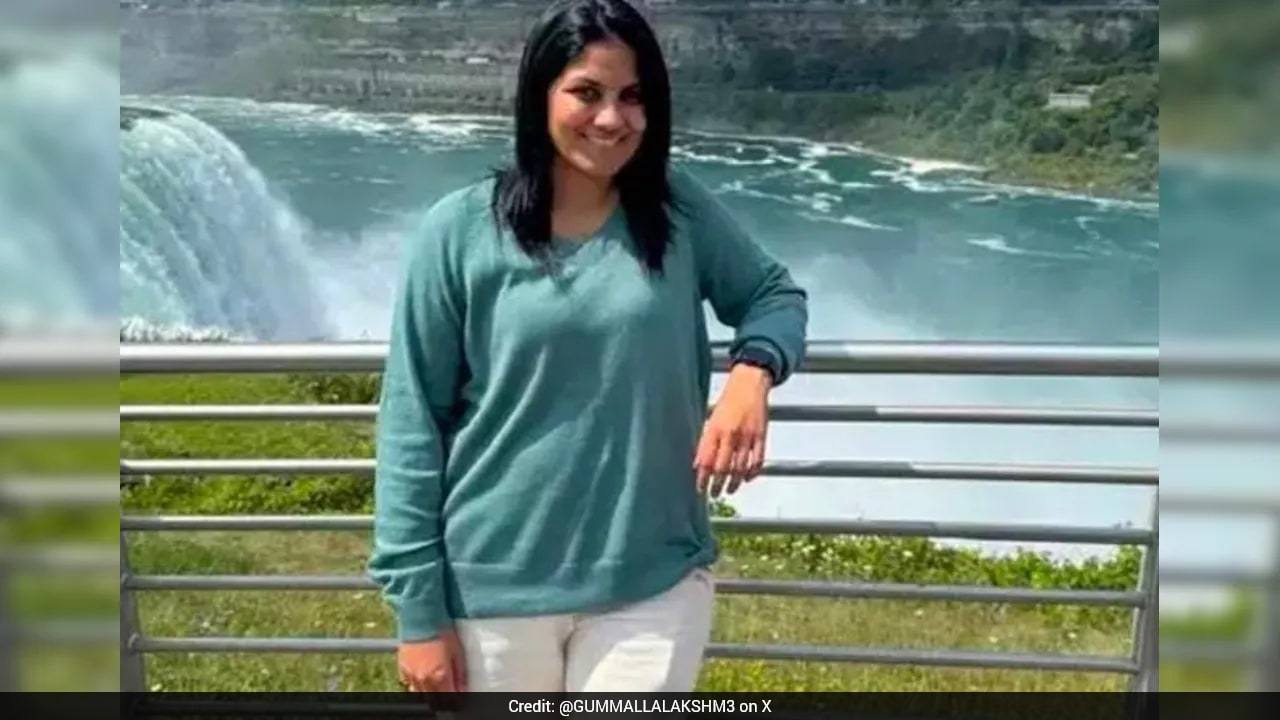
The fatal highway crash in upstate New York that killed 25-year-old international student Prasanna Atluri while she was driving to a temple is more than an isolated tragedy. It is the latest symptom of a systemic crisis facing hundreds of thousands of Indian scholars who arrive in the United States every year. Atluri, a recent graduate of Pace University from a modest farming family in Andhra Pradesh, died when a speeding vehicle struck her car from behind at a traffic light. The incident immediately exposed the fragile reality of the foreign student experience, where a single unpredictable moment can shatter a family across the globe and lay bare the complete lack of structural support for international scholars.
Beneath the glossy brochures of American universities lies a harsh environment of predatory debt, inadequate health and life insurance, and structural isolation. When an international student dies or suffers a catastrophic injury on American soil, the institutional machinery that eagerly collected their out-of-state tuition suddenly vanishes. Families are left to navigate complex international legal systems, massive medical bills, and the exorbitant cost of body repatriation entirely on their own. Recently making headlines in related news: Why the Indian Diaspora is Rewriting Australia Geopolitics.
The Economics of a Tragic Pipeline
American higher education has become heavily dependent on full-fee-paying international students. Indian students represent one of the largest demographics driving this multi-billion-dollar industry. They pay double or triple the tuition of domestic students, effectively subsidizing the operations of major universities. Yet, this financial contribution does not translate into basic safety nets.
Atluri came from Moolapadu, a village where her father works as a farmer and her mother runs a small bag manufacturing unit. To send her to New York, her family pooled their meager savings and took on substantial student loans. This is not an unusual story. It is the standard operating procedure for thousands of families across Telangana and Andhra Pradesh who view an American degree as the ultimate ticket to upward mobility. Further information into this topic are covered by The Guardian.
When a student dies, those loans do not simply disappear. Indian banks routinely require collateral, often meaning that a grieving family faces the immediate threat of losing their ancestral land or home alongside losing their child. The financial architecture of international education demands upfront investment but offers zero downside protection.
Universities provide orientation sessions on academic plagiarism and campus map navigation. They rarely, if ever, discuss what happens if a student is killed on a state highway or how a family back home will manage a sixty-thousand-dollar repatriation fee. The institutional responsibility ends at the campus perimeter.
The Crowdfunding Safety Net
The immediate aftermath of these highway fatalities reveals a disturbing pattern. Governments and universities offer condolences, but the actual work of bringing a deceased student home falls on loose community networks and internet crowdfunding platforms.
Hours after the crash that killed Atluri, her cousin had to launch an online fundraising campaign. The goal was seventy-five thousand dollars. This money was not for a luxury; it was strictly required to pay off her pending student loans, cover funeral arrangements, and fund the transportation of her remains back to India.
Typical Breakdown of Repatriation and Emergency Costs:
--------------------------------------------------
Mortuary Services & Embalming:    $4,000 - $7,000
International Air Freight:        $5,000 - $10,000
Consular Paperwork & Legal Fees:  $2,000 - $4,000
Domestic Transport (India):       $1,000 - $3,000
Outstanding Student Debt Liability: Varies ($30,000+)
Relying on the charity of strangers via GoFundMe has become the default health and life insurance policy for Indian students in America. If a student does not have a well-connected network or if their story fails to gain traction on social media, their family is left completely helpless.
This reliance on crowdfunding highlights an institutional failure. Insurance policies mandated by universities are designed to cover basic on-campus medical care. They are notoriously deficient when it comes to long-term disability, accidental death, or international body repatriation. Students buy the cheapest policy that meets the university's minimum compliance checklist because they are already financially stretched to the breaking point.
Transit Vulnerabilities and Geographic Isolation
The physical geography of the American university system presents an immediate hazard to international students. Many institutions are located in suburban or rural towns with virtually no public transportation.
To survive, buy groceries, or find affordable housing, students must travel by car. They often purchase old, high-mileage vehicles that lack modern safety features. Alternatively, they cram into crowded vehicles driven by peers who are equally unaccustomed to American highway speeds, aggressive freight trucks, and complex traffic laws.
The accident involving Atluri occurred while she was traveling with friends over a weekend. Another recent incident near Chicago involved a minivan carrying seven Indian students that was struck from behind because it was moving too slowly due to mechanical failure. Investigators later discovered that five of the passengers were sitting on boxes without seatbelts because the vehicle only had two proper seats.
This is the ground reality of the international student experience. It is an existence defined by cutting corners to save money. They share overcrowded apartments, drive unreliable vehicles, and travel late at night to avoid missing low-wage shifts or classes. They operate on the absolute margins of safety.
The Diplomatic Vacuum
When these tragedies occur, the diplomatic response from both the home and host countries follows a predictable, hollow script. Consulates issue statements on social media expressing deep sadness. They promise to coordinate with local authorities.
Then the paperwork begins.
For a rural family in India, dealing with a county coroner in upstate New York or Indiana is an impossible task. The bureaucratic red tape required to release a body, secure a death certificate, obtain a transit permit from the consulate, and clear international customs is staggering.
The Indian state governments have occasionally stepped in with ad-hoc financial packages, but there is no formalized, institutionalized system to handle these crises automatically. Every tragedy is treated as a novel emergency rather than a recurring systemic failure.
The host nation views these incidents through the narrow lens of local traffic enforcement. The deeper socio-economic pressures that put these students on those roads under those specific conditions are entirely ignored.
The Psychological Weight of the Promised Land
The pressure on these young adults is immense. They carry the financial hopes of an entire extended family on their shoulders. Every day spent in the United States without a high-paying corporate job is a day where interest accumulates on a high-interest loan back home.
This intense pressure forces students to minimize their own health and safety needs. They will not go to the emergency room for an illness because of the fear of a surprise medical bill. They will not buy a safer car because that money needs to be sent home to pay down the principal on a bank loan. They drive through exhaustion, poor weather, and dangerous traffic conditions because they feel they have no choice.
The American dream sold to these students is a optimization game where everything must go perfectly. If they graduate, secure a job under the Optional Practical Training program, and successfully transition to an H-1B visa, the gamble pays off. But the margin for error is zero. A single distracted driver on a New York highway can instantly liquidate a family's multi-generational investment.
Universities continue to recruit aggressively across South Asia, highlighting campus amenities and career placement statistics. They remain silent about the structural precarity that awaits these students once they step outside the university gates. The tragic end of Prasanna Atluri's journey proves that the current system treats international students as highly profitable revenue streams rather than human beings under their institutional care.